The Socialist Alliance has selected a Victorian Senate team of Lalitha Chelliah and Tim Gooden, and candidates Zane Alcorn for the seat of Wills and Sue Bull for the seat of Corio.
-
-
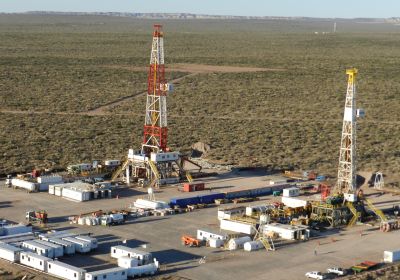
A report released by the Institute for Energy Economics and Financial Analysis on May 19 has said that the $800 million gas pipeline planned for the Northern Territory is economically unviable, to the extent that it is described as the “whitest of white elephants”. The pipeline, known as the North East Gas Interconnector (NEGI), has been the crown of the NT Country Liberal Party’s economic strategy in the lead-up to the August election. The pipeline is designed to transport the vast shale gas reserves in the NT from Tennant Creek to Mt Isa for sale to the rest of the world. -
Five months after the December 20 election in Spain failed to produce a government, the country is returning to the polls in the most polarised contest since the end of the Franco dictatorship in 1977.
-
A new Climate Council report card on the renewable energy progress of Australia's states and territories finds South Australia and the ACT are topping the class. NSW received the worst grade due to its low and falling percentage of renewable energy, no renewable energy target and low levels of rooftop solar. -
Tasmanian Police have discontinued their prosecution of former Greens leader Bob Brown, who was arrested earlier this year under controversial anti-protest laws which he went on to challenge in the High Court. Brown was arrested in January for standing in the way of bulldozers primed to clear forest at Lapoinya, in north west Tasmania. He was one of the first to be charged under the Workplaces (Protection from Protestors) Act 2014. The law is part of a controversial series of legislation, which aims at deterring protests that interrupt businesses' activities. -
Two weeks into a protracted election campaign, it is looking ever-more likely that climate change is to be placed way down the order of business – at least for the major parties. The contest over climate change that characterised the previous three federal elections seems to have disappeared off the political radar despite the issue being more urgent than ever.
-
The three remaining presidential candidates — Republican candidate Donald Trump, and Democratic contenders Hillary Clinton and Bernie Sanders — have all come out against the Trans-Pacific Partnership (TPP) agreement in varying degrees. The TPP, a “free trade agreement” involving 16 Pacific Rim nations (including Australia), is an undisguised corporate power grab. However, all candidates in the US presidential election stress a reactionary argument against it. -
The Malcolm Turnbull Coalition government's economic spin is that they are managing a “transition” from “strong resource investment-led growth to broader-based drivers of economic activity”. This, it claims in the 2016 budget papers, is a transition to more “labour-intensive sectors, such as services”. Hence the Coalition's mantra: “Growth and jobs”. Sounds nice, but what does this mean for the different classes in Australia? -
At the start of the election campaign federal environment minister Greg Hunt came here to announce $50 million in new projects to boost water quality, including efforts to keep sediment, fertilisers and pesticides off the Great Barrier Reef. This announcement was partly to allay concerns over research showing 93% of the Reef had been bleached and dire predictions that the Reef will be dead in 25 years. -
As South Asia swelters through a record-breaking heatwave — with reports of hundreds of lives lost in India on top of the hundreds of farmer suicides this year owing to crop failures due to drought — a May 20 Reuters report that Pakistanis were digging mass graves in preparation for heatwave-related deaths brings the grim situation we are in into sharp focus. -
Candidate for the socialist Awami Workers Party (AWP) Baba Jan will contest a May 28 by-election for the assembly of the Pakistani-administered Himalayan territory of Gilgit-Baltistan from his jail cell. Baba Jan has been described as a climate justice prisoner. In 2010, his home area in Hunza was devastated by climate change-fuelled floods and landslides. A protest movement developed against the misappropriation of relief funds. Police responded with brutality and protesters were killed and arrested. -
The World Economic Forum (WEF) Africa summit in Kigali, Rwanda, on May 11 to 13 reinforced extractive industry and high-tech myths. The gathering unveiled the elite’s exuberant imagination and its lack of exposure to the continent’s harsh economic realities. As an antidote, grassroots protesters all over Africa are questioning the logic of export-led “growth” and renewed fiscal austerity. Instead they demand policies that meet their basic needs.