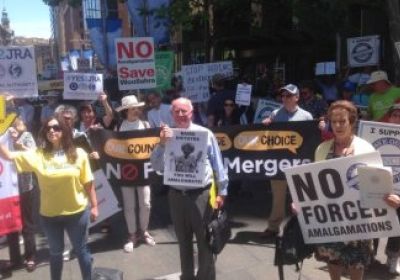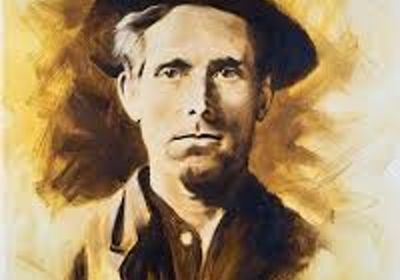
In 1972, Aboriginal rights campaigners successfully pressured the Whitlam Labor government to grant funds for the Aboriginal Housing Company to begin buying houses in Redfern for low-cost housing for Aboriginal people. Now, Redfern Aboriginal Tent Embassy (RATE) is fighting for The Block to retain this role instead of being sacrificed to greedy developers.
-
-
It is now more difficult for unemployed people to find a job than it has been for 20 years. Official youth unemployment is 12% and the official national jobless rate has risen to a 13-year high of 6.3%. The last time employment prospects were so depressed was in the 1990s when the national unemployment rate was 8%. In South Australia, the official unemployment rate is now 7.9%, with employment growth a negligible 0.3%. -
Heat and corruption are a heady mix. As Iraq swelters in record-breaking temperatures, thousands of largely young Iraqis are taking to the streets to protest the miserable conditions they face. They are angry about the lack of electricity and water - and blame rampant government corruption.
-
Ecuadorian President Rafael Correa and social movements behind Ecuador’s “Citizens' Revolution” are engaged in yet another battle against the South American country's entrenched elites. Supporters of Correa marched through the capital of Quito on August 12 to the presidential palace, where they intend to maintain a permanent presence to help defend the elected government. The next day, violent opposition protests led to 86 police officers being injured, the interior ministry said, along with 20 civilians and three members of the press. -
By any logic, Greece's SYRIZA-led government should be sinking in the opinion polls. At the Brussels Eurosummit of Eurozone leaders on July 12, SYRIZA Prime Minister Alexis Tsipras agreed to a set of draconian preconditions for obtaining a third €86 billion bailout. The decision effectively reversed the opposition to austerity on which SYRIZA was elected in January. -
The extent of anger at austerity in Britain — and desire for an alternative to the pro-corporate politics of Britain's major parties — is being exposed by the scale of enthusiasm and support for the campaign of veteran socialist Jeremy Corbyn for leadership of the Labour Party. -
CONALCAM brings Bolivia’s main indigenous and popular organisations together with state representatives to coordinate and debate economic policies.
The small Andean nation of Bolivia has received praise from many quarters due to the economic transformation it has undergone over the past decade.
-
The Malaysian democracy movement, Bersih, has called its fourth major mobilisation — named Bersih 4.0 — for August 29-30 amid increasingly desperate and repressive attempts by the Barisan Nasional (BN) government of Prime Minister Najib Razak to suppress investigations of his alleged involvement in a multi-billion dollar corruption scandal involving the debt-ridden state investment fund 1Malaysia Development Bhd (1MDB).
-
For the first time in its history, the US colony of Puerto Rico has gone into default, Moody's Investors Service said on August 3. The news comes after years of economic turmoil in the island, produced mainly by the 2007-2010 recession and housing crisis that have affected the US. The default came soon after the island's Government Development Bank announced that it was only able to make a partial payment on its US$72 billion debt. This debt crisis directly hurts the Caribbean island's residents, since the debt is mostly owned by residents through credit unions.
-
Over the past few decades there has been a rapid growth of interest in buying food that does not come from large-scale industrial farms. Concerns exist over their use of large amounts of commercial fertilisers, pesticides and genetically modified organisms, and inhumane treatment of farm animals.
-
Anti-water charge protests in Letterkenny, County Donegal on November 1.
The Irish government’s unpopular public utility, Irish Water, has been dealt a body blow. It failed two key tests within the space of a fortnight — gifting a huge victory to opposition parties and the huge anti-water charges movement.
-
For a long time, superannuation was available only to permanent public sector workers and managerial employees in the private sector. So-called “blue collar” workers were not so privileged. In the mid-1980s, only about a quarter of these workers had access to superannuation, more often than not following union-led campaigns in targeted industries.