
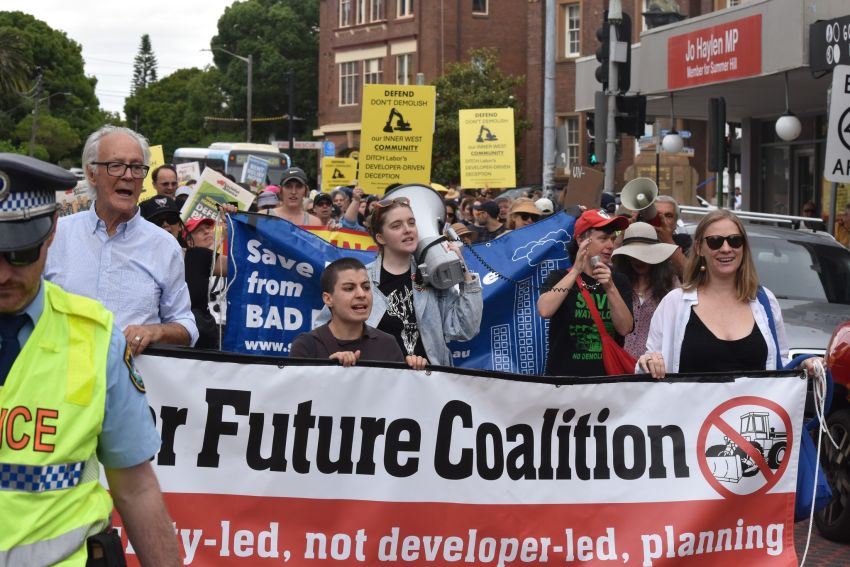
Alarm bells were set off across New South Wales when the state Labor government announced major anti-democratic changes at the local government level, including barring residents from speaking at council meetings.
Local government minister Ron Hoenig insists that the new Model Code of Meeting Practice will “boost transparency and community confidence in local government”. But a NSW Greens councillor in the Inner West is not convinced.
Inner West Greens Councillor Izabella Antoniou told Green Left that for many councils, including Inner West Council (IWC), there will be little change to the prior process.
She said the IWC allows residents to speak to motions at the start of each council meeting, with the speaking list closed before formal debate and voting on motions begins. Residents cannot ask questions or interact with councillors when the issue they came to speak about is being debated.
“This will still be the case at IWC … except the time when residents are speaking will be considered a ‘public forum’,” Antoniou said.
Other councils have chosen to hold “public forums” a week before the council meeting, possibly making interaction with councillors, or a resolution of the issue, even more remote.
The new code of practice is being given a five-month trial. The changes include dress code standards, limiting the ability of councillors to attend meetings via video link and making councillors stand when the mayor enters the chambers.
Restrictions on residents addressing council and, importantly, seeking clarification from councillors, have been IWC practice for some time. For several decades, and particularly since the forced amalgamation of councils, democracy at the local level has been restricted.
NSW Greens local government spokesperson Amanda Cohn said splitting the resident contributions into separate public forums is “restrictive”.
She said it “removes the immediacy of comments, and it also means not all of the councillors making a decision on the item may be in attendance to hear members of the community speak about it”, the Sydney Morning Herald reported her saying last month.
Another change is that private pre-meeting briefings for councillors have been banned in an effort to “improve transparency”. While councillors can still request information from the general manager ahead of a meeting, this information must be made available to the public.
Other changes may have more implications for local campaigns. Residents are now banned from bringing “flags, signs or protest symbols to the meeting” and may be expelled for “disorderly conduct”.
Erina Delinicolas spokesperson for the Better Future Coalition, which is campaigning against the IWC’s “Fairer Future” pro-developer plan, told GL the changes “risk further distancing the politicians making decisions from the communities they have sworn to represent”.
“Residents are right to be wary about changes to the way local councils are run”, Pip Hinman said. “Local councils are the most accessible level of government, and one of the few places left that ordinary residents can have their say on critical issues.”
Hinman, a coordinator of a state-wide campaign to reverse the Coalition government’s 2016 forced merger of NSW councils, organised the campaign that led to a successful 63% “Yes” vote to demerge the IWC back into separate Leichhardt, Marrickville and Ashfield council areas.
“The poll, which was undertaken by the NSW Electoral Commission in 2021, was largely driven by residents noticing that council services were degrading, unelected bureaucrats on high wages were making the key strategic decisions and democracy was almost non-existent.
“At the time, Labor councillors pledged to respect the poll outcome. However, when the result came back, they engineered a biased business case that became the fig leaf for them to refuse to demerge. They brought state Labor in on the act and changed the law to make it harder for all councils to demerge.”
This is just one example of Labor’s dismissal of residents’ wishes. The rush to announce the Fairer Future Plan is another. The pro-developer plan includes a massive expansion of expensive private housing in the Inner West, with only 2% allocated to “affordable” housing. Inner West Labor pushed through the plan despite significant community opposition.
Residents and community groups are keeping a close eye on how NSW Labor’s new code of conduct helps or hinders local democracy.
[Isaac Nellist is a member of the Socialist Alliance.]