-
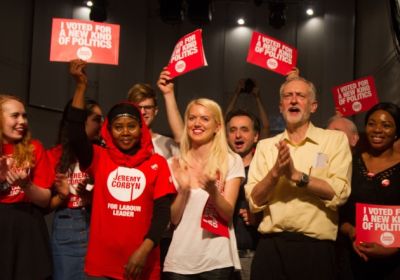
As socialist Labour leader Jeremy Corbyn addresses enthusiastic mass meetings across the country it appears clear — despite attempts by Labour right to sabotage the vote and deny as many Corbyn backers the right to vote as possible — the anti-austerity leader will easily be returned as leader. -
As Brazil’s media focuses its attention on the Rio Olympics, new revelations continue to shine a light on the glaring contradictions in the unelected government's efforts to impeach suspended President Dilma Rousseff for allegations of fraud.
-
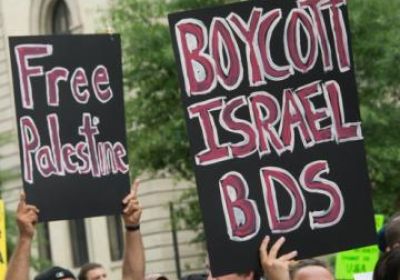
Israel is intensifying its efforts to crack down on activists working for freedom, justice and equality for Palestinians. On August 7, interior minister Aryeh Deri and public security minister Gilad Erdan formed a new inter-ministerial task force that will, as the The Times of Israel reported, “target supporters of the boycott, divestment and sanctions (BDS) movement”. The task force aims to prevent the entry of foreign activists allegedly affiliated with groups that support BDS. It also aims to expel those who have already entered territories under Israeli control. -
Since the mid 1930s, self-styled progressives and many socialists have often justified supporting one of the United States' two major capitalist parties by claiming that it is the “lesser evil” compared to the other one. The “lesser evil” is frequently the Democratic Party. In this year's election, the “lesser evil” is the war hawk and neoliberal Hillary Clinton as opposed to right-wing populist Donald Trump. -
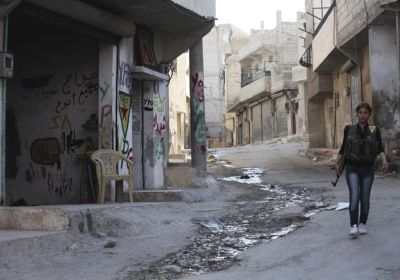
Kurdish forces of the People's Protection Units (YPG) responded in an official statement to the Syrian rebels' Aleppo Operations Chamber that said they will attack the Kurds after breaking a regime siege on Aleppo city.
-
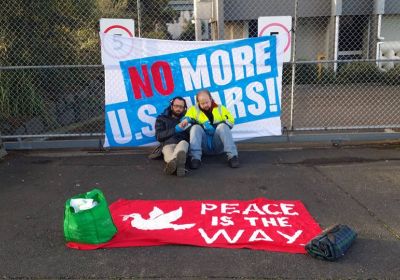
Two peace activists, Greg Rolles and Shane Anderson, locked themselves to Lockheed Martin's main gates on August 11, blocking the entrance to the Dandenong research facility in an attempt to disrupt the making of missiles for military drones.
-
Jorge Knijnik is a researcher at the Institute for Culture and Society at the University of Western Sydney, and specialist in sport and social justice issues. He spoke to Lalitha Chelliah from the Solidarity Breakfast Show on Melbourne community radio station 3CR on August 6 about the many social issues swirling around the 2016 Rio Olympics. Below is an edited and abridged transcript.
-
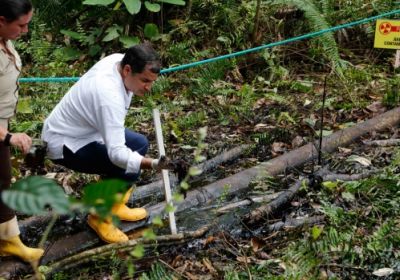
A United States federal appeals court ruled on August 8 in favour of the oil giant Chevron in a case that dates back more than 20 years. The ruling blocks an Ecuadorean indigenous community from collecting a judgement of nearly US$8.6 billion for environmental damage to the Amazon rainforest.
-
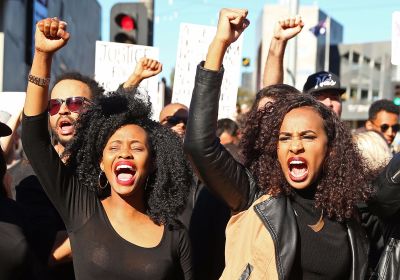
“While police tactics and accountability measures are being examined, many black people are also questioning their safety and place in society,” the San Francisco Chronicle wrote on July 31. “They worry about the next time they interact with police, and about the difficult conversations they must have with their children.” Black people make up 6% of San Francisco's population — and suffer 40% of the city's shootings by cops. The city's statistics on police stops of Blacks and violence mirror other cities, especially in the Midwest and South. -
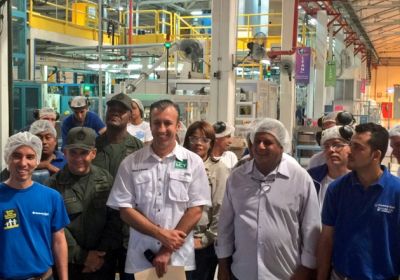
Venezuela's newly nationalised Kimberly-Clark factory has produced 2,068,800 sanitary towels its the first month since reopening following a worker takeover in July, Venezuelanalysis.com said on August 10. Last month, the Texas-based consumer products giant shut down its operations in the country without warning, firing nearly 1000 workers.
-
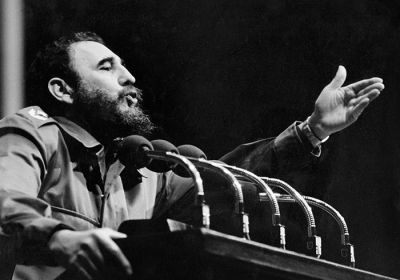
Fidel Castro, the historic leader of the Cuban Revolution, turned 90 on August 13. Progressive, anti-war and social justice forces across the world join in the celebration of the life of one of the world's most influential and significant leaders.
-
Members of the Green Party of Canada made history at their August 5–7 convention in Ottawa, passing a resolution to support the boycott, divestment and sanctions (BDS) campaign targeting economic activities in the Palestinian territories occupied by Israel.