-
The text of the controversial Trans-Pacific Partnership — negotiated by 12 Pacific rim nations including Australia — was released on November 5 after a negotiating process shrouded in secrecy. The release of the much-guarded text of the deal has renewed calls for action to stop the TPP as a “toxic deal” and “disaster for democracy”. -
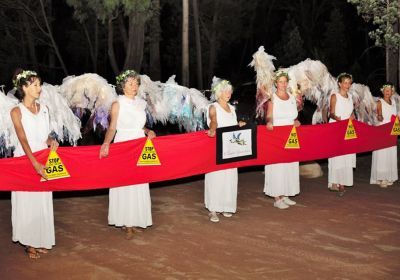
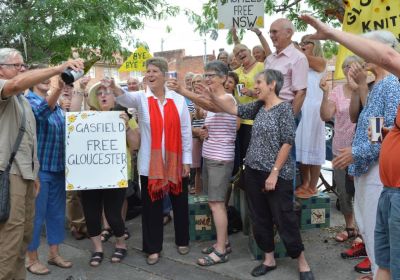
Gas miner Metgasco's surprise announcement on November 2 that it was recommending its shareholders accept a $25 million payout for its three remaining exploration licences in NSW's Northern Rivers, near Lismore, was celebrated right across the state. Anti-fracking campaigners, who have worked hard for more than three years, educating, organising and mobilising communities against the industry, are very relieved. -
After a long campaign of community resistance to the project, the Nicaraguan government has declared that the Canadian company B2Gold's bid to open a gold mine is “unviable” due to its environmental impacts.
-
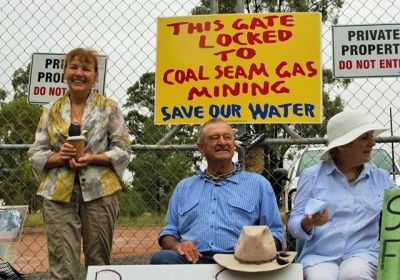
About 50 people attended the Queensland Water Summit in Dalby on September 23. Despite its midweek timing, a wide range of people attended from across the state, including farmers threatened by increasingly severe drought and mining company pollution of their water sources, to community members, doctors and clergy from communities impacted by coal seam gas, underground coal gasification and coalmining. The summit was organised and funded by independent Senator Glenn Lazarus, who spoke briefly but mostly listened to the concerns raised by attendees. -
The United States and 11 other Pacific Rim nations, including Australia, reached an agreement on October 5 on the Trans-Pacific Partnership, the largest regional trade accord in history.
-
South America’s largest country, Brazil, has been rocked in recent months by a political crisis, partly fuelled by mass protests calling for the removal of centre-left President Dilma Rousseff. The protests come as the country officially moves into recession, with Brazil’s economy expected to contract by 2% this year. Brazil has been governed by a Workers’ Party (PT)-led coalition for over a decade, firstly under Luiz Ignacio “Lula” da Silva and now Dilma, as she is commonly known.
-
Land reforms are essential to achieving a long-standing peace after half a century of conflict, said Colombian academic Alejandro Reyes on September 10 during a forum on agrarian issues in Bogota.
-
Until July, not one of the homes destroyed during Israel’s assault on Gaza last year had been rebuilt. Why?
-
More than 6000 people and 500 group have participated in public meetings on a proposed land law with the government of President Rafael Correa.
-
Israeli bulldozers uproot olive trees on Palestinian lands to make way for a separation wall in Beit Jala.
Palestinian farmers have called for international solidarity against ongoing Israeli destruction of their olive groves and livelihoods.
-
Palestinians in Susiya demonstrate in May against Israel’s plans to destroy the village. Photo: Sarah Levy/Electronic Intifada.
The Palestinian village of Susiya is at imminent risk of demolition. On May 5, Israel’s High Court of Justice refused to grant an interim order to freeze the demolition until the outcome of an appeal brought by villagers to prove the village’s legitimacy.
-
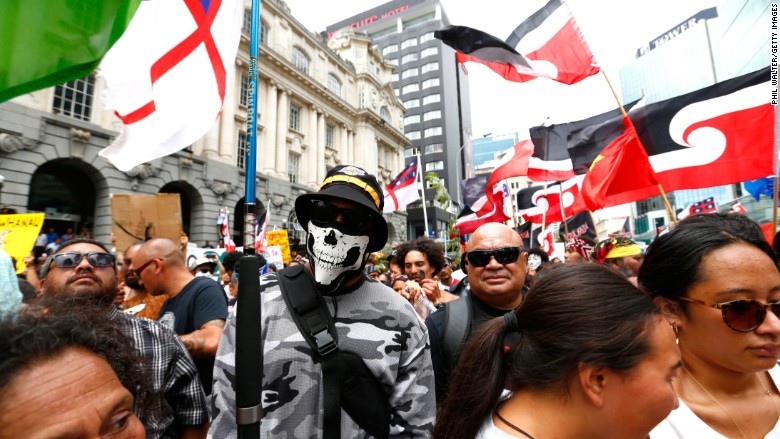
There were huge protests against the Trans-Pacific Partnership held across New Zealand on August 15. About 10,000 protesters marched in Auckland, 5000 in Wellington, 4000 in Christchurch and thousands more in other parts of the country.