-
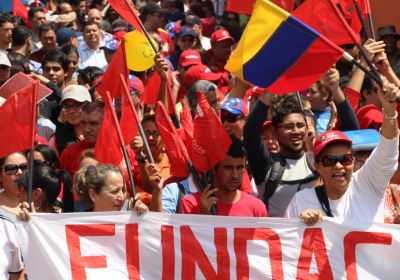
Almost a year has passed since the death of Hugo Chávez on March 5, 2013. Arguably this has been the most difficult one for the Bolivarian Revolution. Many people, both on the left and the right expressed doubt that there could be Chavismo without Chávez. Perhaps a year is still too short of a period to assess the situation after Chávez’s passing. Yet, the dynamic developments over the past twelve months call for some preliminary remarks. -
Throughout March, the United Nations Human Rights Council (UNHRC) will be reviewing the human rights situation in Sri Lanka, among other countries, at it meeting in Geneva.
-
At quarter to six on the morning of February 6, in a wood on the Moroccan side of the border with the Spanish north African enclave Ceuta, about 300 asylum seekers met to try to cross the six-metre high razor-wire fence seperating the two countries.
-
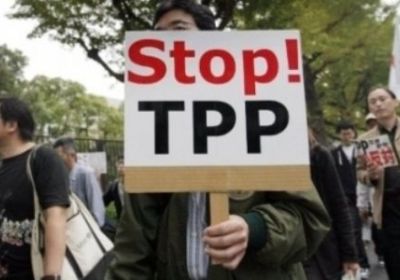
Four days of talks in Singapore for the proposed TransPacific Partnership (TPP) ended inconclusively on February 25. It is clear big disagreements still exist between the negotiating countries.
-
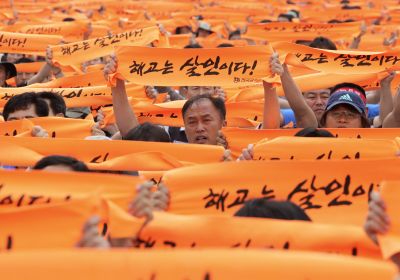
Seoul's High Court ruled on February 7 in favour of the 153 members of the SsangYong Motor Company branch of the Korean Metal Workers Union who were unlawfully laid-off in 2009.
-
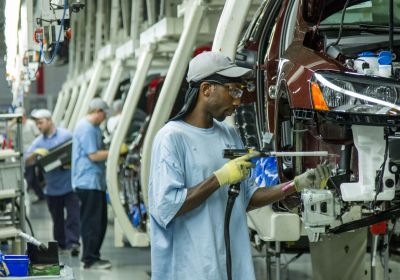
In a closely-watched election, the United Autoworkers Union (UAW) tried to break into the anti-union South to organise a Volkswagen plant in Chattanooga, Tennessee. The union lost the February election among the plant’s 1550 production workers. There were 626 votes in favor and 712 against. The negative vote was something of a surprise, because Volkswagen management did not threaten workers’ jobs if they voted yes, and was officially neutral. Generally, bosses intimidate workers and pay for a barrage of anti-union advertising to stop workers voting in favour of unionising. -
After failing to violently crush mass protests in Kiev’s Independence Square, which have been raging since November 21, the regime of Viktor Yanukovich collapsed on February 22. The protests began in opposition to Yanukovich’s decision to back out of a Free Trade Agreement and Association Agreement with the European Union. But in the face of police brutality, the protests evolved into a general expression of anti-regime discontent. The movement was initially known as Euromaidan (“Eurosquare”) but later just Maidan, reflecting this evolution. -
The armed group Basque Country And Freedom (ETA has made a significant step towards decommissioning the weapons used in its campaign for independence and freedom, Irish Republican News said on February 21. But the Spanish government immediately rejected the move. The decommissioning by ETA of some its cache of weapons and explosives, drawing a definitive line under decades of bloody conflict, was confirmed by an International Verification Commission.
-
Millions of dollars worth of damages to public property may have been caused by a wave of violence across Venezuela, according to government sources. The assessment comes after Venezuelan President Nicolas Maduro called for a “National Peace Conference” as a means of resolving the on-going violent opposition protests in Venezuela.
-
In response to the violence instigated by the Venezuelan elite, the working classes of Venezuela took to the streets this week.
-
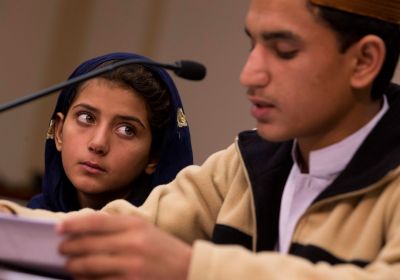
It stands to reason that the perpetrators of crimes against humanity have a vested interest in silencing those who speak out against them. So it is not surprising there has been an intensified campaign of repression in Pakistan against those speaking out against the US bombing campaign in Pakistan's north-west.
-
The Kansas Republican-controlled House of Representatives passed a bill on February 11 that makes it legal to discriminate against LGBTIQ people in the mid-western US state. This caused outrage across the US. If passed by the Senate, the law would make it legal for private businesses to discriminate against LGBTIQ people and allow public servants to deny LGBTIQ people basic services — so long as their reasoning is motivated by “sincerely held religious beliefs”.