-
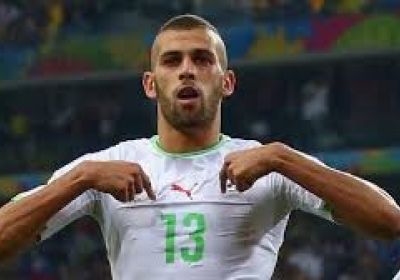
Players in Algeria's national football team have announced that they plan to put prize money earned in the World Cup to good use, BleacherReport.com said on July 2. Striker Islam Slimani said the entire squad would donate the earnings to the people of embattled Gaza, saying “They need it more than us”. -
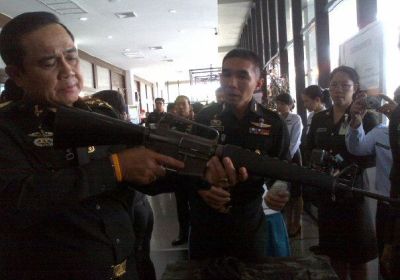
As the autocratic rule of Big Brother Generalissimo Prayut Chan-ocha trundles forward, we are seeing the militarisation of politics, economics and society in Thailand. All government ministries are controlled by military personnel. Civil servants who were in their posts before the May 23 military coup are being replaced by loyal lapdogs or cronies of the junta. -
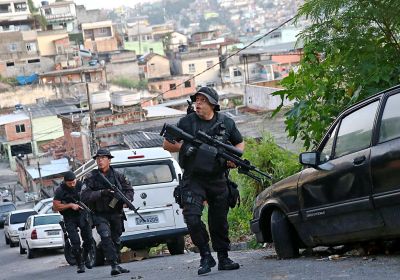
When I was in Brazil for those first days of the World Cup, I was ― with many other journalists ― tear gassed by military police. I saw sleek, urban-outfitted tanks in the streets and I felt concussion grenades send subsonic shrapnel crashing into my eardrums. I didn’t see the drones flying overhead, but then again, no one without a Hubble telescope is supposed to see the drones. -
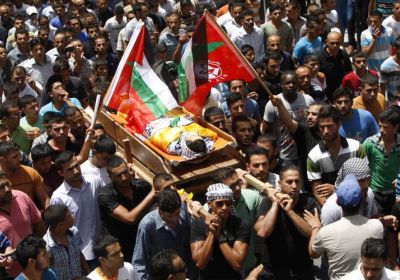
In the early hours of July 1, Israel Defense Forces (IDF) bombed dozens of sites across Gaza, hours after three missing teenage Israeli settlers were found dead. The Israeli government, led by Prime Minister Benjamin Netanyahu, predictably seized on the boys' disappearance and death as the pretext to raid Palestinian territory, attack Hamas and expand illegal settlements. -
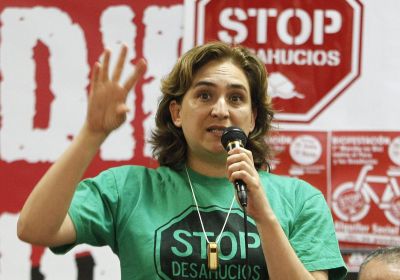
If anyone can get the different forces of the Catalan left to unite in support of a common cause, it is Ada Colau. The spokesperson of the anti-eviction Mortgage Victims Platform (PAH) until early May, Colau is almost certainly the most popular and respected social activist in the Spanish state. On June 26, Colau launched Let’s Win Barcelona platform for next year's May municipal elections in the Catalan capital. -
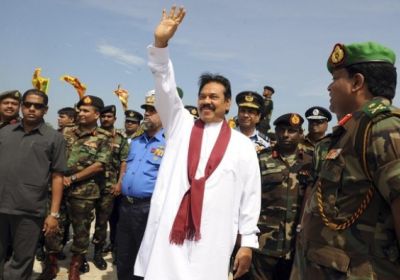
Dr Paikiasothy Saravanamuttu, executive director of the Centre for Policy Alternatives in Sri Lanka, gave a talk on “The challenge of moving from post-war to post-conflict in Sri Lanka” at a June 21 meeting held in the Darebin Intercultural Centre in Melbourne. The following is a summary of his talk compiled by Michael Cooke. *** The end of the war [between the Sri Lankan state and the Liberation Tigers of Tamil Eelam in 2009] does not mean the end of conflict. The guns are silent, but the sources of conflict remain, and are being reproduced.
-
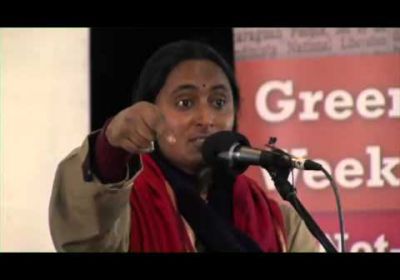
Kavita Krishnan is a socialist activist and a well-known international spokesperson for the movement against sexual violence in India.
-
Official statistics from the Palestinian Authority's Ministry of Information have revealed that 1518 Palestinian children were killed by Israel's occupation forces from the outbreak of the second intifada ("uprising") in September 2000 up to April last year. That's the equivalent of one Palestinian child killed by Israel every three days for almost 13 years. -
Since the bodies of three missing Israeli youths were discovered in the occupied West Bank on Monday, Israeli politicians have whipped the public up with demands for “revenge.”
-
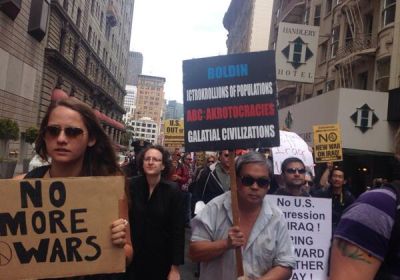
Washington has embarked on a risky course in Iraq that may lead to a new US war. In the face of the swift advance by a Sunni coalition headed by the Islamic State in Iraq and Syria (ISIS), which captured a large swathe of northern and western Iraq, the Obama administration has sent 300 soldiers back into the country. This force, referred to as “observers” or “advisers”, are there to shore up the US-installed Baghdad government in a situation of developing civil war. -
One cannot but feel privileged and awed to meet three of Burma's “88 Generation” student uprising leaders: Min Ko Naing who has spent most of the years since 1988 uprising jailed by the Burmese military dictatorship for his opposition activities; Ko Jimmy, who spent 20 years as a political prisoner and who was recently thrown back into what he wryly describes as “our second home” for protesting against fuel price hikes; and Ko Ko Gyi who spent 17 years in prison for opposing the military regime. -
A spectre is haunting Venezuela ― the spectre of the colectivos. All the powers of old Venezuela have entered into a holy alliance to exorcise these colectivos: political parties, NGOs, the foreign press, and of course, Twitter users. “Armed thugs”, “vigilantes”, “paramilitaries” ― these are just a few of the hyperbolic terms attached to what has suddenly emerged as the central bogey of the Venezuelan opposition today: “los colectivos.”