Well, now I really feel safe. The Australian defence department has finally started to buy up vital necessities to protect this country. Oil paintings, comfy handmade chesterfield lounges, memberships to exclusive golf clubs… You name it; our defence department now has it. I guess you can’t underestimate the usefulness of a well-rested backside and a perfect golf swing during hand-to-hand combat.
-
-
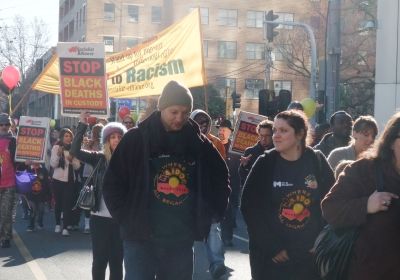
Witness Roy Bramwell told the re-opened inquest into Aboriginal man Mulrunji Doomadgee’s death on March 8 that police threatened to “come after him”, as they crushed his original damning witness statement and threw it in the bin.
-
One feature of the otherwise successful Perth rally against internet censorship on March 6 was an attempt by a far-right political group to hijack the event. About 300 people participated in the rally and march. Speakers included internet studies lecturer Mike Kent, Greens Senator Scott Ludlam and an Iranian refugee, who talked about the draconian nature of Iran's internet censorship. Other speakers included Socialist Alliance Senate candidate Ben Peterson and Mike Walmsley from the Liberal Democratic Party. -
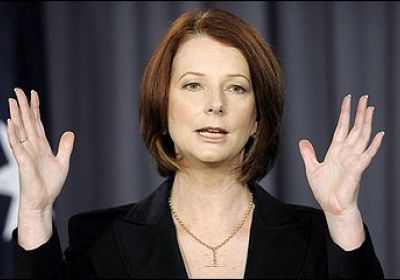
On February 25, federal education minister Julia Gillard announced the release of the new national curriculum. She sounded like a consultant for a private education firm, yet at the same time revealed her utter ignorance of education in this country.
-
John Bellamy Foster is a renowned Marxist economist and ecologist. He is the editor of the US socialist journal Monthly Review and is the author of Marx's Ecology and The Ecological Revolution (published by Monthly Review Press. Foster will be a featured speaker at the Climate Change — Social Change conference in Melbourne in November (see ad on page 13 for more details).
-
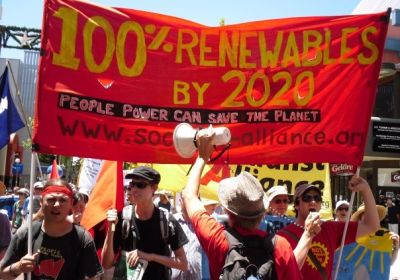
When it comes to avoiding the most catastrophic impacts of global warming then whatever the financial cost, the price is still worth paying. But new research by Beyond Zero Emissions (BZE) shows Australia could meet 100% of its stationary energy needs from renewables in a decade and stimulate the economy at the same time.
-
According to the Reserve Bank of Australia, the future of the Australian economy is so bright we should all start wearing shades. Justifying the RBA’s decision to lift official interest rates a further 0.25% on March 2, governor Glenn Stevens said, “the risk of serious economic contraction in Australia [has] passed”.
-
Changes to Aboriginal employment, infrastructure and welfare programs have stripped remote Aboriginal communities of resources and left many Aboriginal people, in effect, working for rations.
-
Last year’s national Climate Action Summit was groundbreaking. It set a national grassroots movement on its feet, something I haven’t seen on such a scale in my two decades of activism. A new ongoing network has been set up, with more than 100 groups now signed onto the initial structure.
-
The proposal by the Greens to the Rudd government that it introduce a price on carbon (starting at $23 a tonne) “as an interim measure in the transition to a functional and effective emissions trading scheme” is provoking a lively debate in the grassroots climate action movement.
-
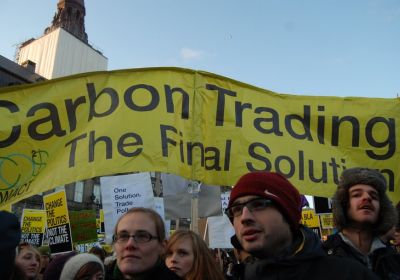
Carbon trading schemes have become the most favoured government strategy to deal with climate change, including in Australia. But as economics professor Clive Spash found out, government employees who question whether such schemes can actually deliver emissions reductions can find themselves under huge pressure to be silent.
-
The NSW government has just approved plans for two, 2000-megawatt power stations, one near Lithgow, the other in the Hunter Valley. If coal is chosen as the fuel source NSW’s greenhouse gas emissions will increase by 15.1%. If gas is chosen the increase will be 7.1%. It’s likely the government will go with coal.