-
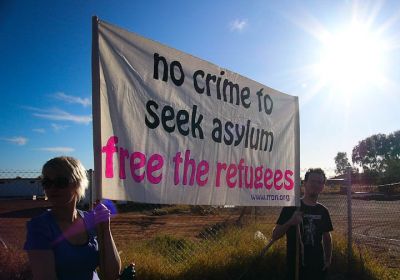
Hazara asylum seekers, who broke out of the Northern Immigration Detention Centre in Darwin on September 1 to hold a peaceful seven-hour protest, have been transferred to the WA Curtin detention centre. On September 3, Australian Association of Hazaras spokesperson Arif Fayazi told ABC radio he was concerned for their welfare. Fayazi said that when he was in detention in similar circumstances in 2000, many of his fellow detainees became so distressed they harmed themselves. -
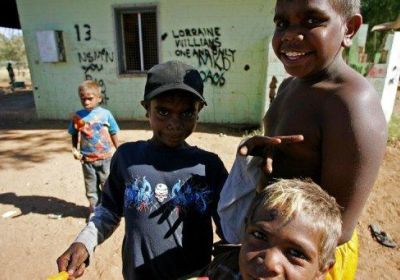
I am a committee member of the Human Rights Alliance and a trustee of the Deaths in Custody Watch Committee WA. Through my role in both during the past couple of years, I have been stunned by the fact that Australia has one of the world's worst deaths in custody records. There are more non-Aboriginal deaths in custody than Aboriginal deaths. But the rate of Aboriginal deaths in custody is higher than in South Africa during the peak of apartheid. -
Independent Andrew Wilkie won the Tasmanian seat of Denison at the recent federal elections. Previously, the seat had been held by Duncan Kerr for 23 years and was considered a safe Labor seat. Wilkie came to prominence in 2003 when he resigned from his job at the Office of National Assessments in public protest against the then Liberal/National Coalition government's decision to invade Iraq. The invasion was based on the claim Iraq had weapons of mass destruction, a claim that later proved false. -
In 2007, federal election candidates made much of the seven vultures that were feeding on the carcass of the Howard government as it flailed around shifting further and further to the right. Those seven vultures were: • the denial of climate change; • touting of the war in Iraq; • Work Choices; • policy failure on education spending; • poor vision of infrastructure; • destruction of research and development; and • persecution of refugees with the Pacific Solution. -
The Socialist Alliance national office has produced its analysis of the August 21 federal election. It traces the precise mix by electorate of the increased Green, Coalition, independent and informal vote, produced as voters deserted Labor. The differences among the seat-by-seat contests in an Australian federal election have never been so great. The general disillusionment with the two major parties expressed itself in quite different ways in different electorates and areas.
-
A high court challenge to Australia's offshore processing, on behalf of two Tamil refugees whose asylum claims were refused, has questioned the legality of the refugee processing policy. The case, heard in Canberra's High Court over August 24-26, occurred amid rising numbers of refugee claims being refused. Australia imprisons refugees in offshore detention and denies them full right of appeal in Australian courts. Access to legal advice and fair processing is greatly restricted. The lawyers acting on behalf of the Tamils labelled this practice unlawful and unconstitutional. -
Undoubtedly the best thing about the election result was that people — everywhere — were talking about politics. Some of the discussion was about the hung parliament where neither major party won majority support. Because the result wasn’t clear, it gave everybody an opening to form and express an opinion about what should happen next. Other parts of the discussion surrounded the sudden emergence of political issues that had been completely ignored in the “boring” election campaign. The war in Afghanistan is the best example.
-
Socialist Alternative’s Corey Oakley thinks many on the Australian left have got the federal election wrong. There is nothing positive about the balance of power being held by four independent MPs and one Green, he wrote in an August 27 article on the Socialist Alternative website. He said the left should be fearful of the independents, but some activists were wrongly celebrating the new role of these reactionary politicians.
-
After a long hiatus, the Broad Left Collective has reformed in Wollongong. Broad Left played a valuable role in circulating left and progressive news in the Illawarra community from its inception in 1987 until its dissolution over the course of 2002-3. At a meeting held in June this year to discuss reforming the collective it was agreed that Broad Left could continue to play a valuable role in linking up left and progressive people and groups across the Illawarra. -
In the lead-up to the 2004 federal election, legislation was passed against marriage rights for lesbian, gay, bisexual, transgender and intersex (LGBTI) people. The 2004 marriage ban became the catalyst for the development of a powerful protest movement. This movement has won a series of important victories. These include the repeal of 85 pieces of federal legislation discriminating against same-sex couples, but not the repeal of the discriminatory marriage ban. Recognition of civil unions has been won in the ACT, after a five-year struggle.
-
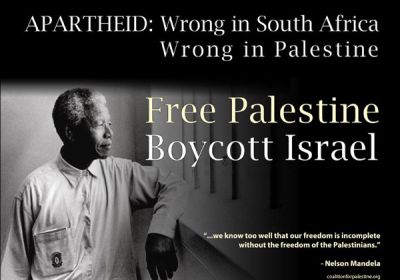
It is a film that advocates peace, yet the head of the ABC decided it was too controversial to be viewed by the Australian public. In May, the ABC pulled the plug on an independent film documenting daily life of Palestinians living under Israel’s military occupation in the West Bank. Now, thanks to the power of public pressure, the ABC is reconsidering whether to broadcast Inka Stafrace’s documentary Hope in a Slingshot. Letters are flying thick and fast to the ABC, asking the broadcaster to air Stafrace’s film. -
On September 1, Luke Foley, the newest Labor member of the New South Wales Legislative Council, rose to make his inaugural speech to the chamber. Foley began: “It is with pride and humility that I enter this place, Australia’s oldest Parliament, as a representative of Australia’s oldest, and greatest, political party — the Australian Labor Party.” Oh dear. What a day for Foley to praise the ALP in NSW.