Venezuelan President Nicolas Maduro has approved Bs40 million (about $6.75 million) in funding for an environmental mission, and announced the creation of a national ecosocialist school.
During a meeting of Venezuela's environmental movement, Maduro called on students and young people to join in state-sponsored environment rehabilitation projects.
-
-
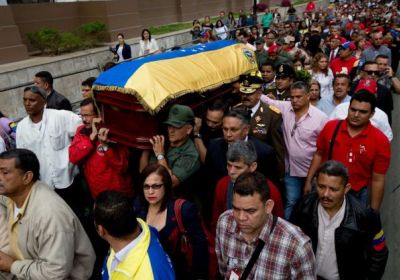
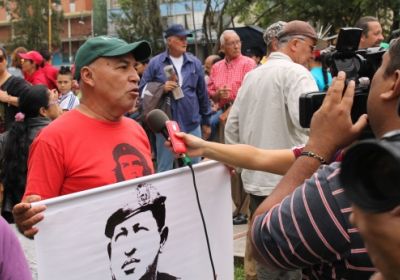
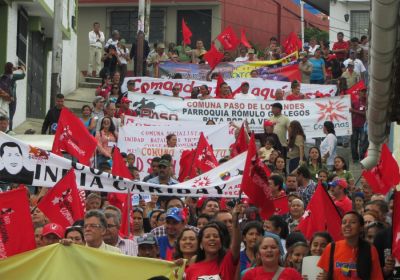
The Venezuelan people have marked the 12th anniversary of the right-wing military coup on April 11, 2002, that briefly ousted former President Hugo Chavez. In an historically unprecedented event, the coup was overturned within 48 hours by a mass uprising of the people and soldiers loyal to the Bolivarian revolution. This year’s anniversary occurs in the context of one of the most intense right-wing destabilisation campaigns since the dramatic days of 2002. -
The violent anti-government protests that shook Venezuela in February have again thrust the issue of the pace of change into the broader debate over socialist transformation. Radical Chavistas, reflecting the zeal of the movement’s rank and file, call for a deepening of the “revolutionary process”. Moderate Chavistas favour concessions to avoid an escalation of the violence. -
As they are prone to do, the private media have invented a new thing. In both English and Spanish, they are calling it the colectivos. They are meant to be irrational, cruel, grotesque armed motorbike riders who “enforce” the revolution in Venezuela and are responsible for most of the violence afflicting the South American nation, which has left more than 30 people dead since February. The opposition barricaders are presented as the innocent victims of these collectivos, who apparently work with the National Guard and have the support of President Nicolas Maduro's government. -
Via Campesina is a global organisation of peasants and one of the largest and most significant international social movements. The statement below in solidarity with Venezuela’s revolution and peasants was released by its International Coordinating Commission of Via Campesina International, which met in Managua, Nicaragua on March 29. *** -
When the later president Hugo Chavez was first elected president in 1998, it began a process of change that has sought to expand the democratic and social rights of the poor majority who had previously been excluded. This process is known as the Bolivarian revolution. It has included a new constitution guaranteeing previously unheard of social rights, re-nationalising the oil industry and promoting participatory democracy. -
In a recent article, Amnesty International accused the Venezuelan government of a “witch hunt” when a right-wing opposition mayor Daniel Ceballos was arrested. However, Amnesty has yet to use such strong language against the five weeks of human rights violations people in Venezuela have suffered at the hands of violent opposition sectors. The “witch hunt” term demonises the people’s right to bring such criminals to justice. -
The Venezuelan opposition and much of the media use the term “peaceful protests” to distinguish gatherings of protesting students and other young people from the more violent actions by opponents of President Nicolas Maduro's government -- including vandalism and shootings carried out by those outside of the university community. “Peaceful protests”, however, is a loaded term that serves to plant doubts about the intentions of the Maduro-led Chavista government. -
What is really going on in Venuezuela since January. An important antidote to the corporate media attacks on Venezuela, its democracy and popular revolution.
-
The news below is mostly accumulated from recent coverage at Venezuela Analysis, asides from the first report from Prensa Latina. Venezuela Analysis is the best English-language source of news and analysis on Venezuela, its popular revolutionary process and the media war against the country and its democracy.
-
Venezuelan students who support the Bolivarian Revolution speak out against recent oppositional violence, and urge the nation's youth to think for themselves in the midst of the media-backed polarisation.
-
Images forge reality, granting a power to television and video and even still photographs that can burrow deep into people’s consciousness without them even knowing it. I thought that I, too, was immune to the repetitious portrayals of Venezuela as a failed state in the throes of a popular rebellion. But I wasn’t prepared for what I saw in Caracas this month: how little of daily life appeared to be affected by the right-wing protests, the normality that prevailed in the vast majority of the city. I, too, had been taken in by media imagery.