
Australian groups have condemned the decision of US President Barack Obama to issue an executive order on March 9 declaring Venezuela “a national security emergency” and imposing sanctions on Venezuelan officials.
Australia-Venezuela Solidarity Network co-convenor Roberto Jorquera said: “We are extremely concerned at this latest escalation in US attacks on the sovereign nation of Venezuela. We share the concern of the Venezuelan government and many others that this could be a prelude to an economic blockade or even military attack.
-
-
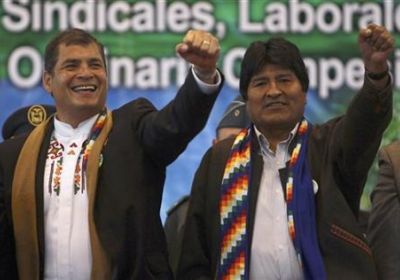 Union of South American Nations (UNASUR) secretary-general Ernesto Samper, said on March 9 that the regional bloc offered total support to the government of Venezuelan President Nicolas Maduro after the US government’s declaration of Venezuela as a national security threat. US President Barack Obama has issued a decree listing Venezuela as a “national security emergency” for the US, citing alleged human rights abuses and corruption. The US has also imposed extra sanctions on several Venezuelan officials.
 -
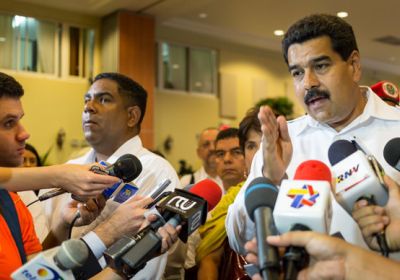 US President Barack Obama issued an Executive Order regarding Venezuela on March 9 that escalated US attacks on Venezuela's left-wing government. The order amounts to an act of aggression against Venezuela's sovereignty by declaring a “national emergency” based on claims the oil-rich South American nation threatens US national security due to alleged human rights violations and corruption.
 -
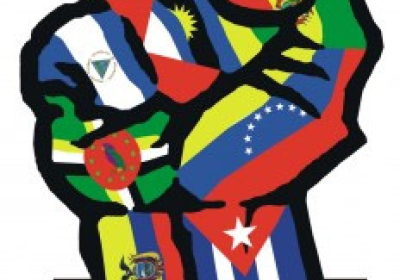 The Bolivarian Alliance of the Peoples of Our America (ALBA) is an anti-imperialist trading bloc first formed by the left-wing governments of Venezuela and Cuba to promote trade on the basis of solidarity rather than competition. It has since expanded to include 11 nations, with Venezuela and Cuba joined by Bolivia, Ecuador, Nicaragua, Dominica, Antigua and Barbuda, St Vincent and the Grenadines, Saint Lucia, Grenada and Saint Kitts and Nevis. Honduras was an ALBA member, but was forced to withdraw when a 2009 US-backed coup installed a right-wing dictatorship.
 -
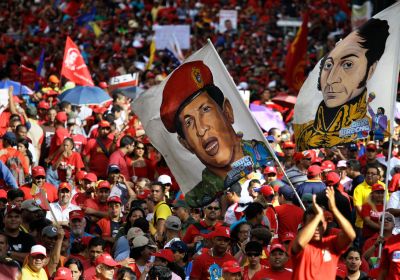 Hugo Chavez was Venezuela's president from 1998 until his death from cancer on March 5, 2013. He led a mass process known as the Bolivarian revolution to redistribute wealth, promote popular power and challenge US domination and exploitation of Latin America. The goal of the Bolivarian revolution is to create a “socialism for the 21st century”.
 -
A new poll released by International Consulting Services, featured several results that suggest Chavismo — the political project pushed by late Venezuelan president Hugo Chavez — continues to be the preferred political option for the country. The poll, carried out on the eve of the second anniversary of the death of Chavez's death on March 5, found 62% of Venezuelans consider themselves Chavistas — “partisans … of the ideals” of the late Venezuelan leader.
-
 Venezuela has launched a campaign against the environmental toll of hydraulic fracturing in the United States with a new exhibition entitled “Fucking Fracking”. Government official Ernesto Villegas announced the inauguration of the exhibition on March 2. It will veature talks by economists and oil experts, as well as an anti-fracking play. The exhibition's logo is a fractured heart dripping with black oil, with dried up leaves coming from the arteries.
 -
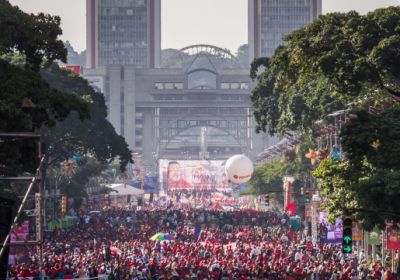 Venezuela has faced new attempts to subvert its democracy and roll-back the pro-poor process of social change known as the Bolivarian revolution, which aims to build a “socialism of the 21st century”. The attacks have taken the form of new US-imposed sanctions, an economic war by private business owners to cause shortages and what Venezuelan officials say is a thwarted coup plot to overthrow the government. On February 25, Venezuelan National Assembly president Diosdado Cabello presented evidence relating the the coup plot thwarted earlier in the month.
 -
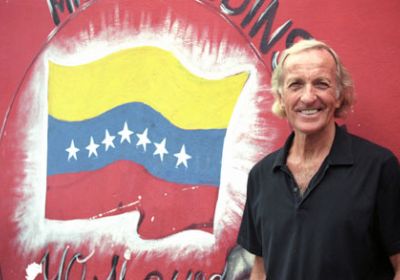 Independent journalist and filmmaker John Pilger was interviewed Michael Albert on the determination of the US and its allies to overthrow Venezuela's elected government and destroy the Bolivarian revolution begun by late president Hugo Chavez.
 -
 The statement below was released on February 17 by socialist groups in the Asia-Pacific region in response to a new coup attempt, including planned assassinations and bombings, by the US-backed right-wing opposition against Venezuela's socialist government of President Nicolas Maduro. *** We, the undersigned organisations, strongly condemn the recent coup attempt that sought to overthrow the democratically elected government of Venezuela in order to reverse the achievements of the socialist Bolivarian process.
 -
Greece, Venezuela discuss cooperation Venezuelan President Nicolas Maduro has invited the newly-elected Greek prime minister to Caracas, TeleSUR English said on February 9. “I have invited Alexis Tsipras, comrade Alexis, to visit us as soon as he can, here in Venezuela,” Maduro told Venezuelan public TV. “He plans to come to Latin America. He mentioned all the pressures that he is under. Because of a savage, savage neoliberal system that has been applied in Greece.” Tsipras expressed an interest in touring Latin America, starting with the Bolivarian Republic of Venezuela.
-
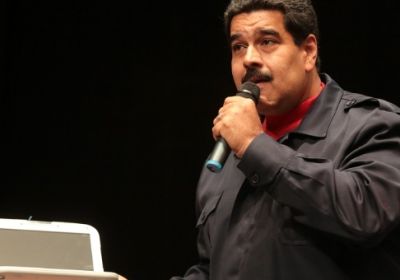
A coup plot against the Venezuelan government has been foiled, with both civilians and members of the military detained, President Nicolas Maduro revealed on February 12 in a televised address.