
 President Nicolas Maduro of Venezuela began his visit to Panama City for the Summit of the Americas with a visit to the impoverished neighbourhood of El Chorrillo to lay a wreath at the monument to those killed by the US bombing of the community during the 1989 US invasion of Panama.
The seventh Summit of the Americas, held in Panama City on April 10 and 11, was widely hailed as a victory for left-leaning and progressive forces in the region, particularly Venezuela and Cuba.
President Nicolas Maduro of Venezuela began his visit to Panama City for the Summit of the Americas with a visit to the impoverished neighbourhood of El Chorrillo to lay a wreath at the monument to those killed by the US bombing of the community during the 1989 US invasion of Panama.
The seventh Summit of the Americas, held in Panama City on April 10 and 11, was widely hailed as a victory for left-leaning and progressive forces in the region, particularly Venezuela and Cuba.
-
President Nicolas Maduro of Venezuela began his visit to Panama City for the Summit of the Americas with a visit to the impoverished neighbourhood of El Chorrillo to lay a wreath at the monument to those killed by the US bombing of the community during the 1989 US invasion of Panama.
The seventh Summit of the Americas, held in Panama City on April 10 and 11, was widely hailed as a victory for left-leaning and progressive forces in the region, particularly Venezuela and Cuba.
-
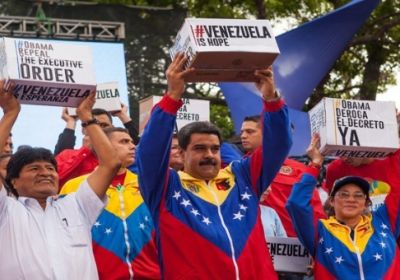 Venezuelan President Nicolas Maduro, along with his Bolivian counterpart Evo Morales, received a petition with 10 million signatures against U.S. President Barack Obama's executive order labelling the country as a “security treat” on April 9. After the decree was issued, Maduro launched a campaign seeking 10 million signatures from Venezuelans demanding the decree be repealed, saying he would present them to the U.S. President Barack Obama at the April 10-11 Summit of the Americas in Panama.
 -
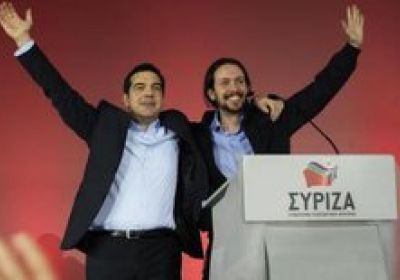 Experience proves that left-wing movements can win government, but nevertheless not hold power. Democracy, in other words the exercise of power by the people and for the people, requires much more. The problem is now being faced in Greece with with radical left party SYRIZA, which won elections in January. It will have to be faced in Spain if the new anti-austerity party Podemos wins November elections.
 -
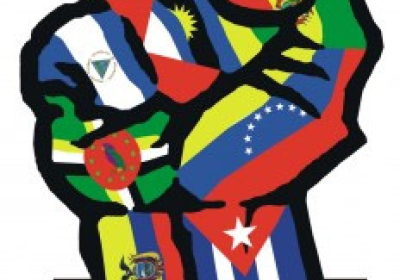 The Bolivarian Alliance of the Peoples of Our America (ALBA) is an anti-imperialist trading bloc first formed by the left-wing governments of Venezuela and Cuba to promote trade on the basis of solidarity rather than competition. It has since expanded to include 11 nations, with Venezuela and Cuba joined by Bolivia, Ecuador, Nicaragua, Dominica, Antigua and Barbuda, St Vincent and the Grenadines, Saint Lucia, Grenada and Saint Kitts and Nevis. Honduras was an ALBA member, but was forced to withdraw when a 2009 US-backed coup installed a right-wing dictatorship.
 -
The Bolivian government said the Andean nation’s gross domestic product grew US$34 billion last year, establishing it as one of the fastest growing economies in the region. Vice-President Alvaro Garcia Linera said that the country’s Social Community Productive Economic Model allowed for the economy to grow, despite a fall in prices for raw materials. “In 1996 the Bolivian economy accounted for $5.3 billion and by 2005, $9.5 billion dollars,” Garcia said.
-
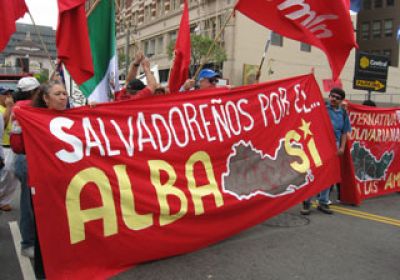 The Bolivarian Alliance of the Peoples of Our America (ALBA) is an anti-imperialist trading bloc first formed by the left-wing governments of Venezuela and Cuba to promote trade on the basis of solidarity rather than competition. It has since expanded to include Bolivia, Ecuador, Nicaragua, Dominica, Antigua and Barbuda, St Vincent and the Grenadines, Saint Lucia, Grenada and Saint Kitts and Nevis. Honduras was an ALBA member, but was forced to withdraw when a 2009 US-backed coup installed a right-wing dictatorship.
 -
Bolivia's fast growing economy fuelled by social spending The Bolivian government said the Andean nation’s gross domestic product grew US$34 billion last year, establishing it as one of the fastest growing economies in the region, TeleSUR English said on February 17. Vice-President Alvaro Garcia Linera said that the country’s Social Community Productive Economic Model allowed for the economy to grow, despite a fall in prices for raw materials. “In 1996 the Bolivian economy accounted for $5.3 billion and by 2005, $9.5 billion dollars,” Garcia said.
-
 The US’s role in Latin America is facing a growing challenge. The 33 member states of the Community of Latin American and Caribbean States (CELAC) vehemently rejected North American intervention in the continent, and particularly the US-led blockade of Cuba and recent sanctions against Venezuela. These positions were part of the “Belen Declaration”, approved during CELAC’s third annual presidential summit, held on January 28th and 29th in Belen, Costa Rica.
 -
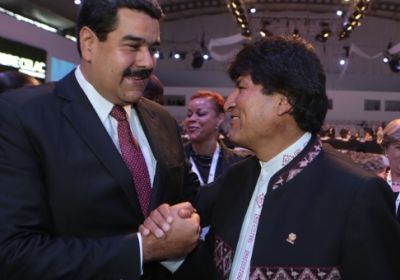 Venezuelan President Nicolas Maduro told a meeting of the Community of Latin American and Caribbean States (CELAC) in Costa Rica on January 28 that Latin America is living in a “new historic era” marked by unity and great opportunity. CELAC was first launched in 2011 in Venezuela, uniting all countries in the Americas except for the United States and Candada. It was set up as a counter-point to the Organisation of American States, which traditionally been dominated by the US.
 -
 Venezuela's left-wing government has congratulated Alexis Tsipras, leader of Greece's radical left SYRIZA party, who won a huge victory in Greece's parliamentary elections on January 25, TeleSUR English reported. A Venezuelan government statement said: “Venezuela warmly congratulates the Syriza coalition party and Alexis Tsipras for their historic victory, wishing them success and complete solidarity and support.”
 -
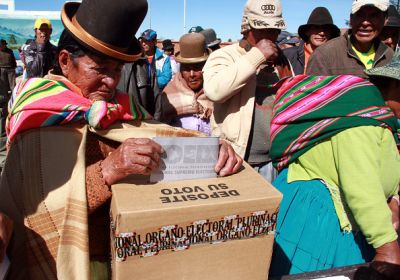 President Evo Morales and his party, Movement Towards Socialism (MAS), won a resounding victory last month. This gave the Morales administration a further five-year term to deepen the progress of the past nine years. I was privileged to take part in a delegation to Bolivia via the New York-based Alberto Lovera Bolivarian Circle. The delegation travelled around the country learning from, and offering solidarity to, the exciting revolutionary processes taking place in Bolivia.
 -
Bolivian President Evo Morales has handed over three new schools and two roofed outdoor community centres in the Sacaca Municipality of the southern Potosi Department. “We are going to continue working, your vote has not been in vain,” said Morales, who was re-elected on October 12 with more than 60% of the vote. In the Caripuyo municipality in Potosi, Morales also inaugurated a market and an electrical system for the Caripuyo community.