
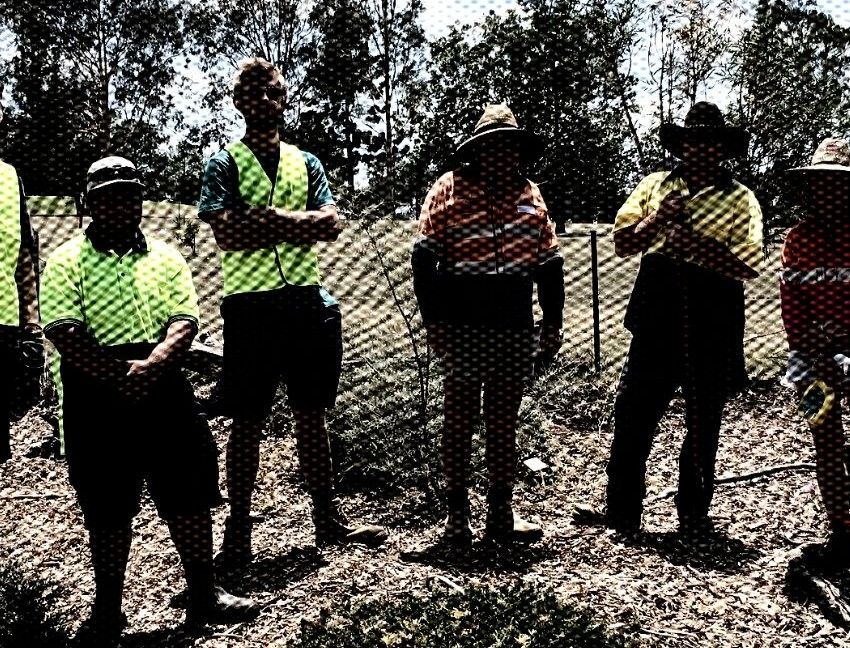
People shared their horror experiences about Work for the Dole, including not having training, a lack of safety equipment and having very little supervision, at an Australian Unemployed Workers’ Union (AUWU) “Know Your Rights” forum on July 29.
It was designed to inform people about relevant laws and contractual obligations between the federal government, job providers and host organisations.
The event was held to commemorate 10 years since Josh Park-Fing died at his Work for the Dole site.
AUWU members had attempted to meet with Andrew Giles, minister for skills and training, to ask him why NEATO, the regional employment agency, had not been held accountable.
They also want to know why Labor refuses to release the data on injuries sustained during Work for the Dole placements. Giles refused to meet and avoided calls.
After Park-Fing died, the Department of Employment and Workplace Relations conducted an internal review in 2020, but the results were only released four years later. It found shortcomings in the employment provider’s risk assessment processes and incident reporting. It also noted that earlier incidents had not always been properly investigated or reported. The employment provider was fined, but the court ordered no conviction be recorded.
The case prompted a senate inquiry and repeated calls for the release of the federal investigation into Park-Fing’s death. His family, the AUWU and others continue to argue that Park-Fing’s death has exposed systemic problems with Work for the Dole programs, particularly the compulsory participation, safety oversight and accountability.
The AUWU and the Antipoverty Centre have called for a federal inquiry into the program, which was initially set up under John Howard’s Coalition government in 1997 as part of its broader “welfare reform” agenda. It targeted younger unemployed people, who had to complete unpaid activities with community organisations in exchange for income support.
Critics argued that compulsory unpaid work would displace paid employment, create a pool of low-cost labour and place downward pressure on wages and conditions. It has continued to expand in scope and reach to become a central component of Australia’s mutual obligation system.
Over time, the program’s eligibility requirements have broadened, participation requirements have increased and the program has been incorporated into successive employment service models, including Jobactive and Workforce Australia.
What began as a targeted work experience initiative has, under Labor, evolved into a wider program affecting a larger number of income support recipients.
The data also shows that First Nations and disabled people are disproportionately assigned to Work for the Dole programs.
Since its introduction, mutual obligation requirements have become more stringent and punitive. Successive policy changes have expanded the range of compulsory activities, greater compliance monitoring and payment suspensions and cancellations.
Many participants report the constant text messages from their job provider using threatening language about cutting their payment should they fail to comply.
Volunteer work is treated as an approved activity that may satisfy mutual obligations; because of this, participants are funnelled into approved volunteer positions. This type of arrangement disproportionately affects women aged over 55.
The AUWU heard from one such woman, who could not ask for time off or sick days and was required to work on Saturdays.
A substantial body of research has concluded that compliance and punitive instruments, like “mutual obligations”, are not conducive to people finding long-term employment.
Research by Patrick Arni, Rafael Lalive and Jan C van Ours found that that stricter compliance requirements can lead to a rise in the rate in which people go off unemployment benefits. However, that is not the same as finding secure work. It means that people with less bargaining power are being forced to accept sub-par wages and working conditions.
There is another cohort of people for whom the punitive nature of mutual obligations and extremely low rates of welfare payments become barriers to employment and they become locked into long-term poverty. Mandatory participation in programs, such as Work for the Dole, can consume time and resources that might otherwise be spent on education, training or searching for suitable employment.