
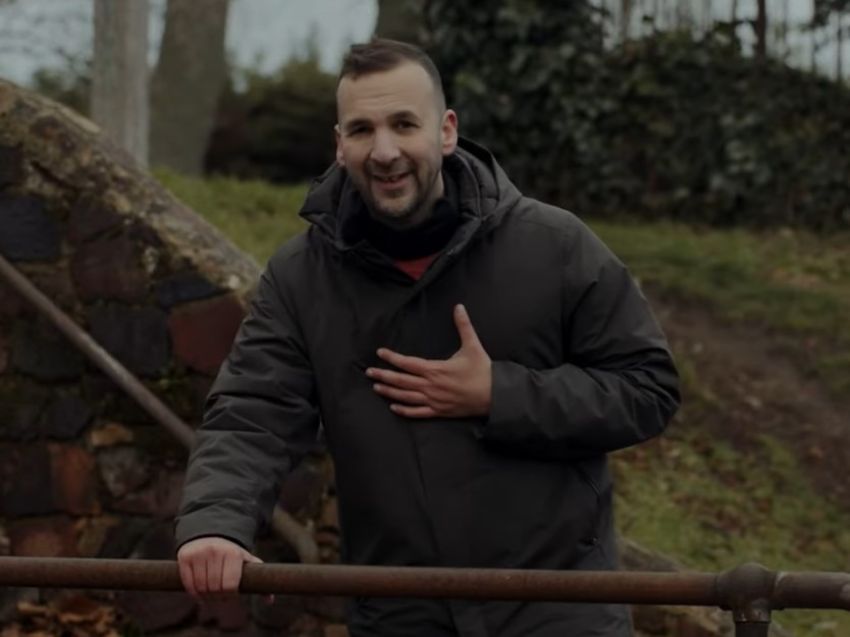
Zack Polanski was elected the new leader of the Green Party of England and Wales in September last year. In the party’s powerful new YouTube video, How We Make Hope Normal Again, we see him running down city streets, getting faster and faster, approaching exhaustion, while speaking to camera.
His message? We are all running faster and faster, just to stay still, as rising prices and rents make life more difficult. The solution? Tax the billionaires to fund services.
This message is unusual for the Greens. Rising prices, incomes and inequality are now the explicit pitch, rather than climate change, peace and animal rights.
And it seems to be working. On January 26, the party announced it had 190,000 members, a remarkable increase.
Remarkable victory
Polanski’s leadership is growing the Green Party and generating huge interest. In contrast to previous leaders, he is constantly being interviewed on TV and gaining a major social media presence.
Polanski is not new to Green Party politics; he was previously deputy leader and elected in 2021 as one of three Greens on the Greater London Assembly.
Assembly members who help run London arguably have much more power than members of parliament at Westminster. Polanski defeated a joint leadership ticket made up of Green Party MPs Ellie Chowns and Adrian Ramsay.
Ramsay had previously served as joint party leader with Greens MP Carla Denyer. Denyer stood down to be replaced by Chowns. Normally, the party’s internal elections are heavily biased towards incumbents such as Ramsay.
Caroline Lucas, the Greens leading MP — and a former leader — has been massively influential in previous contests; candidates that she has backed almost always win internal Green Party elections, such is her significance and popularity.
This time, Lucas backed Ramsay and Chowns. For Polanski to win with 80% of the vote was remarkable.
Polanski has three things going for him: he is a strategic thinker — all too rare in the Greens; he is a charismatic and an effective communicator; and there is an appetite for his strident ecosocialist populism. All three things are reflected in the party’s political broadcast.
Political system’s deep crisis
Polanski’s bold ecosocialist populism, with an emphasis on direct persuasive communication, occurs in the context of the British political system’s deep crisis.
The deeply unpopular Conservative Party lost the 2024 general election and the new Labour government has proven to be even less popular, with both previously dominant parties regularly polling below 20%. Polls indicate that the far-right Reform Party would win a general election, gaining a possible majority with more than 300 parliamentary seats.
British voters are increasingly embittered. Rising prices, stagnant income growth and a feeling that nothing works any more is leading to deepening disillusionment. As party leaders, Ramsay and Denyer seemed incapable of reaching out to such voters.
There is also a significant and largely suppressed left vote. Keir Starmer’s leadership of the Labour Party has seen the left heavily repressed and the enthusiasm for Jeremy Corbyn — previously Labour’s leader before his expulsion — seems very long ago.
Polanski’s strategy of focusing on economic injustice has the potential to tap into a general disillusionment, as well as enthuse voters, particularly younger voters seeking an alternative.
Foreign policy
Britain’s often disastrous but consensual foreign policy, with Labour, Conservatives and Reform sharing near-identical platforms, is in the spotlight.
Labour’s strong logistical and ideological support for Israel, along with the repression of protest, represented by listing Palestine Action as a terrorist group and arresting thousands of its advocates on terrorism charges, is clogging up the justice system.
Polanski is proud of his Jewish heritage and highly critical of the brutal destruction of Gaza’s population. Even before his election, Muslims were moving heavily from Labour to the Greens.
The election of Mothin Ali, a Yorkshire councillor and Muslim, is accelerating this trend. Starmer’s repression of Palestine Action is also driving Labour members, including local councillors, to join the Greens.
United States President Donald Trump’s erratic authoritarianism, particularly his recent demands to colonise Greenland, is wrecking the North Atlantic Treaty Organization.
The traditional pro-US stance of Britain’s main parties is looking increasingly unsustainable. While Starmer has criticised Trump over Greenland, his approach has been to shower him with praise and royal banquets to keep on his “good side”.
Conservative leader Kemi Badenoch and, to an even greater extent, Reform’s Nigel Farage are even more deferential to Trump. Polanski’s robust criticism of Trump, along with a scepticism about following US foreign policy, is yet another vote winner for the new Green Party leader. Even amongst right-wing voters, Trump is largely disliked, and according to Politico, Nigel Farage’s support for him is putting off potential voters.
Welsh independence
Polanski has also deepened the Greens’ traditional opposition to unionism. He is in favour of Welsh independence and this is boosting the party in Wales.
Welsh elections are due this May and, according to a recent YouGov poll, the Greens (with 13% support) have a chance of being elected to the Senedd (Welsh Parliament) for the first time. Combined with 37% support for the larger Plaid Cymru, support for pro-independence parties is at 50%, according to YouGov.
Polanski has also healed a rift with the Scottish Green Party. The Scottish Greens have long been independent of the Green Party of England and Wales but were alienated by a failure to root out transphobia.
Polanski, a gay man who is passionate about supporting trans and non-binary people, campaigns on moving the party ahead on this issue. His election with such a large percentage of the vote has been seen as dramatic defeat for anti-trans members.
Where to from here?
It would be easy for some from the left to engage in uncritical Polanski worship. After all, what is there not to like about an explicitly ecosocialist leader, supportive of Welsh and Scottish independence and an ethical foreign policy supporting Palestine?
Some critics point to Polanski’s political origins as a Liberal Democrat, a party very much of the centre rather than the left.
Britain has also seen bursts of enthusiasm for various left leaders — for example, the Corbyn wave. However, these have been short lived, with the British media and party machines working to repress the left.
The Greens, with four MPs, look a long way from parliamentary power. The party has, in the past, seen large increases in membership but has failed to retain members. It is also known for low rates of activism among members — traditionally the majority are paper members and don’t engage in electoral or other activity.
Could Polanski be the victim of a wave of enthusiasm that is unsustained, a green wave that rises swiftly and then crashes on the rocks?
Greens are winning local council elections, but Britain’s underfunded councils — if run by largely inexperienced Greens — might be in a difficult position. Some Green-run councils in the past, for example Brighton and Hove, have seen Greens forced into embracing cuts that have led to a loss of electoral support.
The crisis in the Labour Party, and the failure, so far, of Corbyn’s new party to gain support or even cohere as an organisation, will help the Greens. Nonetheless, there are challenges ahead.
Polanski may fail to sustain the party’s electoral growth, and keeping members and engaging them in activism will require a revolution in the Green Party’s internal culture. Nonetheless, it will be fascinating to see how the Polanski’s leadership unfolds in the run up to the next general election, which is likely to be held in 2029.
[Derek Wall is a former international coordinator for the Green Party of England and Wales and a prominent ecosocialist, academic and writer.]