-
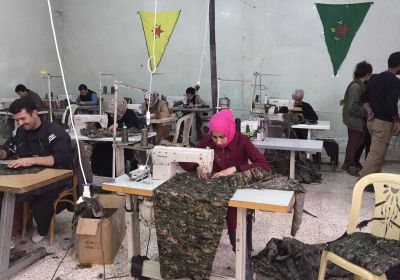
In July 2012, the residents Kobanê rose up against the regime of Bashar al-Assad, making it the centre of the liberated cantons of Rojava (Syrian Kurdistan). In the rest of Syria, various forces — including the regime, the so-called "Islamic State" and the al-Qaeda-affiliated Nusra Front have turned the country into a battleground, fuelled ethnic and religious divisions and competed with each other in cruelty to civilians. By contrast, in Rojava's liberated cantons a new society based on participatory democracy, ethnic equality, religious tolerance and feminism is emerging. -
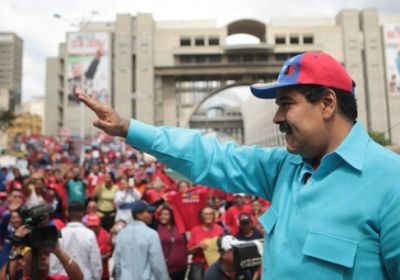
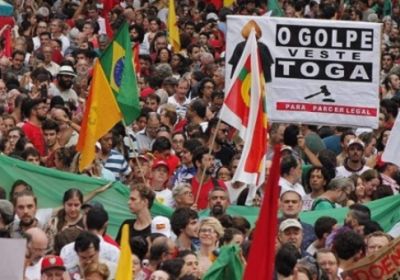
On December 6, Venezuela held its 20th election in 17 years and one of its most difficult yet. With the opposition upping the ante in terms of media attacks and sabotage, 2.5 years of economic difficulties and since the passing of revolutionary leader Hugo Chavez, not to mention a recent right-wing victory in Argentina, the left and right around the world turned anxious eyes to Venezuela. -
Venezuela's Bolivarian Revolution will face its toughest challenge yet this Sunday, when voters go to the polls to elect a new National Assembly. Amid an economic crisis marked by currency instability and inflation, many Venezuelans are understandably going to be thinking hard before casting what would be seen as a vote in support of President Nicolás Maduro. -
Syria can seem an endless black hole of misery. But in the northern, largely Kurdish region of Rojava, it is also the scene of a profoundly democratic and humanist revolution, which places the rights of ethnic minorities and women's liberation at its centre.
-
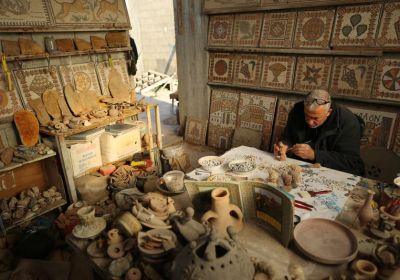
Ownership of the land of Palestine is hotly contested, so it is little surprise that the Earth itself is often the first casualty of Israel's occupation.
-
The United States National Security Agency (NSA) accessed the internal communications of Venezuela's state-owned oil company, PDVSA, and acquired sensitive data it planned to exploit to spy on the company's top officials, a highly classified NSA document has revealed. It shows the operation was carried out in concert with the US Embassy in Caracas. The March 2011 document, labelled “top secret” and leaked by former NSA contractor-turned-whistleblower Edward Snowden, was reported exclusively by a parternship between TeleSUR and The Intercept. -
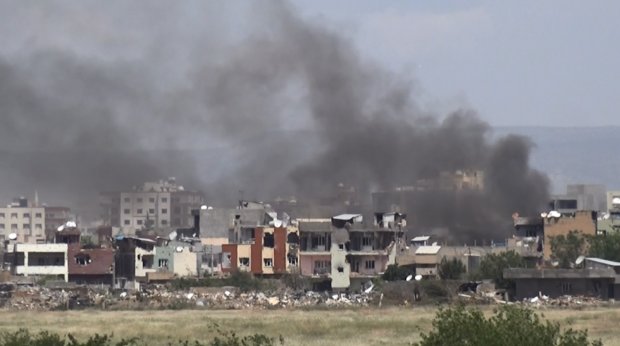
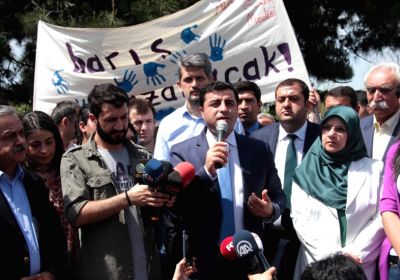
Emergency protests were held in Sydney and Melbourne on November 14 against the Turkish government's military bombardment and siege of the Kurdish city of Silvan. Since November 2 parts of the town of Silvan have been occupied by the Turkish military. There is a 24-hour curfew and civilians are not allowed to leave for basic necessities, to take the wounded to hospital or bury the dead. Armoured cars and helicopters have been machine gunning parts of the city. -
April 24, 1915, was the beginning of the slaughter 1.5 million Armenians by the Ottoman Empire in what is now Turkey. This set a dangerous precedent that has been copied and expanded upon by later despotic governments. Despite its morbid place in world history, governments around the world, including major international powers, refuse to acknowledge that it ever happened. -
The entire northern province of Sri Lanka, an area mainly inhabited by Tamils, was "brought to a standstill" on November 13, according to the Tamilnet website, in support of Tamil prisoners on hunger strike for their freedom. All private and public activities, except for medical services, came to a standstill. Students did not attend schools. Roads remained deserted except for the army and police. -
Israeli military jeep broadcasting threat to gas residents, Aida refugee camp, Bethlehem, occupied West Bank, October 29. Still from video by Yazan Ikhlayel.
Israel has introduced dramatic new restrictions on Palestinians living in the city of Hebron in response to recent violence and mass resistance in the occupied West Bank.
-
PKK fighters driving a tank into Shingal. The town of Shingal (in Kurdish or "Sinjar" in Arabic) in Iraq's Nineveh Province was declared liberated from ISIS forces, which had held the town since last year, on November 13. The town is mostly inhabited by the Kurdish religious minority community of Yazidis. The town was liberated by Iraqi Kurdish forces, fighting alongside Yazadi militias and fighters from the left-wing Turkish-based Kurdish Workers Party (PKK).
-
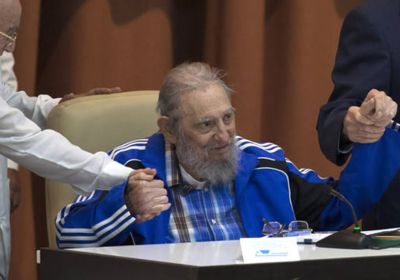
Angolan President Jose Eduardo dos Santos recognised and thanked Cuba on November 12 for its important support in achieving national independence 40 years ago. Commemorating four decades of independence from colonial powers, dos Santos invited a Cuban delegation to honour the historical events that led Fidel Castro to deploy 36,000 troops to defend Angola from a US-back military invasion by forces of apartheid South Africa.