
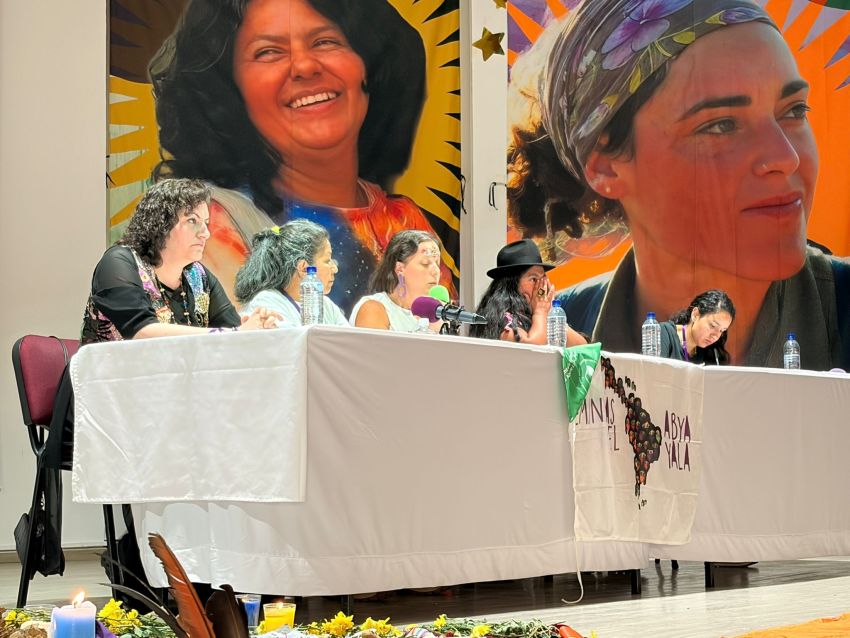
“From Abya Yala to Kurdistan”, was the theme of an autonomous, grassroots, First Nations- and women-led international conference, held from February 11–15, in Bogotá, Colombia.
About 400 women from diverse movements, communities and territories — across Abya Yala (an indigenous term meaning a decolonised Latin America) and the world — came together to weave connections, share knowledge and sow seeds for the future.
United by a commitment to resistance and renewal, the gathering, which was organised by Network Women Weaving the Future, created a space for dialogue, solidarity and the collective imagining of pathways toward liberation.
Completely volunteer-based, with translators and food provided and accessible to all, it showed what could be possible in Australia and what we can do together to challenge the three pillars driving the destruction of our Mother Earth: colonialism, capitalism and patriarchy. These interconnected forces sustain a model of exploitation that prioritises profit and power over life itself.
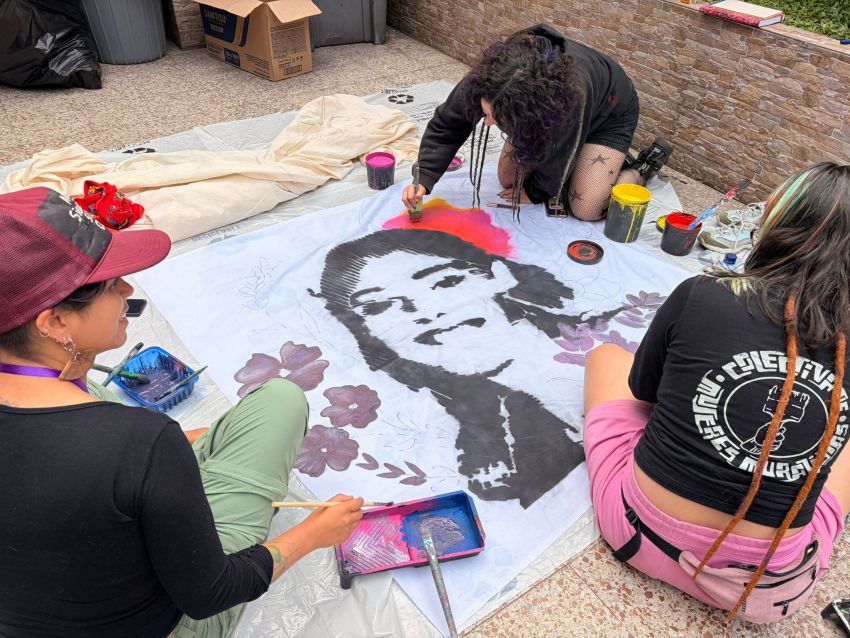
Responding to these challenges, women came together to plant seeds of resistance, to reclaim land, defend our bodies and imagine new futures rooted in care, autonomy and collective strength.
The purpose of the gathering was to build systems from below and create a space to debate, inform and exchange ideas and strategies to confront extractivist and land-destroying colonial systems.
Women shared experiences of struggle and resistance, explored common challenges and searched for collective solutions.
It was also a space to reclaim women’s body-territory in the face of ongoing attacks, while drawing strength from the spirit and legacy of ancestral women — past, present and future. Through dialogue, reflection and solidarity, participants sought to weave pathways forward, nurturing hope and resistance in the face of the destruction of life.
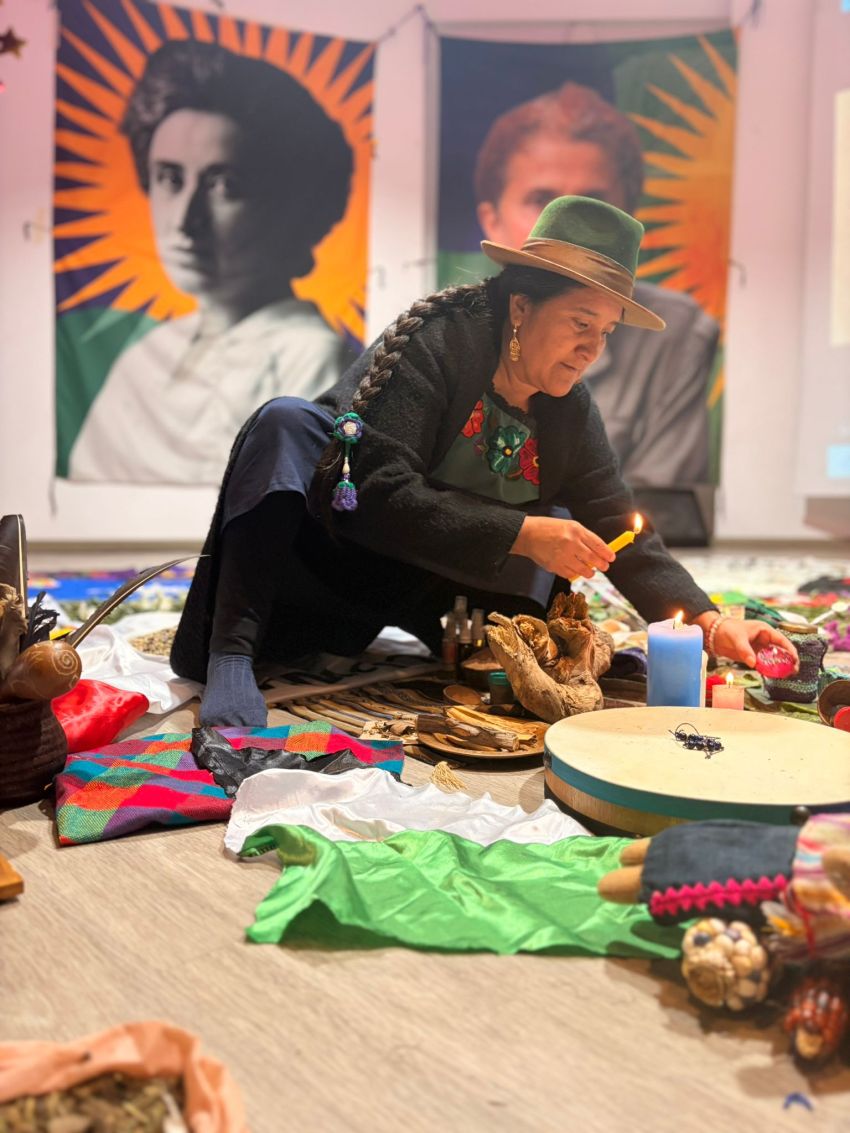
The first day began with a ceremony led by spiritual authorities from the Mapuche, Quechua, Lenka, Aymara and other indigenous nations.
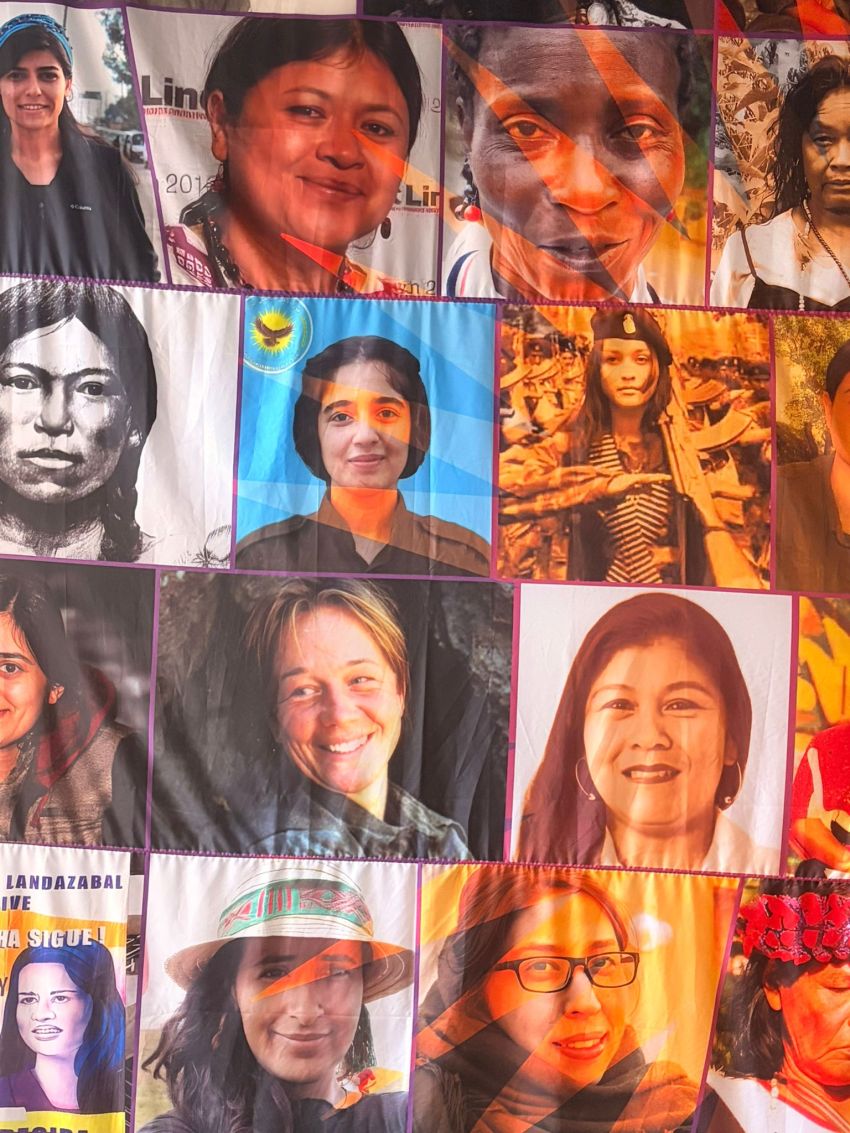
The smoke from palo santo (sacred wood) filled the air. Banners of martyrs hung from the walls. Among them was: Berta Cáceres, the Lenca indigenous defender from Honduras, murdered for protecting her land and rivers; Rosa Luxemburg, whose revolutionary ideas still ignite conversations about socialism, democracy and freedom; Sakine Cansız, a pioneering founder of the Kurdish women’s movement and a symbol of unwavering resistance; and Alina Sánchez, the Argentine internationalist who joined the Kurdish freedom struggle.
Their memories moved through the space like quiet currents of strength, reminding us that the fight for liberation stretches across generations and borders.
Sánchez’s mother, Şehîd Legerîn Çiya, spoke. With quiet strength, she shared her pride in seeing her daughter’s dreams take root far beyond her horizons. As she spoke, ritual and remembrance unfolded around the circle: smoke curled gently into the air, water was poured in blessing, seeds were placed at the centre and candles were lit for those who had been murdered, disappeared or imprisoned.
Whilst the energy was solemn, there was power in the room. By the end of the night, we all embraced each other, sang and danced, determined not to be crushed by the systems that wish to oppress us.
After four days together, the gathering had become more than a space for sharing experiences. It was a place where dreams and needs intertwined, where perspectives met in solidarity and where new bonds of comradeship were woven.
The women recognised that to walk their territories with strength means walking together connected through networks of care, resistance and collective purpose. It means planting ancestral seeds in the soil, defending rivers and water sources, forming cooperatives rooted in solidarity and nurturing new generations with the knowledge and courage to continue the struggle.
Throughout the gathering, women participated in workshops that explored culture, education, economics, health, communication, self-defence, Jineology (Kurdish feminist philosophy) and democratic confederalism.
Together, participants reflected on how colonialism, capitalism and patriarchy continue to erode cultures, control knowledge, exploit labour and attack the body and land.
Discussions emphasised the need to reclaim and organise culture through art, archives, language revitalisation and community memory.
In the education sessions, women spoke about unlearning colonial and patriarchal systems by creating their own curricula, community media and spaces of collective learning rooted in ancestral knowledge.
Conversations on economics focused on women’s financial autonomy through cooperatives, rural economies and communal forms of production that prioritise care over profit.
Workshops on health highlighted the importance of defending traditional medicines, recognising the healing knowledge of grandmothers and building community-centred wellbeing practices that nurture physical, emotional and spiritual health.
Participants also explored the power of autonomous communication and free media to counter misinformation, while discussions on self-defence expanded the concept beyond violence to include defending bodies, languages, territories and collective memory.
The knowledge shared throughout these workshops will not remain within the walls of the conference. Participants committed to carrying these ideas back to their communities, creating local networks, developing educational tools, establishing women-led cooperatives, building independent media and forming spaces of collective care and political learning.
By planting these seeds in their own territories, the women aim to strengthen future movements and continue building systems of autonomy that support, protect and empower women for generations to come.