
Legal experts, diplomats and international observers are concerned about a growing push in Washington to designate the Polisario Front — the independence movement at the forefront of the struggle to end Morocco’s illegal occupation of Western Sahara — as a terrorist organisation.
In a March 14 letter to the United States Senate Foreign Relations Committee, the New York–based Global Monitoring Centre (GMC) urged lawmakers to exercise caution in considering Senate Bill S.4063 and related legislative efforts targeting the Sahrawi liberation movement.
But does the Polisario Front meet any credible definition of a terrorist organisation? Or is this label being politically constructed to serve other interests?
The GMC argues that the proposed designation represents a sharp departure from longstanding bipartisan US policy on Western Sahara, which recognises the Sahrawi people’s right to self-determination.
Democratic Senator Edward Kennedy, who died in 2009, and Republican Senator James Inhofe, who died in 2024, were among the most prominent advocates of this principle.
Inhofe consistently emphasised that “the Sahrawi people deserve the right to freely choose their own destiny”. Their bipartisan stance reflected a broader understanding that Western Sahara’s future must be determined through a free and genuine referendum.
That position was not merely rhetorical. Inhofe ensured that the 2004 US-Morocco Free Trade Agreement explicitly excluded Western Sahara — recognising its unresolved legal status.
Today, that consensus is being challenged. Advocacy by figures such as Republican Senator Ted Cruz, alongside proposed legislation from Republican Congress representative Joe Wilson, signals a shift that risks undermining decades of US diplomatic consistency and commitment to international law.
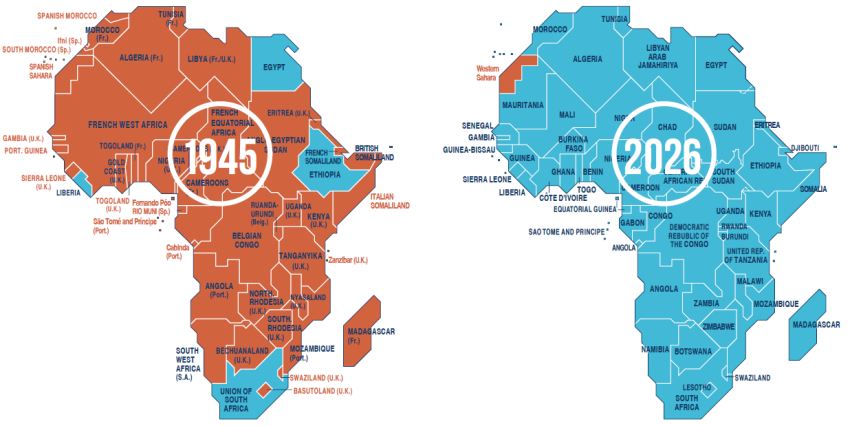
Western Sahara remains classified by the United Nations as a Non-Self-Governing Territory. Spain is still regarded as the de jure administering power, while Morocco controls much of the territory as an occupying force.
Under international law, the Sahrawi people retain an inalienable right to self-determination — one that is meant to be exercised through a long-promised UN-backed referendum. This vote is intended to include Sahrawis across all geographies: those in occupied territories, refugee camps and liberated zones.
The GMC warns that attempts to label the Polisario as a terrorist group risk derailing this process entirely, replacing a legal and diplomatic framework with a politicised narrative.
No basis for terrorist designation
Crucially, the Polisario Front has never been designated as a terrorist organisation by any major international body — not the UN, the African Union, the European Union nor the US itself.
On the contrary, the Polisario is widely recognised as the legitimate representative of the Sahrawi people. It is a central party to UN-led negotiations and a key actor in the long-standing Organisation of African Unity-UN settlement process.
This raises an obvious contradiction: if the Polisario were truly a terrorist organisation, why has the international community — including Western governments — engaged with it diplomatically for decades? Why have Moroccan leaders, such as King Hassan II and King Mohammed VI, entered into direct negotiations with its representatives?
The answer is straightforward: the terrorism label does not reflect reality — it reflects politics.
Kamal Fadel, the Polisario representative to Australia, describes the current push as part of a long-standing disinformation campaign.
“In a world awash with disinformation, few liberation movements have been as deliberately misrepresented as the Polisario Front,” he told Green Left.
Fadel said the accusations have shifted over time depending on geopolitical trends:
“During the Cold War, they said we were communists. Later, they claimed links to al-Qaeda. Now, they try to associate us with Iran and Hezbollah … When asked for evidence, they provide none.”
This pattern, he said, reveals a strategy not of evidence-based assessment, but of narrative manipulation designed to delegitimise a liberation movement and obscure the underlying issue: Morocco’s continued occupation of Western Sahara.
Liberation movement
Founded in 1973, the Polisario Front emerged as an anti-colonial movement against Spanish rule. It has since evolved into the internationally recognised representative of the Sahrawi people, a status affirmed by UN General Assembly Resolution 34/79 and the African Union, where the Sahrawi Arab Democratic Republic holds full membership.
Over more than five decades, there is no verified record of the Polisario engaging in terrorism, affiliating with extremist networks or targeting civilians.
Instead, the movement has demonstrated alignment with international legal norms. It has ratified the Geneva Conventions, adhered to Additional Protocol I and committed to the African Union’s Convention on the Prevention and Combating of Terrorism. Its armed wing, the Sahrawi People’s Liberation Army, operates under the framework of international humanitarian law.
These are the hallmarks of a national liberation movement operating within recognised legal boundaries.
Mislabelling resistance
The attempt to brand the Polisario Front as terrorist is not without precedent. Across Africa, liberation movements were frequently labelled as terrorists by colonial powers and their allies.
The Zimbabwe African National Union and Zimbabwe African People’s Union were dismissed as “communist terrorists”. Algeria’s National Liberation Front was similarly branded by France, even as it led the struggle for independence. Today, both are recognised as legitimate movements that played central roles in ending colonial rule.
The Polisario Front, many argue, belongs to this same historical tradition.
Beyond legal and historical concerns, the GMC warns of broader geopolitical risks. Escalating tensions between Morocco and Algeria — already engaged in a growing arms buildup — could be further inflamed by politicised designations.
Self-determination
A peaceful resolution remains possible. The long-delayed referendum on self-determination offers a clear path forward that could bring stability, economic opportunity and certainty to the region.
Undermining that process through unilateral political moves risks prolonging conflict rather than resolving it.
At its heart, this debate is not about terrorism — it is about self-determination.
Labeling the Polisario as a terrorist organisation does not address extremism. As Fadel puts it: “It is about silencing resistance, criminalising solidarity and reshaping the narrative to suit geopolitical interests.”
[Ron Guy is an Australian Western Sahara solidarity activist based in Naarm/Melbourne.]