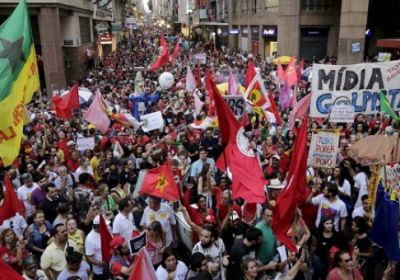
Brazilian workers were planning May Day rallies ahead of May 1 to defend democracy against what is being cast as an attempted parliamentary coup against President Dilma Rousseff. The move came as representatives from both sides of Brazil’s political divide made their case for or against impeachment on April 28.
A special Senate committee has been charged with reviewing the request to see the president removed from office. It will hear presentations from experts invited by both sides of the impeachment debate.

 Photo: Albaciudad.org.
The Venezuelan Supreme Court unanimously ruled on April 11 that a controversial “amnesty law” passed by the country's right-wing opposition-controlled parliament is unconstitutional, Venezuela Analysis said the next day.
Photo: Albaciudad.org.
The Venezuelan Supreme Court unanimously ruled on April 11 that a controversial “amnesty law” passed by the country's right-wing opposition-controlled parliament is unconstitutional, Venezuela Analysis said the next day.
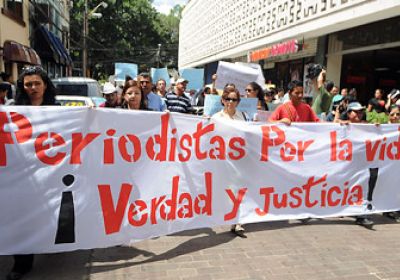
 Photo: TeleSUR.
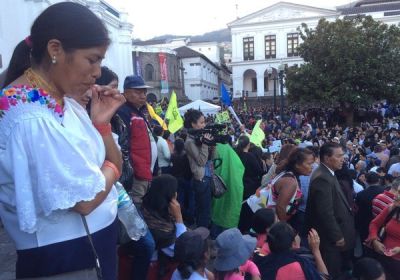
International delegations from more than 20 different countries gathered with Honduran social movements on April 14 to demand justice for Berta Caceres, the environmentalist and indigenous activist assassinated in the Central American nation on March 3.
Photo: TeleSUR.
International delegations from more than 20 different countries gathered with Honduran social movements on April 14 to demand justice for Berta Caceres, the environmentalist and indigenous activist assassinated in the Central American nation on March 3.
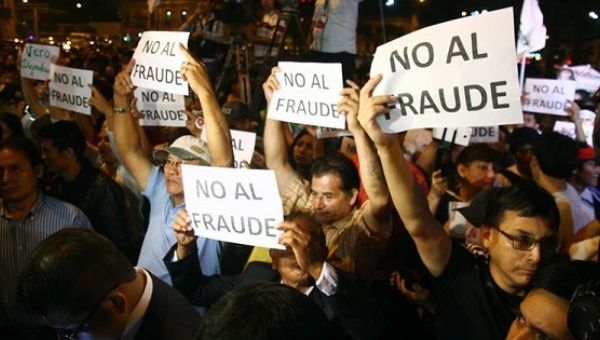 Supporters of leftist candidate Veronika Mendoza protest electoral fraud. Lima, April 10. Photo: EFE.
Peruvian left-wing presidential candidate Veronika Mendoza came third in the first round of Peru's presidential elections on April 10, behind former World Bank economist Pedro Pablo Kuczynski and Keiko Fujimoro, the daughter of a jailed ex-president.
Supporters of leftist candidate Veronika Mendoza protest electoral fraud. Lima, April 10. Photo: EFE.
Peruvian left-wing presidential candidate Veronika Mendoza came third in the first round of Peru's presidential elections on April 10, behind former World Bank economist Pedro Pablo Kuczynski and Keiko Fujimoro, the daughter of a jailed ex-president.