-
More than 2 million Bolivians have been lifted out of extreme poverty in the past decade since President Evo Morales's government came to power. Bolivia's economy is on course to grow by 5% this year, placing it among the top performers in Latin America. It is one sign of Bolivia's rapid economic transformation. Another indicator is falling poverty rates. When Morales took office in 2006, the rate of extreme poverty was 38.2%. This year, the figure is 16.8%. -
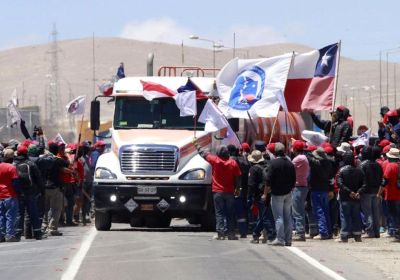
The Bolivian mining cooperative protests and the August 25 killing of the Bolivian Vice-Minister of the Interior Rodolfo Illanes by cooperative miners requires us to question our assumptions about the cooperatives.
-
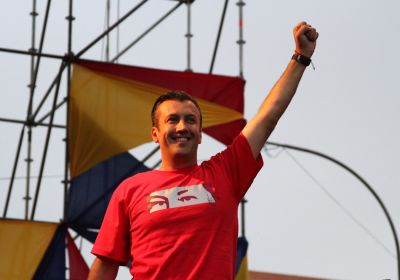
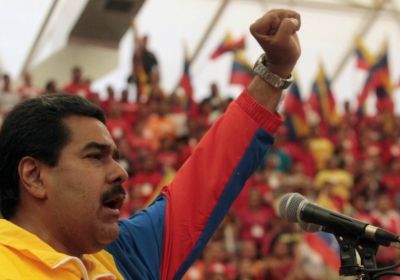
Thousands of Venezuela's right-wing opposition took to the streets in Caracas on September 1 in a menacing march labelled “the taking of Caracas”.
-
The statement below was released by the Philippines-Venezuela Solidarity Network (PhilVenSol) on August 31. It comes after calls from Venezuela for international solidarity against new US-backed destabilisation against the elected government and revolutionary movement.
-
United States State Department spokesperson John Kirby said on August 31 that Brazil's democratic institutions had acted within the country's constitutional framework when the Senate voted to oust elected president Dilma Rousseff and install Michel Temer as the new leader. The US defence of the process that removed Brazil's elected president stands in contrast to many critics, including several Latin American governments, who have labelled it an institutional coup. -
Brazil's de facto president Michel Temer was sworn in on August 31, after the country's Senate voted to impeach suspended President Dilma Rousseff.
-
After the historic announcement on August 24 that negotiations have concluded in the Colombian peace process between the Colombian government and the left-wing Revolutionary Armed Forces of Colombia (FARC), here are the five key points that have been agreed on.
-
A groundbreaking peace deal has been signed between the government and left-wing Revolutionary Armed forces of Colombia (FARC) rebels. But while the more than 50-year-long war is finally over, difficult times still lay ahead to fully realise the promise of peace in the South American nation.
-
“I am absolutely convinced that history will talk of the Rio de Janeiro before the Games and the much better Rio de Janeiro after the Olympic Games,” said Thomas Bach, president of the International Olympic Committee.
-
The majority of Colombians say they will vote “Yes” in a plebiscite to affirm the peace deal ending nearly 50 years of war between the Colombian government and the main rebel group, the left-wing Revolutionary Armed Forces of Colombia (FARC), a new poll has revealed.
-
Colombia has just emerged from 50 years of civil war, but its future is still uncertain. Amid the optimism prompted by the peace deal between the leftist Revolutionary Armed Forces of Colombia (FARC) and the government of President Juan Manuel Santos, it is easy to assume the slaughter of trade unionists and other activists is a thing of the past. However, 534 people were murdered from 2011 to last year — 134 of those trade unionists — according to Justice for Colombia, the British trade union-based campaign against paramilitary violence against the Colombian labour movement. -
With the highest record of Olympic medals in Latin America, Cuba owes its sports achievements to its socialist revolution. The devastating US blockade on Cuba, which has lasted for more than 50 years and includes restrictions on the nation's sporting industry, has not stopped the island from becoming the most successful Latin American country in Olympics history.