-
Over the past three years Christian Super, a not-for-profit industry fund, has engaged in dialogue with Australian company Wesfarmers over its sourcing of phosphate rock from Western Sahara. Phosphate is used in its production of agricultural superphosphate. “Western Sahara is a disputed territory where human rights abuses have been reported,” said Tim Macready, chief investment officer for Christian Super. “Companies doing business in this area may unwittingly aggravate the conflict or become complicit to oppression.” -
This episode features Beyond Zero Emissions' Terry McBride plus footage of the campaign for big solar in Port Augusta, South Australia.
-
This election year has seen some of the most extreme weather in the US for some time. Heat records were topped in many cites for a prolonged period. The most devastating drought in decades has ruined crops in a large area of the country. Yet there has been hardly a peep from either Barack Obama or Mitt Romney about global warming and climate change. Both have championed dangerous new methods of drilling for oil and natural gas, and promoted the very dirty tar sands oil from Canada. -
Johnny Mao, Brit Schulte and Ben Silverman detailed in the US Socialist Worker the case of three activists in the United States north-west who are in jail for refusing to testify before a grand jury. On October 17, Leah-Lynn Plante -- the third to be jailed -- was released. For more information, visit www.freeleah.org. * * * -
Tommy Docherty, the legendary wit and former manager of Manchester United, once quipped after his team had suffered a humiliating defeat, “We lost 4-0 and frankly we were lucky to get the nil”. The Tories in Scotland know just how he felt, for they are so hated that out of 56 MPs they have just one, and they were lucky to get that!
-
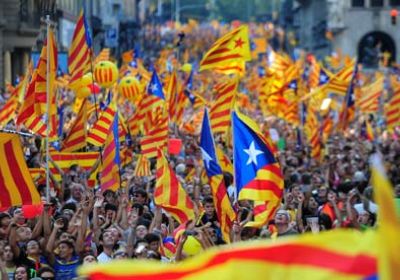
Two recent events dramatised the state of economy and politics in the Spanish state: the Red Cross announced that this year the takings of its annual Flag Day would go to fight poverty and social exclusion in Spain, and education minister Jose Ignacio Wert told the national parliament that changes to the national education syllabus were aimed at “Spanishing” students in Catalonia. The Red Cross decision came as a shock across the country. People knew things were bad, but that bad? -
At least 50,000 protesters rallied in Athens on October 9 to tell visiting German Chancellor Angela Merkel she was not welcome. Thousands of police officers cordoned off whole sectors of the city to prevent demonstrators embarassing Merkel, though police still detained more than 50 people during the day. Even in unrestricted areas pedestrians were stopped and searched. But the crowds made their message clear, gathering outside parliament and chanting: “History is written by the disobedient.”
-
Alejandro Fierro from Rebelion spells out five key lessons to be taken from the Venezuela's presidential elections, which were one by President Hugo Chavez with 55% of the vote. It was translated by Tamara Pearson from Venezuela Analysis. * * * 1. Venezuela is an authentic democracy
-
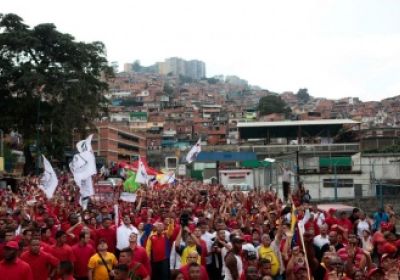
Nothing quite prepares you for a first visit to Venezuela ― especially when the country is polarised between two very different visions for the future. This is how it was just before the October 7 presidential elections, which socialist President Hugo Chavez won with 55% of the vote in the largest turnout, more than 81%, in Venezuelan history. -
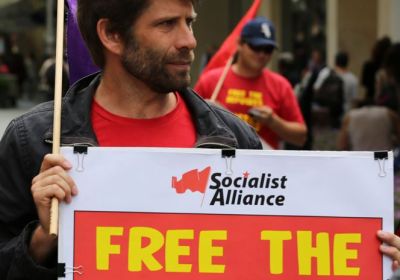
On October 7, the Socialist Alliance adopted as a key focus for its next federal election campaign a call to bring the mining industry and the banks under public/community ownership and control, so they can be run in a way that respects Aboriginal rights, the environment and social justice. The urgent need to address climate change alone demands that these industries be immediately taken out of the hands of the billionaires and their global corporations and operated as not-for-profit public services under the democratic control of the majority.
-
Venezuela's socialist President Hugo Chavez has won the October 7 Venezuelan elections with over 54.44% of the vote against 45% of the vote for right-wing opposition candidate Henrique Capriles. The National Electoral Council's Tibisay Lucena announced more than 80% of the 19,119,809 registered voters in Venezuela participated in the election. -
Forest protection group Groundswell released the statement below on October 3. * * * A group of activists gathered at the federal government's community cabinet forum on October 3 in Launceston to send a clear message to the Labor government that the Tarkine needs an emergency world heritage listing.