-
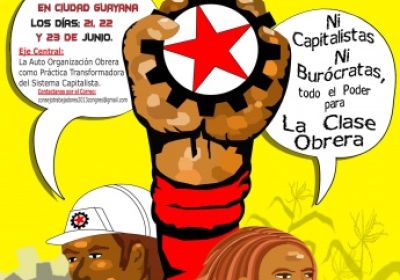
Activists from across the Venezuelan labour movement met last weekend for the country’s first ever Workers’ Congress, where workers discussed workplace democracy and the construction of socialism. The congress, billed “I Workers’ Congress: Balance and Challenges of Worker Control and Workers’ Councils for the Construction of Socialism”, was organised by the National Worker Control Movement and saw the participation of over fifty groups from factories across the country. -
The Conga gold and copper mining project is becoming one of Latin America’s most significant environmental battlefronts. It is pitting almost the entire population of the northern Cajamarca region of Peru against the invasive forces of the multinational mining industry and its governmental puppets in Lima. In recent years, there have been many strikes and protests. This has led to hundreds of arrests, scores of injuries and several protester deaths.
-
The eight-storey Rana Plaza collapsed in Dhaka, Bangladesh, during working hours on April 24. The official death toll stands at 1129. However, workers’ rights groups believe the number could be higher. Another 2000 workers were injured in the collapse, many losing limbs.
-
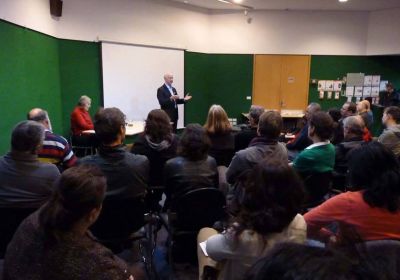
About 90 people gathered in the Coburg library on June 6 to oppose the Moreland Council’s plans for a mini-CBD in the central Coburg shopping centre. The meeting was organised by the Save Coburg Residents Network which formed in January to oppose the council’s C123 planning amendment. Most residents only discovered the plans a couple of weeks before the deadline for public submissions. The plan includes a row of 10-storey buildings along both sides of Bell St on the western entrance to the shopping centre and 10-storey buildings along one side of Sydney Road to the north. -
Investigative journalist Glenn Greenwald speaks via Skype to the Socialism 2013 conference in Chicago regarding Edward Snowden's revelations about the NSA's mass surveillance program.
-
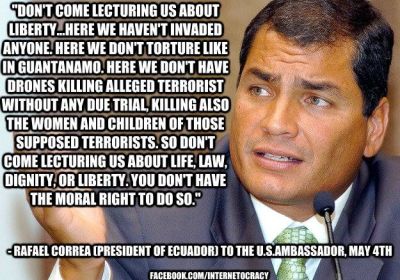
Faced with several days of overt threats from the Obama Administration and top senators threatening to revoke a key US-Ecuador trade pact if they dare to grant asylum to Edward Snowden, the Ecuadoran government has told the US what they can do with their frozen broccoli and fresh cut flowers, and has cancelled the pact themselves. -
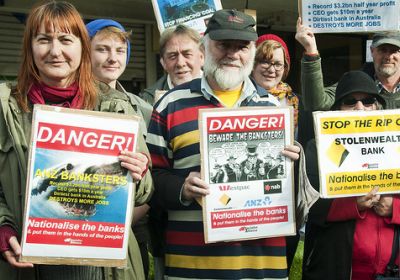
Australia's four biggest banks — the Commonwealth Bank, ANZ, NAB and Westpac — dubbed the "banksters", were condemned for crimes against people and the environment during a protest in Melbourne on June 29. Protesters marched to each bank, cordoned of the entrance to create a symbolic crime scene and read out a charge sheet. The action was called by the Socialist Alliance. Margarita Windisch, the Socialist Alliance candidate for the seat of Wills, argued the big banks, mines and energy companies should be nationalised and put under community control. -
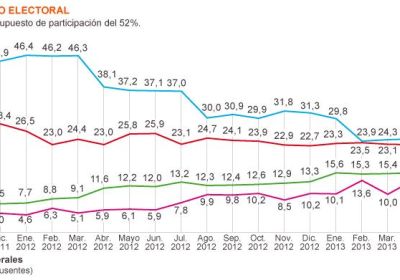
The latest opinion polls in the Spanish state have stirred concern in the elites, hopes on the left and storms of comment in the media. Nationally, they show the radical federation United Left (IU) closing the gap on the social-democratic Spanish Socialist Workers Party (PSOE). In the June Metroscopia poll, IU trailed just 4.7% behind the PSOE (16.8% to 21.5%). Regionally, Spanish social democracy’s decline is most advanced in Catalonia and Galicia. In Madrid city council IU would jump from 10.7% to 20.5% of the vote, just 1.6% behind the PSOE. -
The Unified Workers Central (CUT), other trade union confederations and the Movement of Landless Rural Workers (MST) decided on June 25, to jointly organise a protest on July 11 across the entire country. They also decided on the items to present to Brazilian President Dilma Rousseff. The planned strikes and demonstrations will aim to unleash the agenda of the working class in Congress and in ministries, as well as building on and promoting the agenda that has emerged from the recent street protests.
-
The June 27 general strike in Portugal, the fourth since the country became an economic protectorate of the European Commission, European Central Bank and International Monetary Fund “troika” in 2011, was marked by several important firsts. It was the largest general strike to date, with 80%-100% support from public sector workers and a clear rise in support from private sector workers.
-
Frances O’Grady, head of the British Trade Union Congress (TUC), set the tone in the opening session of the People's Assembly in London on June 22, declaring: “The Bullingdon boys are waging class war against ordinary people. We will retaliate, it is time to fight back against a government of millionaires.”
-
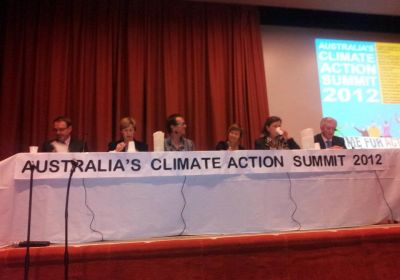
About 400 activists from across Australia converged on Sydney over June 21-23 for Australia’s Climate Action Summit 2013. As the science of climate change becomes ever more alarming, and as the refusal of business and political elites to act becomes ever more glaring, the activists met to share ideas and strategies to build a strong movement for a safe climate.