-
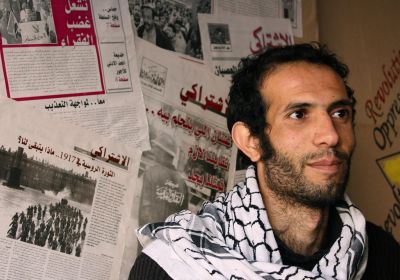
Basque independence activist Arnaldo Otegi has been banned from running as a candidate in an upcoming regional election in the Spanish-controlled Basque Country. An electoral authority ruled on August 24 that Otegi, who was released from jail in March, could not run as a candidate for left-wing Basque party EH Bildu due to a conviction of alleged links to terrorism. -
A groundbreaking peace deal has been signed between the government and left-wing Revolutionary Armed forces of Colombia (FARC) rebels. But while the more than 50-year-long war is finally over, difficult times still lay ahead to fully realise the promise of peace in the South American nation.
-
French philosopher Guy Debord's The society of the spectacle plays out on newer, modern terms at a Moreland Says No To Racism rally in May.
-
“I am absolutely convinced that history will talk of the Rio de Janeiro before the Games and the much better Rio de Janeiro after the Olympic Games,” said Thomas Bach, president of the International Olympic Committee.
-
With calls for a royal commission into the banking sector growing, the argument for a new "people's bank" to challenge the domination of the big banks is gaining strength. A number of recent events have propelled community anger at the "Big Four" — Commonwealth Bank (CBA), NAB, Westpac and ANZ — to the point that a royal commission seems increasingly likely.
-
After months of protests, mass meetings and failed talks with the University of Sydney administration, about a dozen Sydney College of the Arts (SCA) students started an occupation of the Dean's office at its Callan Park campus in Rozelle on August 22.
-
Treasurer Scott Morrison's speech to a Bloomberg business breakfast in Sydney on August 25 echoed previous warnings by Prime Minister Malcolm Turnbull that Australians were heading for economic trouble if the new parliament fails to pass the government's "omnibus" budget package. -
An Australian version of an open letter from Asian Americans in solidarity with Black Lives Matter has been circulating on social media. “Letters for Black Lives” is a project that began in the United States to initiate cross-generational conversations between young Asian Americans and their families about anti-Blackness and police violence. The original letter has since gained 200 contributors, 30 translations, and dozens of audio and video recordings. -
Prime Minister Malcolm Turnbull has announced plans to reduce welfare payments for the poorest and most economically disadvantaged people in Australia. The cuts are part of a proposed package of $6.5 billion savings in the federal budget that parliament is still to vote on. Turnbull has proposed axing the energy supplement fund that all welfare recipients receive. This fund is worth between $4.40 and $7.05 a week, which might not sound like much, but is a lot for people who are already living below the poverty line. -
If we needed any more proof that Prime Minister Malcolm Turnbull's plebiscite on equal marriage is a spurious delaying tactic we got it on August 21 when the media reported that the vote will now be pushed back to February 2017, some 18 months after it was first proposed. -
This is the Australian version of the open letter created by Letters for Black Lives, an ongoing project for people to create and translate resources on anti-Blackness for their communities in solidarity with #BlackLivesMatter. * * * Mum, Dad, Uncle, Auntie, Grandfather, Grandmother: We need to talk. You may not have grown up around people who are Black, Aboriginal or African but I have. Black people are a fundamental part of my life: they are my friends, my classmates and teammates, my roommates, my family. Today, I'm scared for them. -
One of the less prominent aspects of Malcolm Turnbull's federal budget is the plan to shift another 30,000 Disability Support Pension (DSP) recipients onto Newstart umemployment benefits. This move has been defended as a cost-saving measure to help fund the National Disability Insurance Scheme (NDIS). It follows the tightened of the eligibility criteria for DSP that occurred in 2011 under a federal Labor government. Since then, the number of DSP recipients has flatlined at around 800,000.