
This statement was released by Lock the Gate on March 7
***
The Lock the Gate Alliance launched its federal election campaign today by taking demands for national law reform on coal and gas mining to federal parliamentarians across Australia.
The “Call to Country” incorporates a passionate plea for protecting Australians and the environment from the current onslaught of irresponsible mining as well as a program of legislative reform to address this issue.
-
-
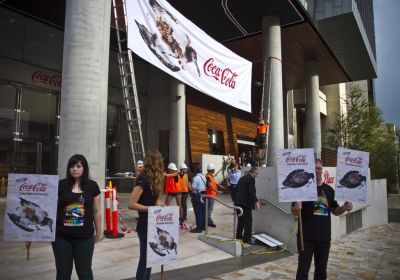 DARWIN — Coca-Cola has forced the Northern Territory government to scrap its 10c deposit recycling scheme. The scheme was introduced in January last year, but Coca-Cola, Schweppes Australia and Lion Pty Ltd took the NT government to the federal court. The federal court ruled on March 4 in favour of the beverage companies, which challenged the recycling scheme on the basis that it was “costly and ineffective” and added 10 cents to the retail price. Coca-Cola said "Australian families do not deserve to be slugged with yet another cost of living increase”.
 -
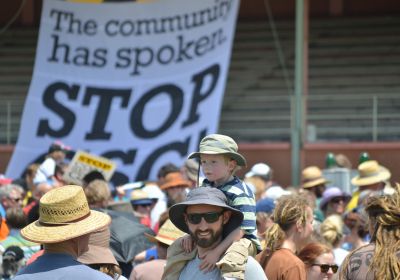
The arrest on February 6 of an Indigenous elder and another Githabul traditional owner on a coal seam gas (CSG) blockade should act as a siren call to all those concerned about our future.
-
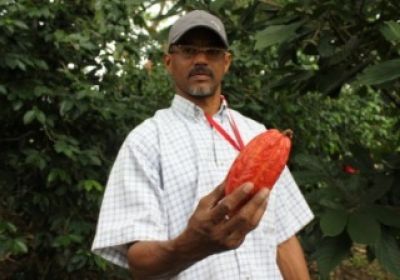 It’s a warm night in the small village of Chuao in Venezuela. Dozens of children are playing in the square in front of the old colonial church, and a local man, beating a drum he holds between his knees, sings: “This is the taste of my cocoa. This is what we have, we black people of Chuao.” The people of Chuao, descendants of Africans brought to Venezuela’s coast as slaves by the Spanish, have been growing cocoa for more than 400 years.
 -
It's just about impossible to watch a commercial TV channel anywhere in Australia without being assaulted by slick mining company ads telling us how good they supposedly are for the community. Incredible amounts of money are being spent on these brainwashing campaigns. One set of these advertisements more specifically targets communities that are resisting the onslaught of the coal seam gas (CSG) miners, particularly in precious water catchment areas and prime food producing regions. These ads are often more targeted in their messaging, but they have been caught out lying.
-
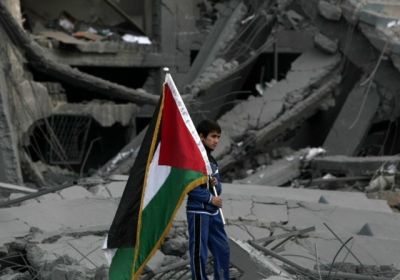 Renowned Jewish-American academic and author Noam Chomsky visited the Gaza Strip over October 25-30. The article below, on the suffering of the Gazan people, is areprinted from www.chomsky.info. * * *
 -
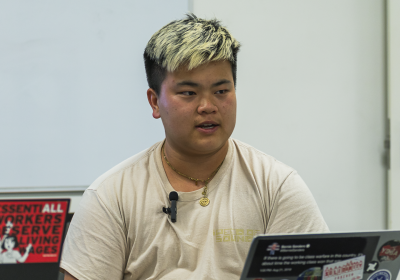
This episode focuses on feminism's resurgence and Venezuela's unfolding revolution. It includes activist news on Stop CSG protests, Global Noise protests, plus Carlo Sands on the European Union's Nobel Peace prize win, and a performance by 1000 eyes at Occupy.
-
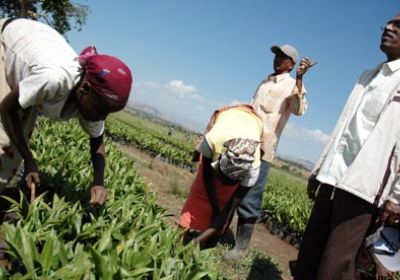 The people of the west African nation of Guinea suffer high rates of poverty and malnutrition. In some of Guinea’s regions, more than 40% of people are food insecure. Yet overseas investors have bought 100,000 hectares of land in Guinea to grow soy and corn for export and biofuel production. A further 1.5 million hectares of Guinea’s farmland will soon be up for sale.
 -

This show has a special focus on Islamophobia, with the Green Left Report interviewing Mohamad Tabbaa who researches anti-Muslim discrimination, and Muslim community activist Rebecca Kaye, who challenge the politicians and corporate media's views.
-
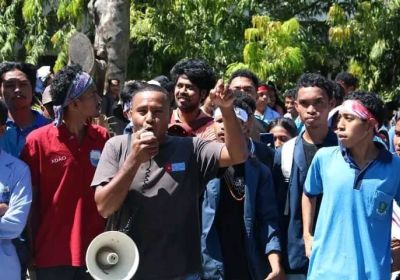
Special guests Bashana Abeywardane from Journalists for Democracy in Sri Lanka, Karl Hand from Community Action Against Homophobia, plus Carlo Sands takes on Gina Rinehart and Clive Palmer!
-
The article below first appeared at The Conversation on September 11.
-
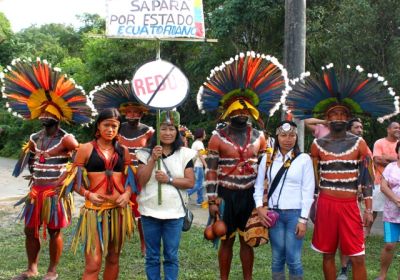 Everywhere you look these days, things are turning green. In Chiapas, Mexico, indigenous farmers are being paid to protect the last vast stretch of rainforest in Mesoamerica. In the Brazilian Amazon, peasant families are given a monthly “green basket” of basic food staples to allow them to get by without cutting down trees. In Kenya, small farmers who plant climate-hardy trees and protect green zones are promised payment for their part in the fight to reduce global warming.