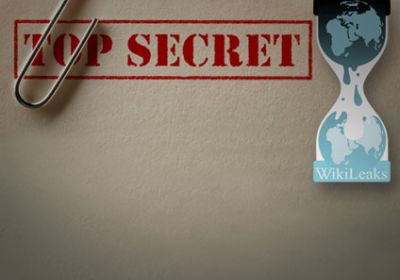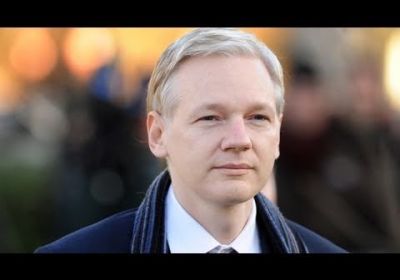
Following revelations that The New York Times liaised with the White House before publishing information supplied to it by WikiLeaks, the website’s editor-in-chief, Julian Assange, has revealed the British Guardian edited out “all sorts” of information before publishing US diplomatic cables.
-
-
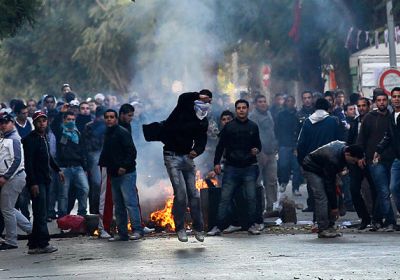
Disgraced Tunisian foreign minister Ahmed Ounaies resigned on February 13 from the interim government set up after dictator Zine El Abidine Ben Ali resigned on January 14 in the face of huge protests. The government has introduced fresh reforms as protests for democracy and economic justice continue in the north African country. Ounaies, a former diplomat whose appointment to the interim government was announced on January 27, described French foreign minister Michelle Alliot-Marie as “above all a friend of Tunisia”. -
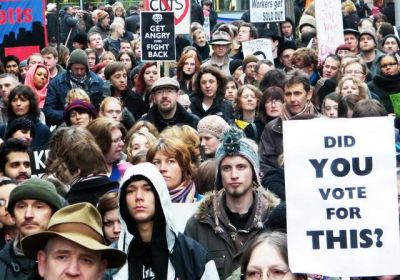
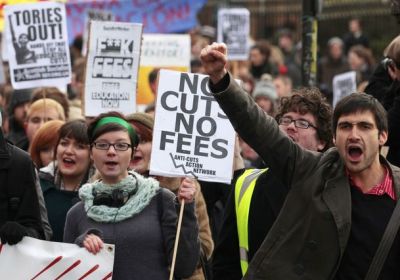
A rebellion is developing across Britain in the face of huge spending cuts by the Conservative Party-Liberal Democrat coalition government. The scale of the cuts is huge. The government is seeking to privatise huge swathes of the economy and hundreds of thousands of public sector jobs are under threat. They have also cut corporation tax, but sharply increased the goods and services VAT tax from 17.5% to 20%, which hits those on lower incomes hardest. By changing the inflation measure used to determine benefits and pensions, the government is plunging more people into poverty. -
If you intended to remedy the global collapse of fishing stocks, the last thing you would do is book a date with Japanese whalers at an upmarket seafood restaurant. Similarly, if you were writing a book on human rights, asking Kim Jong Il to write a chapter might undermine its credibility. By the same logic, inviting the world’s corporate and political elites to a ski resort in the Swiss Alps to discuss the growing disparity between the world’s rich and poor is distasteful and ludicrous.
-
The recent rebellion in the Arab world has not just shaken the foundations of authoritarian regimes across the north of Africa to the Arabian Peninsula. It has also shattered many of the myths and prejudiced stereotypes propagated by the corporate media and right-wing politicians about Arab peoples. -
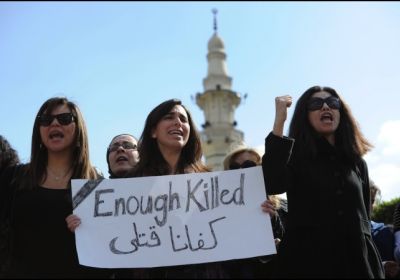
Sudan’s National Intelligence and Security Services (NISS) is still holding dozens of protesters arrested during and after the January 30 protests against Omar al Bashir’s government. The protests were inspired by the Egyptian revolution. The protesters are being held without charge. There are reports that many have suffered torture, including electrocution and sleep deprivation. Women detainees have been threatened with rape.
-
Climate change could lead to the disappearance of up to two-thirds of the world’s permafrost by the end of the century, the US National Snow and Ice Data Center (NSIDC) said on February 16. Should the Earth’s permafrost (or permanently frozen soil) thaw out to this extent, it would release huge amounts of greenhouse gases into the atmosphere — and make climate change even worse. NSIDC scientist Kevin Schaefer said the carbon released would be “equivalent to half the amount of carbon that has been released into the atmosphere since the dawn of the industrial age”.
-
An Ecuadorian court handed down a landmark verdict in an 18-year case against international oil-giant Chevron on February 14. The company was fined US$8.6 billion for polluting the Amazonian basin, and $900 million in costs. The case — perhaps the biggest environmental case in history — was filed on behalf of around 30,000 peasants, farmers, and indigenous Ecuadorians who have suffered the ill-effects of Chevron’s toxic legacy.
-
Leaked emails have revealed a plot by private internet security firms to bring down WikiLeaks. The plot was allegedly created on behalf of the Bank of America — the largest bank in the US. WikiLeaks editor-in-chief Julian Assange has said Bank of America will be the subject of future leaks. Computer-hacker group Anonymous revealed the plot after stealing 50,000 internal emails from internet security company HBGary Federal. -
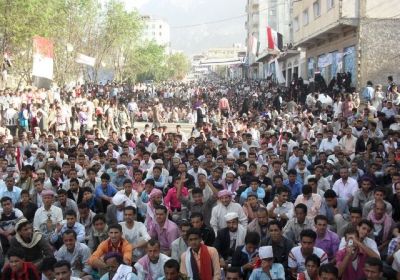
The flames of discontent continue to spread across the Middle East, in the wake of the toppling of the Tunisian and Egyptian regimes in recent weeks.
-
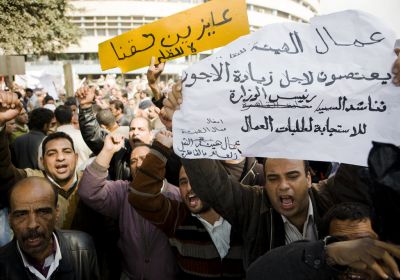
The Egyptian people’s revolution has entered a new phase after the fall of dictator Hosni Mubarak on February 11. The first reaction to Mubarak’s resignation after 18 days of continuous protests was one of celebration. Cairo’s Tahrir Square, the centre of the uprising, turned into the scene of a giant party for days afterwards in celebration of the exit of Mubarak, who had ruled Egypt for three decades. Undoubtedly, the widespread feeling was that it was time to begin building a “new Egypt”. -
On November 10, tens of thousands of students marched through London against education cuts and fee hikes. This was an indication of the revival of a militant student movement in Britain. Clare Solomon, president of the University of London Union, told Green Left Weekly: “That demonstration was absolutely electric, especially when we occupied the Millbank Tory party headquarters. “There were thousands and thousands of 14, 15 and 16-year-old students, dancing, singing, hugging. It really was like a carnival of the oppressed.”