
If you have consulted Karl Marx for an answer to the recent global economic crisis, you are not alone. Google has confirmed the popularity of Marx’s writings is booming as people around the world try to make sense of increasingly harsh economic conditions.
The phenomenon was reported in an article posted at Time.com by Rana Foroohar, who said: “I consulted Google to see if the term ‘Marxism’ was trending upward. It was and has been ever since the end of December.”
-
-
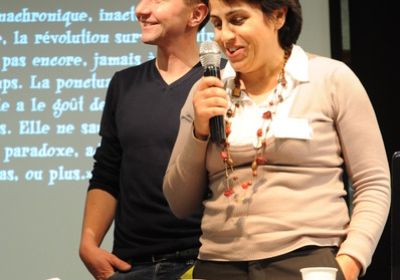 Ahlem Belhadj is a Tunisian revolutionary socialist and member of the Ligue de la Gauche Ouvriers (Left Workers’ League). It is a part of the January 14 Front, which unites left-wing groups seeking to push Tunisia’s revolution forward by creating a new government free from members of the former ruling party, and supports policies reversing neoliberalism. Belhadj spoke with Green Left Weekly’s Tony Iltis on February 12 about the Tunisian revolution. * * *
 -
 Hidden beneath the spectacular street battles that forced Egyptian dictator Hosni Mubarak out of office was a trigger that exists in dozens of countries throughout the world — food. Or, more specifically, the lack of it. Commentators have focused on the corruption of the dictatorship, or the viral effects of the Tunisian uprising or what appears to be akin to an Arab political awakening. But the inability of the Egyptian regime to ensure a steady flow of food staples should also be viewed as a critical factor driving this seemingly spontaneous movement for freedom.
 -
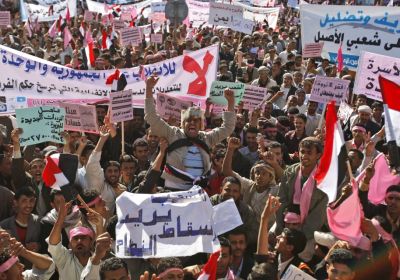
With revolts taking place in 15 countries across the Arab world, those with stakes in maintaining the status quo — especially the United States — are getting worried. From Morocco all the way to Iran, people are standing up for their long-denied rights.
-
 As the wave of popular uprisings has spread across the Arab world, a flurry of articles have appeared suggesting Venezuelan President Hugo Chavez could be the next “dictator” to be overthrown. Such arguments follow a pattern in the corporate media of slandering the Chavez government and the revolutionary process it leads. They aim to conceal the real threat that haunts imperialism: that the Arab world may follow the example of Venezuela and other countries in Latin America — and break away from Western hegemony.
 -
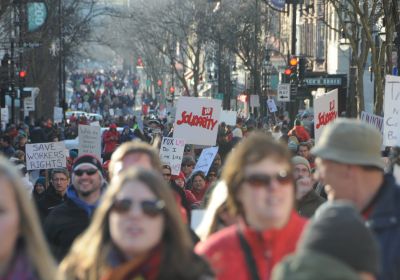
A huge battle of the right of public sector workers to organise has broken out in the state of Wisconsin. In response to a law pushed by Republican Governor Scott Walker, protesters have held a sit-in at the state legislature in Madison, Wisconsin’s capital, since February 14.
-
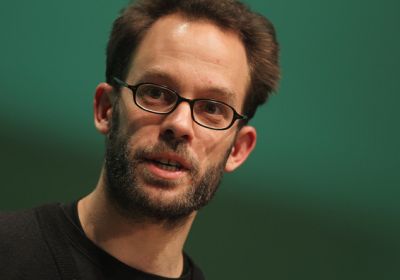 WikiLeaks has announced it will pursue legal action against disgruntled former employee Daniel Domscheit-Berg, whose recently released book, Inside WikiLeaks, slams Julian Assange's leadership and character in a series of allegations. Some of the allegations appear serious. Others are hopelessly trivial.
 -
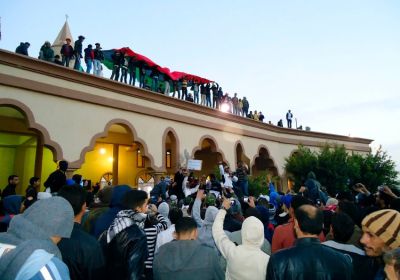 On February 22, Muammar Gaddafi boasted on state TV that the Libyan people were with him and that he was the Libyan revolution. His comments came as his dwindling army of special guards and hired mercenaries tried to drown the popular revolution in blood. AlJazeera.net reported on February 21 that civilians were strafed and bombed from helicopters and planes. Snipers with high-powered rifles fired into unarmed crowds.
 -
 More than 100,000 protesters packed Pearl Roundabout in Bahrain's capital, Manama, on February 22, demanding an end to the regime of King Hamad bin Isa al-Khalifa. Protester Muhammad Abdullah told The New York Times: “This is the first time in the history of Bahrain that the majority of people, of Bahraini people, got together with one message: this regime must fall.” If the Khalifa family — which has ruled the tiny island nation for 200 years — falls, it could have major implications for the region and world politics.
 -
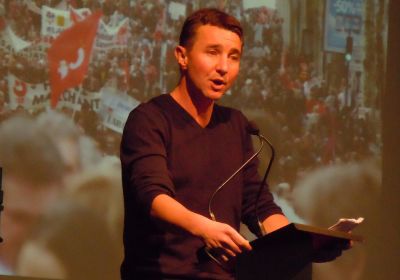 The New Anti-capitalist Party (NPA) held its congress in the Paris suburb of Montreuil over February 11-13. The congress adopted by a large majority a document, Our Responses to the Crisis, which analyses the multiple crises gripping capitalism: economic, social, food and climate, and outlined a vision of anti-capitalist, ecosocialist politics.
 -
 WikiLeaks founder Julian Assange’s legal team have announced they will appeal after British magistrate Howard Riddle ruled on February 24 that Assange can be extradited to Sweden to face questioning on allegations of sexual assault. Assange denies the allegations. Assange’s British Attorney Mark Stephens told Democracy Now later that day that the defence team remains “very optimistic about our opportunities on appeal”.
 -
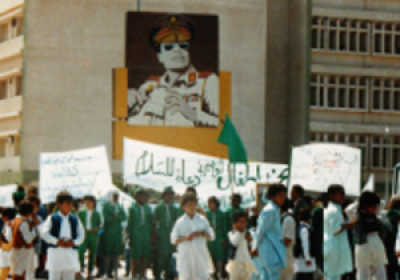 In 1987, I visited Libya as a journalist for the left-wing newspaper Direct Action. I visited Gaddafi’s bombed-out home — attacked by the United States one year earlier. In the 1980s, the Gaddafi regime came under attack from the US government because it took an anti-imperialist line and gave financial and material aid to many national liberation movements at the time.