
In a joint statement on February 25, indigenous communities that make up the Native Federation of Madre de Dios River and Tributaries in south-eastern Peru rejected a military crackdown on illegal mining on their lands.
The statement said it was a “false solution to a problem that has social and economic roots”.
Environment minister Antonio Bracks authorised the operation in mid February —involving about 1000 police and infantrymen — to destroy illegal mining equipment including bombing of dredges.
-
-
US-backed dictators have ‘moral scruples’ “[P]ro-American dictatorships have more moral scruples. The comparison is akin to what happened in the 1980s when U.S. allies led by authoritarians fell peacefully in the Philippines, South Korea and Taiwan, even as Communist regimes proved tougher.” — February 16 WSJ editorial. Supporting its dictators “The [Obama] administration has submitted a proposed budget for fiscal 2011 that included military assistance increases for Bahrain, Libya, Morocco, Oman and Yemen.”
-
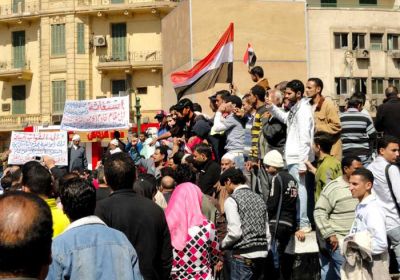 There was another win for “people’s power” in Egypt when interim prime minister Ahmed Shafiq resigned on March 3. Shafiq was sworn in by the overthrown dictator Hosni Mubarak and is closely associated with the old regime. He was replaced by former transport minister Essam Sharaf, who was asked by the military government to form a cabinet in the lead-up to elections scheduled for later this year.
 -
A NATO airstrike killed nine children collecting firewood in eastern Afghanistan on March 2, Afghan officials have said. A March 2 WashingtonPost.com article said the deaths in Konar province “became the latest irritant in the tense relationship between President Hamid Karzai and the international force in the country”. The top NATO commander, US general David Petraeus, issued an apology for the error, which the occupying forces blamed on “faulty communication”.
-
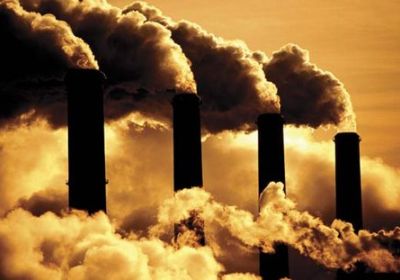 When the Kyoto Protocol was being negotiated in 1997, the European Union opposed the United States’ proposal to introduce carbon trading and “offsetting” as a form of compliance with mandated greenhouse gas emissions reductions. Instead, the EU favoured coordinated policies and measures. But by 2001, when the US unilaterally abandoned climate negotiations, the EU had already reversed its position and enthusiastically supported delivering the fate of climate policy to a speculative market.
 -

The protests that began on February 14 in Madison, Wisconsin against an anti-union bill have continued to grow. On February 26, an estimated 100,000 people defied sub-zero temperatures to rally against the bill. Wisconsin Governor Scott Walker’s bill would outlaw collective bargaining for public sector workers, as well as slash pay and conditions. However, several events have combined to compound pressure on public sector workers and unions resisting the attacks. It remains to be seen whether this pressure will result in the proposed bill becoming law.
-
The article below is abridged from SocialistWorker.org. Protest messages to the Zimbabwe embassy in Australia can be sent to [email protected] . * * * The resistance sweeping the Arab world and the repression against it has reached southern Africa, where more than 50 activists have been arrested by the Zimbabwean regime of President Robert Mugabe. Those arrested include former member of parliament Munyaradzi Gwisai and other members of the International Socialist Organization (ISO) in Zimbabwe.
-
The US government says it wants “stability” in the Arab world. That sounds reasonable, right? However, as US author and political analyst Noam Chomsky explained to Press TV on February 24, for the US government, “stability” means something other than what most people would think. “You have to remember that stability is a cold code word,” Chomsky said. “Stability doesn't mean stability; it means obedience to US domination … [It] doesn't mean that things are calm and straightforward, [it] means they are under control. That of course it is inconsistent with democracy.
-
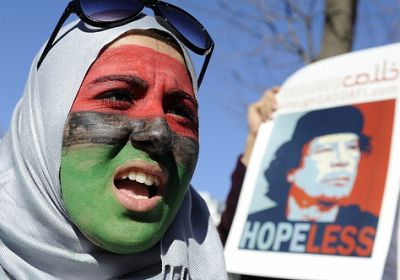 The regime of Muammar Gaddafi has escalated its violence against rebel forces seeking to bring it down. On March 6, opponents of the regime were reported to be in control of several cities, especially in Libya’s east. AlJazeera.net said on March 4 that anti-government protests in the capital, Tripoli, had been met with tear gas by security forces. Opponents said Az Zawiyah, a town just 40 kilometres from Tripoli that is home to an oil refinery, was mostly under rebel control.
 -
Stop the massacre in Libya! Power to the people A February 26 statement by the Socialist Alliance in solidarity with the people's uprisings in Libya and the Arab world * * * The Socialist Alliance extends its full solidarity to the people of Libya now being brutally repressed for demanding an end to the corrupt and unjust regime of dictator Colonel Muammar Gaddafi.
-
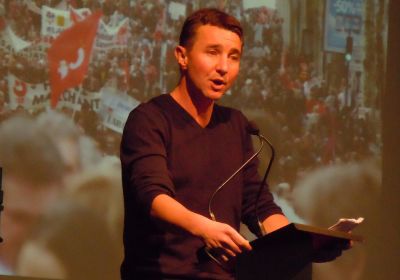 The New Anti-capitalist Party (NPA) held its congress in the Paris suburb of Montreuil over February 11-13. The congress adopted by a large majority a document, Our Responses to the Crisis, which analyses the multiple crises gripping capitalism: economic, social, food and climate, and outlined a vision of anti-capitalist, ecosocialist politics.
 -
 WikiLeaks founder Julian Assange’s legal team have announced they will appeal after British magistrate Howard Riddle ruled on February 24 that Assange can be extradited to Sweden to face questioning on allegations of sexual assault. Assange denies the allegations. Assange’s British Attorney Mark Stephens told Democracy Now later that day that the defence team remains “very optimistic about our opportunities on appeal”.