-
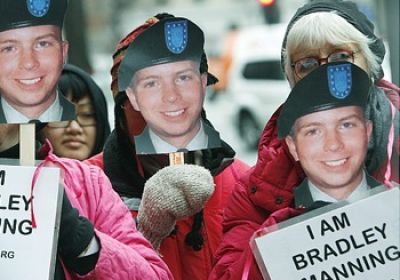
From the cramped prison cell that has become his home, 23-year-old Army Private Bradley Manning is cut off from the world. He has had no opportunity to share his side of what could be the biggest whistleblowing story the world has seen. What we do know of the alleged US war crimes whistleblower comes from the authority of friends and family — or from Adrian Lamo, the man who reported Manning to US authorities for allegedly leaking classified military documents to WikiLeaks. -
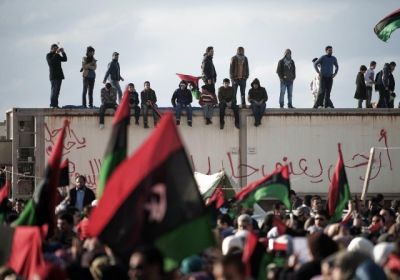
Saif al-Islam, the billionaire son of Muammar Gaddafi who was the neoliberal darling of Western governments until only recently, boasted in a March 10 interview with Reuters that forces loyal to his family were now on the offensive against rebel forces. NATO, for its part, has decided against military intervention — for the time being. However, France became the first government to recognise the rebel Interim Transitional National Council (ITNC) set up in Benghazi on March 5. AFP reported that French President Nicolas Sarkozy has also proposed “targeted air strikes” on Libya. -
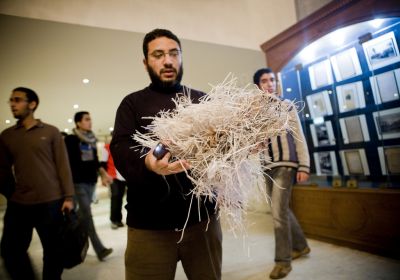
The much-feared secret police and intelligence service that protected the regime of former Egyptian President Hosni Mubarak by arresting, torturing and even killing opponents has begun burning documents and evidence that could incriminate them. This comes as calls escalate to abolish the force altogether and bring its officers to justice. Hundreds of protesters surrounded the main office of Amn al-Dawla, the State Security Police, in 6th of October City, on May 5 to try to stop the burning of files. Protesters shouted: “Justice, justice for they fired bullets on us.” -
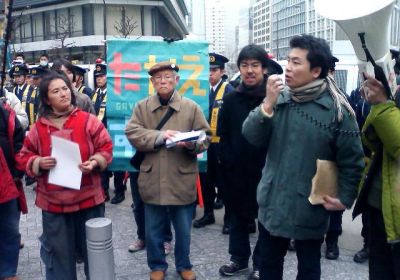
Two activists were arrested on February 20 at a demonstration outside the US Embassy in Tokyo. The activists were taking part in a demonstration against the construction of a United States military base in Okinawa. The activists were released from custody on March 5. Their supporters are campaigning for the charges against them to be completely dropped. The demonstrators had received police permission to rally. But on reaching the embassy, protesters were greeted by a wall of police. -
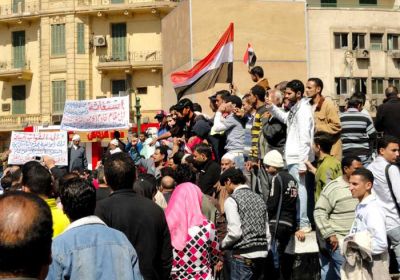
There was another win for “people’s power” in Egypt when interim prime minister Ahmed Shafiq resigned on March 3. Shafiq was sworn in by the overthrown dictator Hosni Mubarak and is closely associated with the old regime. He was replaced by former transport minister Essam Sharaf, who was asked by the military government to form a cabinet in the lead-up to elections scheduled for later this year. -
A NATO airstrike killed nine children collecting firewood in eastern Afghanistan on March 2, Afghan officials have said. A March 2 WashingtonPost.com article said the deaths in Konar province “became the latest irritant in the tense relationship between President Hamid Karzai and the international force in the country”. The top NATO commander, US general David Petraeus, issued an apology for the error, which the occupying forces blamed on “faulty communication”.
-
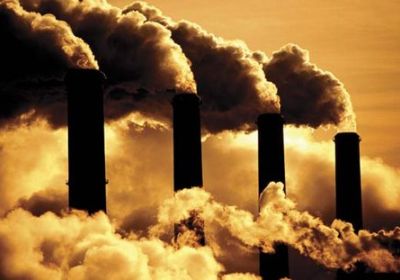
When the Kyoto Protocol was being negotiated in 1997, the European Union opposed the United States’ proposal to introduce carbon trading and “offsetting” as a form of compliance with mandated greenhouse gas emissions reductions. Instead, the EU favoured coordinated policies and measures. But by 2001, when the US unilaterally abandoned climate negotiations, the EU had already reversed its position and enthusiastically supported delivering the fate of climate policy to a speculative market. -
The protests that began on February 14 in Madison, Wisconsin against an anti-union bill have continued to grow. On February 26, an estimated 100,000 people defied sub-zero temperatures to rally against the bill. Wisconsin Governor Scott Walker’s bill would outlaw collective bargaining for public sector workers, as well as slash pay and conditions. However, several events have combined to compound pressure on public sector workers and unions resisting the attacks. It remains to be seen whether this pressure will result in the proposed bill becoming law.
-
The article below is abridged from SocialistWorker.org. Protest messages to the Zimbabwe embassy in Australia can be sent to [email protected] . * * * The resistance sweeping the Arab world and the repression against it has reached southern Africa, where more than 50 activists have been arrested by the Zimbabwean regime of President Robert Mugabe. Those arrested include former member of parliament Munyaradzi Gwisai and other members of the International Socialist Organization (ISO) in Zimbabwe.
-
The US government says it wants “stability” in the Arab world. That sounds reasonable, right? However, as US author and political analyst Noam Chomsky explained to Press TV on February 24, for the US government, “stability” means something other than what most people would think. “You have to remember that stability is a cold code word,” Chomsky said. “Stability doesn't mean stability; it means obedience to US domination … [It] doesn't mean that things are calm and straightforward, [it] means they are under control. That of course it is inconsistent with democracy.
-
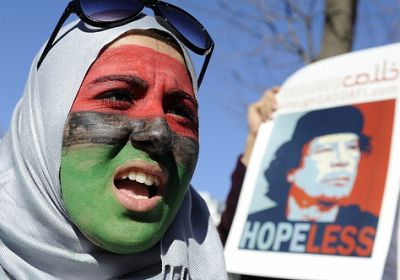
The regime of Muammar Gaddafi has escalated its violence against rebel forces seeking to bring it down. On March 6, opponents of the regime were reported to be in control of several cities, especially in Libya’s east. AlJazeera.net said on March 4 that anti-government protests in the capital, Tripoli, had been met with tear gas by security forces. Opponents said Az Zawiyah, a town just 40 kilometres from Tripoli that is home to an oil refinery, was mostly under rebel control. -
Ireland’s governing Fianna Fáil (FF) party and its Green Party coalition partner were massacred in a general election revolt on February 26. The most successful establishment party in Western Europe for the past 80 years, FF was demolished – reduced from 77 to only 20 seats on the back of public outrage over austerity measures and social spending cuts.