
Six activists arrested in Harare, along with 39 others, were finally granted bail on March 16 after a month in jail. The activists were arrested for attending a video screening of footage from the people’s uprisings in Egypt and Tunisia.
However, the six need to raise US$12,000 to pay their bail — far more than they can afford. An appeal is being launched internationally to raise the funds needed to pay the activists’ bail (see below for details).
The bail conditions require the six to surrender passports and travelling documents. They must report three times a week to the police.
-
-
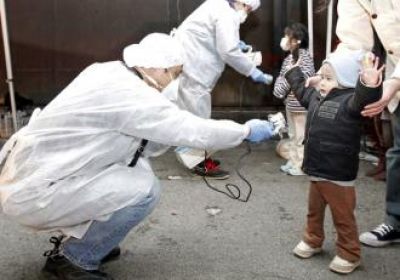 The desperate nuclear emergency at three Japanese nuclear reactors is growing worse by the day. One of the three stricken reactors at the Fukushima-Daiichi nuclear plant is now close to complete meltdown. Should this happen, molten uranium fuel may burn through the containment vessels, leading to a catastrophic release of radiation over the surrounding area.
 -
 This appeal is reprinted from the website of the Maritime Union of Australia. You can also support the appeal launched by Europe solidaire sans frontières (Europe in Solidarity Without Borders). * * * Japanese dockworkers, seafarers hit hard by tsunami March 15 Tens of thousands of people have been rocked by earthquake, engulfed by tsunami and now, in the port of Sendai, consumed by fire.
 -
Tunisian Prime Minister Beji Caid Essebsi announced on March 7 the dissolution of the country’s secret police arm, the British Guardian said that day. This step toward democracy is the most important taken by any Arab country for decades. Tunisia’s interim government also abolished the Ministry of Information, which had been in charge of censorship, allowing a free press to flourish, GlobalPost.com said on March 7.
-
 A cable from the US embassy in Buenos Aires, released by WikiLeaks, reveals pressure from the US government to halt a serious criminal investigation in Argentina. The US pressured an Argentine prosecutor to halt investigations into former Argentine president Carlos Menem and a number of other officials suspected of being involved in a cover-up over the bombing of a Jewish community centre in Buenos Aires in 1994, Argentine daily Pagina/12 reported on February 27.
 -
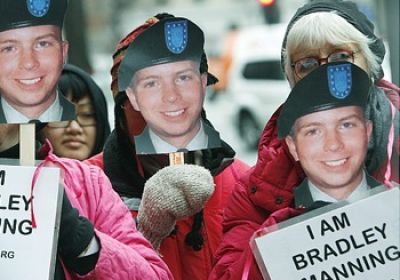 From the cramped prison cell that has become his home, 23-year-old Army Private Bradley Manning is cut off from the world. He has had no opportunity to share his side of what could be the biggest whistleblowing story the world has seen. What we do know of the alleged US war crimes whistleblower comes from the authority of friends and family — or from Adrian Lamo, the man who reported Manning to US authorities for allegedly leaking classified military documents to WikiLeaks.
 -
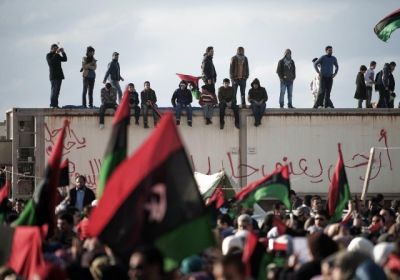 Saif al-Islam, the billionaire son of Muammar Gaddafi who was the neoliberal darling of Western governments until only recently, boasted in a March 10 interview with Reuters that forces loyal to his family were now on the offensive against rebel forces. NATO, for its part, has decided against military intervention — for the time being. However, France became the first government to recognise the rebel Interim Transitional National Council (ITNC) set up in Benghazi on March 5. AFP reported that French President Nicolas Sarkozy has also proposed “targeted air strikes” on Libya.
 -
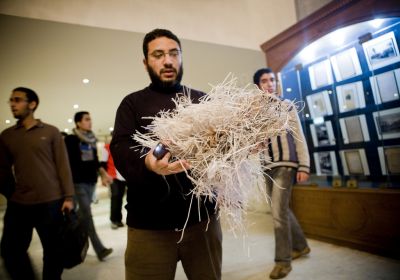 The much-feared secret police and intelligence service that protected the regime of former Egyptian President Hosni Mubarak by arresting, torturing and even killing opponents has begun burning documents and evidence that could incriminate them. This comes as calls escalate to abolish the force altogether and bring its officers to justice. Hundreds of protesters surrounded the main office of Amn al-Dawla, the State Security Police, in 6th of October City, on May 5 to try to stop the burning of files. Protesters shouted: “Justice, justice for they fired bullets on us.”
 -
The government in Yemen is becoming more desperate amid continuing protests across the country calling for the removal of President Ali Abdullah Saleh. Tensions came to a head when security forces fired on protesters at a university in the capital Sana'a, killing one person and wounding many others, AlJazeera.net said on March 9. Security forces also gassed the crowd with what is alleged to be nerve gas, SMH.com said on March 10. Despite the attack, thousands of protesters defied police and continued occupying the university square, AlJazeera.net said.
-
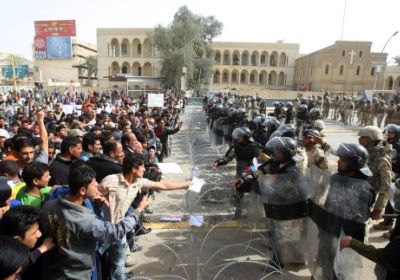
Thousands of protesters took to the streets across Iraq on March 4, defying a curfew and repression to demand democracy and economic justice, the March 5 Los Angeles Times said.
-
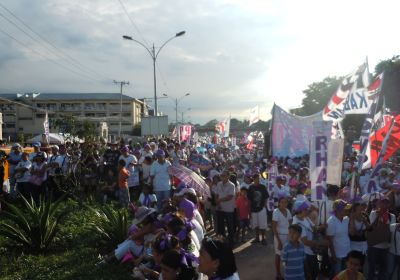 About 10,000 people marched on the Philippines Congress on March 8 to mark International Women’s Day (IWD) and demand passage of the Reproductive Health Bill before Congress. The bill would allow greater access to modern contraceptives and sex education. The bill proposes more maternal health services, raising the number of midwives to one for every 150 deliveries. Contraceptives would also be funded for poor women and would be included in the standard supplies of medicine in hospitals. Modern family planning methods would be provided in all accredited health facilities.
 -
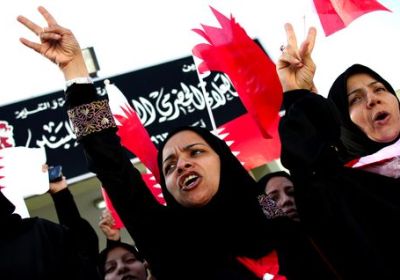 The pro-democracy protests in Bahrain and Saudi Arabia have the potential to have a huge impact on world politics. The stakes are very high. In Bahrain, Saudi Arabia’s tiny island neighbour, protesters have mobilised in their hundreds of thousands for weeks to demand the Khalifah royal family be removed from power. Bahrain is of great strategic importance for the West. It hosts the US Navy's fifth fleet and a US airbase. This helps ensure US control of the oil-rich Persian Gulf region and the ability to maintain a constant threat against Iran.