
An international solidarity campaign has been launched after United Nations secretary-general Ban Ki Moon derecognised unions representing the groups's 65,000 workers.
Unions have been seeking greater protection for members undertaking increasingly dangerous missions. Most are united in the Co-ordinating Committee for Staff Unions and Associations (CCISUA).
CCISUA says that in the last 10 years there have been 555 attacks on UN staff and more than 200 deaths. The unions have been seeking improved health and safety protection and a reduction in the use of private security contractors.
-
-
More workers will die for World Cup than players will play “'More workers will die building World Cup infrastructure than players will take to the field,' predicts Sharan Burrow, general secretary of the International Trade Union Confederation [on the 2022 World Cup in Qatar]. Even if the teams in Qatar use all their substitutes, she is likely to be right.
-
A group of West Papuan asylum seekers arrived in Australia on September 24, defying the Australian government and potentially raising already high tensions between Australia and Indonesia over asylum seekers. The group of West Papuans includes six adults and a child. It has been reported the group had some connection to the West Papua Freedom flotilla, in which supporters of freedom for West Papua tried to sail to the Indonesian-occupied territory. The flotilla sparked by Indonesian authorities on its West Papuan organisers.
-
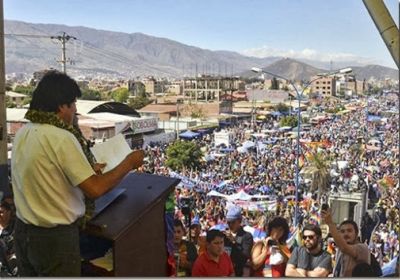 Washington’s refusal to allow Venezuela's President Nicolás Maduro to over-fly its colony of Puerto Rico on September 19 attracted little attention in the North American and European media. But in Latin America this arrogant gesture drew immediate outrage. It recalled the July 2 denial by four European countries — France, Italy, Spain and Portugal — of landing and refuelling rights and passage through their airspace to Bolivia’s president Evo Morales while he was returning home from a trip to Moscow.
 -
The New Zealand government is rushing through the sale of Meridian Energy for NZ$1 billion less than the $3.1 billion needed to reach its goal of raising at least $5 billion from asset sales. It is moving ahead wit the sale widespread public opposition and criticism ranging from opposition parties to investment bankers. Meridian Energy Limited, a state-owned electricity generator and retailer, is expected to divest 49% of its shares as part of a government privatisation program.
-
Bangladesh police have used batons, rubber bullets and tear gas in a bid to stop ongoing protests by garment workers demanding higher wages. But the fifth day of protests in two industrial districts near the capital Dhaka, on September 25, forced the closure more than 100 factories for the day, police said. Gazipur and Narayanganj house hundreds of factories that supply garment products to numerous global brands, including Wal-Mart and H&M. After a three-day work stoppage in the wake of the protests, bosses tried to restart the factories today, but the efforts failed.
-

During a visit to New York for the United Nations General Assembly, Ecuador’s foreign minister Ricardo Patino joined independent media outlet Democracy now! on September 23 to discuss his government’s involvement in two closely watched environmental legal battles.
-
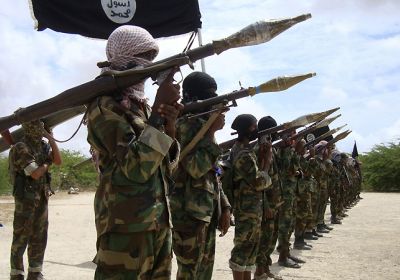 The logic of terrorism is violent political theatre ― the aim is not just to inflict harm but to be widely noticed inflicting harm. From this perspective, the Somali militia al Shabaab’s September 21 seizure of the upmarket Westgate Shopping Mall in Nairobi, Kenya, and massacre of at least 61 hostages, was a successful act of terrorism. But while al Shabaab successfully dominated world headlines with their brutal attack, the media has almost entirely ignored the context: the Western-backed occupation of Somalia by Kenya, Uganda and Burundi.
 -
The Intergovernmental Panel on Climate Change (IPCC) released its first installment of its fifth assessment report (AR5) on climate change in Stockholm on September 27.
-

The Intergovernmental Panel on Climate Change just released its latest scientific report that looks at what the world’s top experts understand about climate change. The review takes years to complete, and will be used for years as a vital resource for climate science.
-
Ecuador’s foreign ministry announced on September 20 that the US has seemingly denied visas to a delegation set to travel to the United Nations General Assembly in New York, RT.com said the next day. The Ecuadorians were planning to present their case in an ongoing dispute against Chevron-Texaco. The ministry said the visas for the five Ecuadorian nationals were returned by the US Embassy in Quito “without any explanation”.
-
 “Arthur's Day”, that ingenious marketing campaign thought up in 2009 to mark the 250th anniversary of the Guinness brewing company and to raise further sales of “the black stuff”, will be celebrated most of all by executives, sales teams and shareholders on September 26. According to Diageo (the British-based conglomerate that now owns Guinness), on September 26 every year: “Guinness fans around the world will come together at a series of exciting musical events to raise a glass to Arthur Guinness and celebrate those who like him, make great things happen.”