
When is it considered legitimate to try to overthrow a democratically-elected government? In Washington, the answer has always been simple: when the US government says it is. Not surprisingly, that is not the way Latin American governments generally see it.
-
-
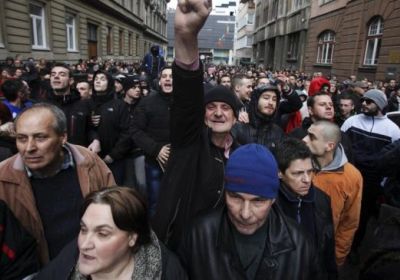
Three years ago, the Museum of Broken Relationships was set up in Zagreb by former lovers Olinka Vistica and Drazen Grubisi to display items symbolising the end of various personal relationships.
-
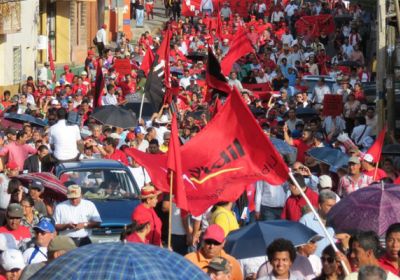
For days after the National Party (NP) was declared the winner of widely disputed elections on November 24, thousands of people protested on the streets of the Honduran capital Tegucigalpa.
-

“WHERE IS MURDEROUS DICTATOR #NICOLASMADURO HOLDING #LEOPOLDOLOPEZ ?IS LOPEZ TORTURED,DEAD?INSANE MONSTERS CAN’T BEAR PPL KNOWING THE TRUTH?” So tweeted singer, actress and renowned Venezuelan political analyst Cher on February 19. Cher was far from the only celebrity to express support for the right-wing protests in Venezuela, and such tweets symbolise how much the source of disinformation and attacks on Venezuela and its democracy has shifted from mainstream to social media.
-
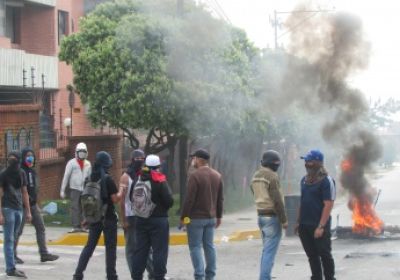 The slant of Venezuela’s private media and the international media on what is happening in Venezuela is clear: The government is responsible for the violence. In the first place, it is said, government-ordered gunmen are shooting at peaceful demonstrators and the violence generated by the opposition is just a response to the brutality of police and military forces. But there is considerable evidence that shows the violence, including that of unidentified motorcyclists against demonstrators, is being carried out by the opposition. Consider the following:
 -

Venezuelan President Nicolas Maduro has expelled three United States consular officials from the country due to suspected conspiracy with the right-wing opposition, Venezuela Analysis said on February 17.
-
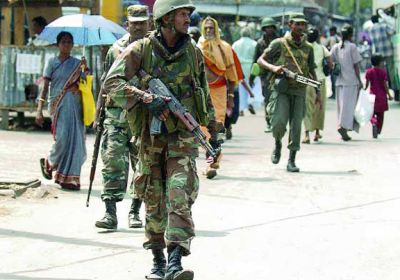 “Contrary to popular belief, the end of the war has actually deepened the ethnic conflict. This is because the underlying causes for the conflict have not been addressed and in certain ways exacerbated”. These were the words of C. V. Wigneswaran, chief minister of the Northern Provincial Council (NPC) in Sri Lanka, addressing an academic conference in capital, Colombo, on February 13.
 -
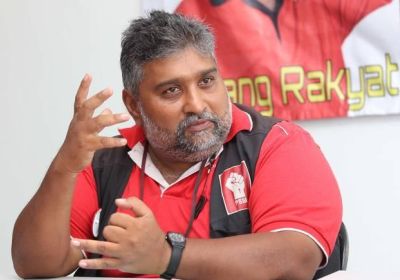 The Socialist Party of Malaysia (PSM), together with other groups and individuals, is forming a body called Left Coalition to bring class politics to Malaysia. PSM secretary general S. Arutchelvan said it is looking to form the coalition with Parti Rakyat Malaysia, Solidariti Anak Muda Malaysia and other activists and individuals. “We are trying to bring back class politics,” he told FZ.com. “We feel the younger generations are actually more receptive to more radical and progressive ideologies ...
 -
In recent years, a powerful student movement has erupted in Chile against right-wing neoliberal attacks on education, and fighting for a fundamentally different, pro-people education system. The mass movement has developed in the face of often brutal state repression.
-
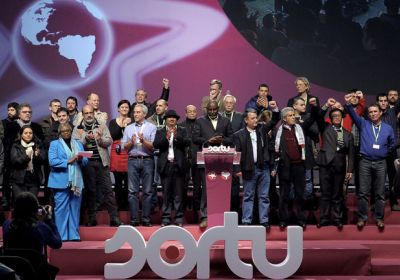 From Sortu, left-wing party of supporters of Basque sovereignty, we would like to congratulate Green Left Weekly on publishing 1000 issues to date; a long journey, during which it has provided a truthful coverage of world events. We would like to express our thanks for the attention your publication has paid to news from Euskal Herria (the Basque Country), especially events of recent years, which have created a new political situation in our country and are bringing us closer to a just and lasting peace.
 -
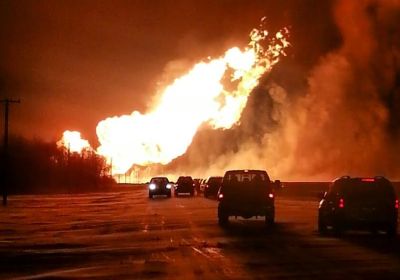 A rupture of the TransCanada PipeLines (TCPL) gas line occurred in the middle of the night on January 25 near the village of Otterburne. A huge fireball erupted into the night sky and burned for many hours. The explosion tore a large crater in the ground. Several thousand homes in 10 small communities were left without gas heating during temperatures that dipped to minus 30C. It took days for full service to be restored. The pipeline brings gas from Alberta to the US across the Manitoba-Minnesota international border. It feeds parts of southern Manitoba along the way.
 -
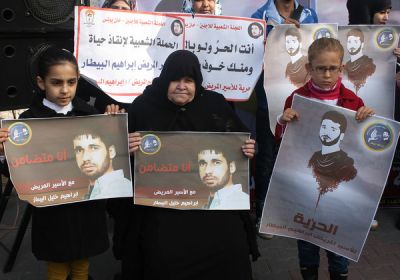 Sit-ins to support Palestinian prisoners in Israeli jails have been held every week since 1995 in the courtyard of the International Committee of the Red Cross’s Gaza office. Recently, they have been followed by rallies outside the office for Ibrahim Bitar, a sick detainee in Israel’s Nafha prison. Ibrahim’s brother Mamdouh said: “We’ve garnered internal support for my brother, and created this popular campaign. It started within our family. It’s a symbol of all the sick detainees.”