
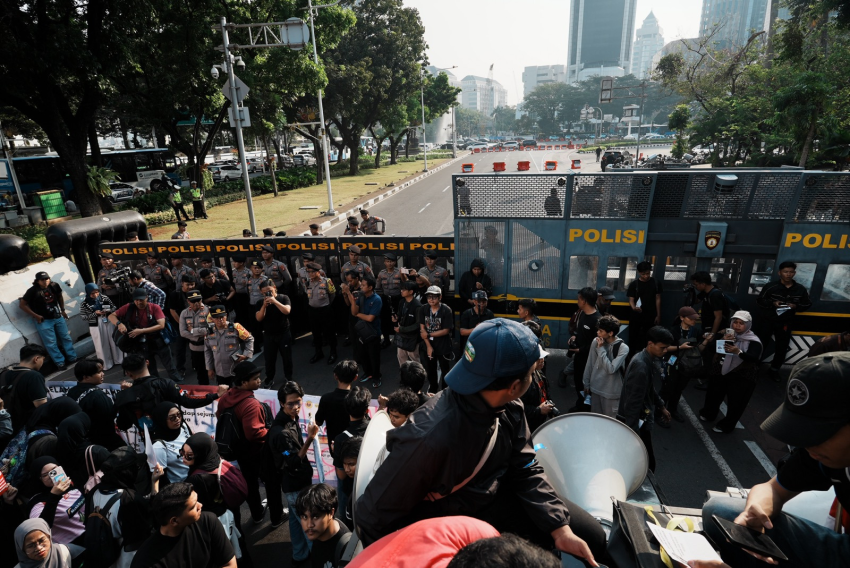
Green Left’s Peter Boyle spoke to Ignatius Mahendra Kusumawardhana from Perserikatan Sosialis (Socialist Union, PS), a left group in Indonesia, about the latest round of youth-led protests that kicked off in June in Jakarta.
* * *
In June this year, Indonesian young people took to the streets in protests over rising costs and fuel prices. What was the size and extent of these protests and what sparked them?
The immediate trigger was the fuel price hike of June 10, when the price of Pertamax [a widely used 92-octane gasoline sold by the state-owned energy company Pertamina] jumped from Rp12,300 to Rp16,250 per litre.
This came on top of a weakening rupiah and rising prices of staple goods.
On June 12, around 1,500 students — led by the student executive board of University of Indonesia (BEM UI) and joined by students from other campuses — marched in Jakarta.
Within a week, the actions spread to Bandung, Solo, Yogyakarta and cities in North and South Sumatra, with thousands besieging the Dewan Perwakilan Rakyat [House of Representatives, DPR] building, on June 19.
The scale of this wave of protests was smaller than the August 2025 revolt, which drew tens of thousands across the country; June was a student-led wave numbering in the thousands.
The protesters raised five demands: lower fuel and food prices, cut wasteful state spending and halt big-ticket programs like the free meals program (MBG) and rural revitalisation. Some contingents went further and demanded President Prabowo Subianto and Vice President Gibran Rakabuming Raka resign.
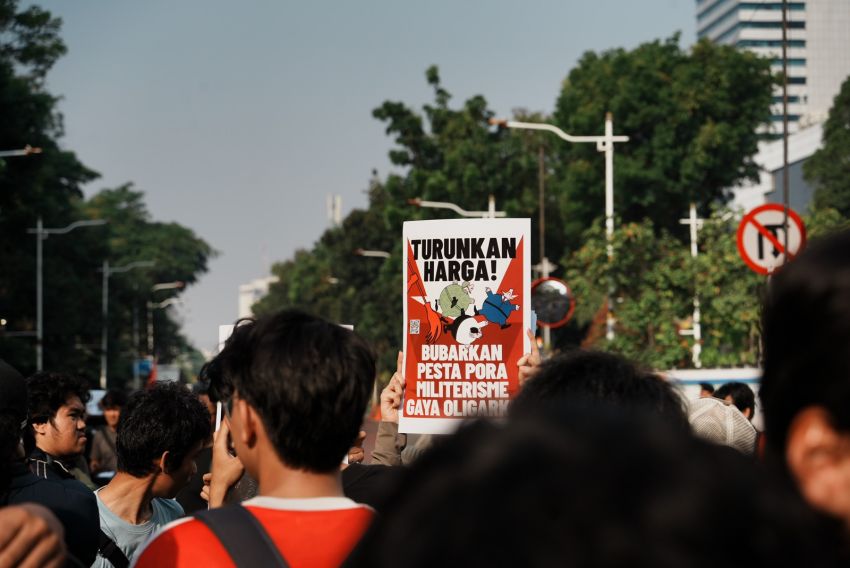
On social media, the protesters used the hashtag #MenujuIndonesiaBangkrut [Towards Indonesia's Bankruptcy]. Does it demonstrate the failure of Prabowo's populist measures like the Makan Bergizi Gratis (Free Nutritious Meals, MBG) program?
The hashtag captures a real material process, not just a mood. The state budget is being drained by the ruling clique's flagship programs while the burden is shifted onto the working class: government debt now stands at Rp9,658 trillion; the rupiah is sliding toward Rp18,000 per US dollar; and in 2025, debt servicing swallowed over Rp497 trillion — more than the education or health budgets.
MBG is the sharpest illustration. In early June 2026, three top officials of the National Nutrition Agency (BGN) were arrested for misuse of MBG funds, the budget was cut from Rp335 trillion to Rp268 trillion and at least 33,000 children have suffered food poisoning.
The corruption here is not a deviation; the program functions as a mechanism of rent distribution to contractors, cronies and the military-linked network around Prabowo.
The same logic runs through the Rp400 trillion Merah Putih Village Cooperatives program, with an estimated Rp48 trillion leakage risk.
So yes, the failure is total, but it is structural, not administrative. It cannot be fixed with better management.
Are these protests similar to the round of youth protests about a year ago, in the sense of being semi-spontaneous?
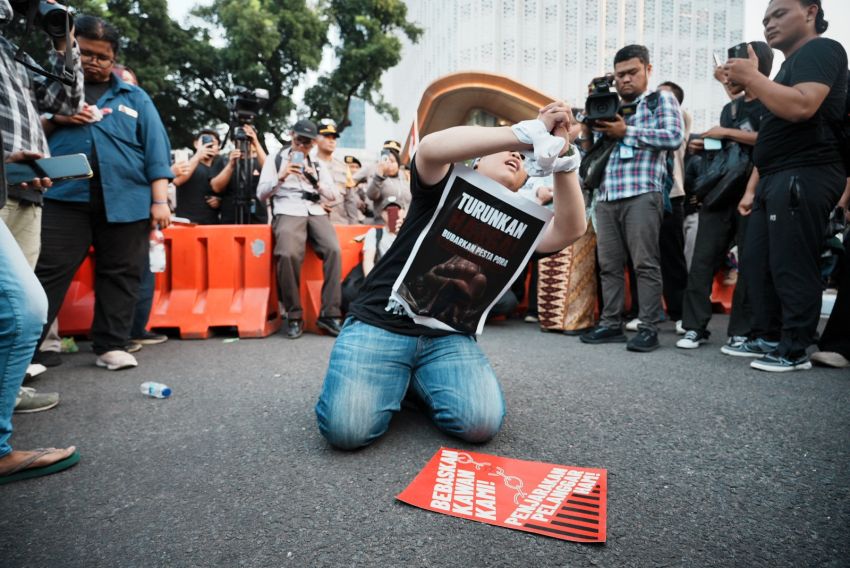
Yes, in form. Like the August 2025 revolt, sparked by the DPR [MPs’] housing allowances and the police killing of the motorcycle taxi driver Affan Kurniawan, the June 2026 actions erupted semi-spontaneously, coordinated through campuses and social media rather than by any national political leadership.
The difference is the accumulation of experience: demands are now aimed directly at the budget, at concrete programs and at Prabowo-Gibran themselves.
But the weakness repeats itself at three levels: 1. The actions remain fragmented city by city, without national unification of students, workers and the urban poor into one movement with one set of demands; 2. Each explosion dissipates because it does not crystallise into durable organs of struggle; [and] 3. Most fundamentally, there is no revolutionary party rooted in the working class that can carry the lessons of one wave into the next, formulate a program and lead.
Semi-spontaneity is not a virtue to be celebrated; it is the price the movement keeps paying for the absence of that party.
What is the political significance of these repeated rounds of protest and what does it say about the Prabowo government's efforts to suppress them? How did young people react to the acid attack on human rights activist Andrie Yunus, and can we expect greater authoritarianism?
The significance of this round of protests is that repression has failed to produce demobilisation.
Prabowo's government answered August 2025 with beatings, mass arrests and intimidation, yet within months a new wave emerged.
The acid attack on Andrie Yunus of KontraS [Commission for the Disappeared and Victims of Violence, a national human rights non-governmental organisation based in Jakarta] on March 12, 2026, shows the method: he was attacked hours after recording a podcast on remilitarisation, and the perpetrators turned out to be four officers of the military's Strategic Intelligence Agency (BAIS).
The military court's verdicts of June 10 gave the perpetrators sentences of one and a half to three years framed as “personal grievance” — an impunity mechanism protecting the chain of command.
The youth response was real though not massive: solidarity actions spread to Yogyakarta, Makassar, Samarinda and other cities, demanding a civilian trial and the arrest of the masterminds, and students in Samarinda took the demand directly to the gates of the local military command.
The case has fed the anti-militarist mood now running through the protests.
Greater authoritarianism is not a possibility, it is the regime’s trajectory: Prabowo directly represents the armed faction of the capitalist class, and its instruments — territorial commands, BAIS, military courts — are being deployed against dissent. But the June protests show intimidation is producing radicalisation, not retreat.
How is Indonesia's left relating to these youth protests?
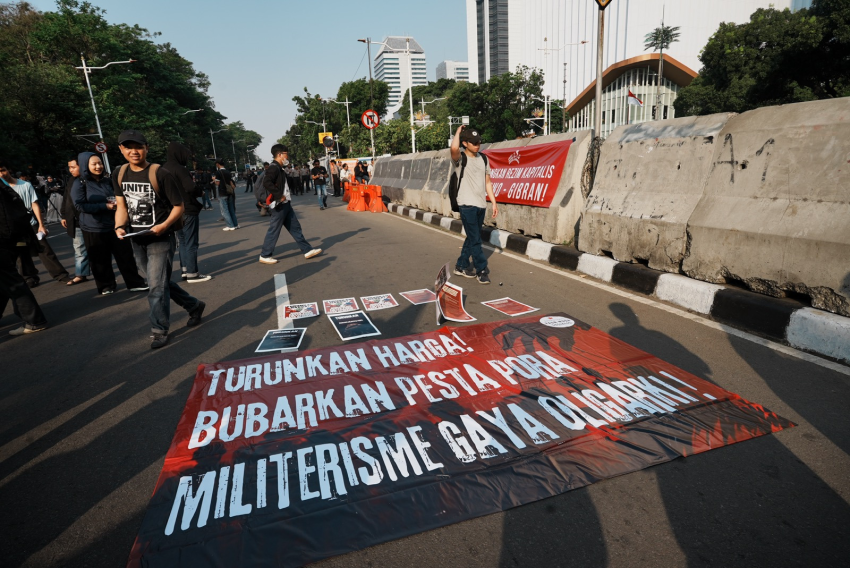
The left participates inside the movement, not as commentators outside it. In mid-July, Perserikatan Sosialis and the Socialist Young People Organisation (OKMS) issued a joint call under the slogan "Lower prices! Disband the oligarchy's festival of militarism!" with the umbrella demand: the economy under the people's control, for the people's welfare, not for the generals, officials and conglomerates.
These demands run from the immediate to the structural: lower prices; raise wages and subsidies; stop MBG and the Merah Putih [Red White, the colours of the Indonesian flag] cooperatives; cancel the foreign debt; carry out the four anti-militarist demands (disband the territorial commands, seize military business assets, try the generals who violated human rights, military back to the barracks, including full withdrawal from Papua); nationalise oil, gas and strategic industries under workers' control; and redistribute national wealth by cutting officials' privileges and taxing the conglomerates.
These are conceived as a transitional program: each demand starts from today's most urgent needs but cannot be consistently won without breaking the power of the ruling class itself.
That is why the left's conclusion is organisational: the youth revolt has an objective basis in the crisis of Indonesian capitalism, and turning repeated explosions into a struggle for power requires uniting students with the organised working class and building the revolutionary party.
PS presents itself openly as the embryo of that party and invites radicalising youth into OKMS.