
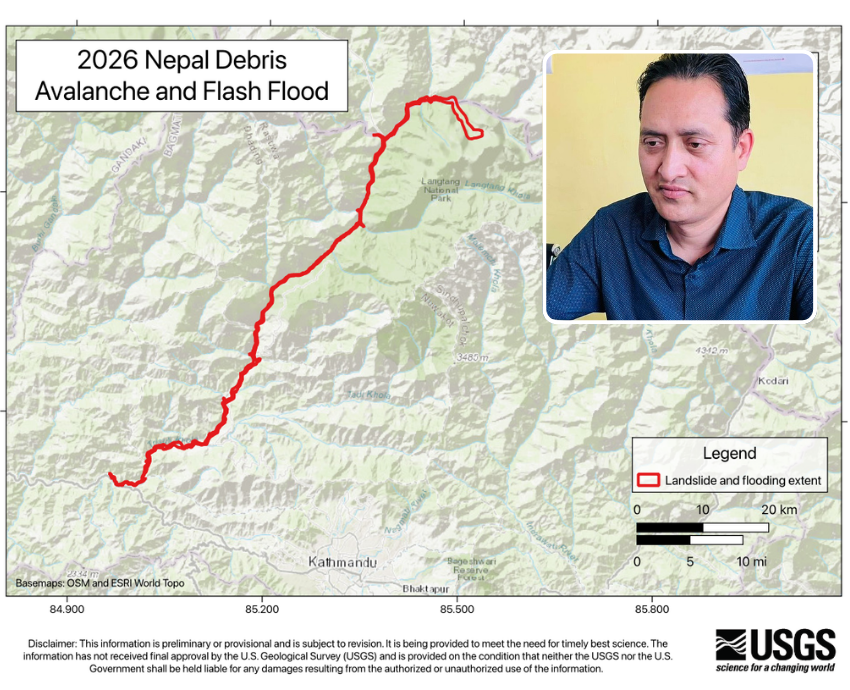
While the whole world is shocked and horrified at the scenes of the catastrophic glacial floods and landslides in Nepal and Tibet, this should be an international wakeup call, said Indra Raj Bhattarai, a social justice and human rights advocate, conservation educator and researcher from Nepal.
Speaking from Nepal’s capital, Kathmandu, Bhattarai told Green Left that despite several climate summits the international community has fallen far short of its targets for funding climate change frontline states such as Nepal.
“This is not only an issue of Nepal,” he said. “Nepal adds very little to the global greenhouse gas emissions and 46% of Nepal is forest.
“And it is not just Nepal that is affected. It goes to other countries also, because the river flows all the way to the ocean, past the boundaries of landlocked Nepal.”
Melting glaciers across the whole Hindu Kush Himalaya mountain system directly affect China, India, Myanmar, Bangladesh, Bhutan and Pakistan, Bhattarai explained.
“It affects these countries’ agriculture, the ecosystem and the economy of the whole region.
“Eventually the water from melting glaciers will raise the sea level and affect even more countries.
“We’ve talked about this problem for at least the past two decades in lots of international meetings. Day by day, our extreme weather patterns send us reminders.
“The devastating consequences are seen. The biodiversity is in decline, new diseases are emerging and lots of devastating effects remind us that this is the problem of the whole world.”
Bhattarai said that the international climate talks have focused on the “polluter pays” principle (PPP) which means that those responsible for environmental damage and greenhouse gas emissions should pay the cost of preventing, controlling and remedying impacts.
“What happened to PPP? Nepal actually increased its forested area by 10% in the last decade and a half, but we are facing the challenges arising from increased greenhouse emissions and forest clearing in other parts of the world…
“There’s a fund called the Green Climate Fund [which approved $36.1 million for Nepal in 2025] to reduce the risk of glacial lake outburst floods (GLOFs) and United Nations agencies are working on that, but Nepal still has no early warning system.
“That should be the first thing the fund is used for. If we had an early warning system, thousands of lives would have been saved.
“We still don’t know exactly how many people lost their lives but we can say that between 15,000 and 20,000 people have been directly affected.”
The Nepali government is struggling to deal with this catastrophe and the problem is made worse because there is not enough cooperation with China, Bhattarai told GL.
“We need real-time information sharing mechanisms between these two countries to deal with this disaster.
“One week after this flood swept through the Rasuwa and other valleys, there are some remote areas where they have not seen any government representatives or aid.
“While the Nepali and Chinese governments are doing their best to rescue the people buried in the hydroelectric dam tunnels, many other people in remote areas are still not getting emergency assistance, nor have there been efforts to rescue them.
“They urgently need food, medical help and temporary shelters. They need solar lights, communication equipment or mobile connections.”
Those who survived the flood but lost family members also face a very challenging time, Bhattarai said.
“They are moving from one place to another trying to identify their families among the dead bodies, and as a result suffer serious mental health problems, which are not addressed.”
There have been complaints about the emergency response by the new Nepali government, under Prime Minister Balendra Shah. However, Bhattari said that the PM was correct to call an all-party meeting to deal with the crisis.
“While all the party leaders agreed to cooperate, until now there is little cooperation between the federal, provincial and local governments.
“The provincial and local governments are in a better situation to understand the real problems in the field but they are controlled by the parties in opposition at the federal level. The federal ministers have little local connections.”
Bhattarai said the federal government should be distributing more of the international funds to the provincial and local governments.
“Our political leaders should realise that they need to put the people’s interest before politics in these disasters. Collaborate and cooperate for the people!”
Bhattarai said that Nepal’s climate disaster needs to be seen as a lesson for the world in the upcoming COP31 global climate summit in Turkey in November. Greenhouse gas emissions must be controlled and adequate funds and effective technical support needs to be provided to climate frontline states like Nepal, which are directly facing mitigation and adaptation challenges from the climate emergency.
“The Himalayas are no longer warning us about the future. They are showing us the future.”