
Venezuelan opposition protesters in Caracas attacked three journalists after a march demanding “greater freedom of the press”. Meanwhile, barricades in Tachira state have claimed another life.
Luis Gutierrez Camargo was killed instantly during a collision with an opposition roadblock in Tachira on March 4, communication minister Delcy Rodriguez announced via Twitter.
Rodriguez condemned the use of street barricades, describing them as “murderous methods”.
-
-
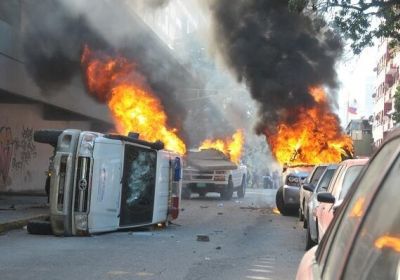
Below, Australia Venezuela Solidarity Network activist Federico Fuentes, provides answers to common questions about recent events in Venezuela. Key facts are referenced, largely from media outlets that could not be identified as pro-government.
-
The governments of the United States, Europe and Canada are working furiously to help consolidate the conservative and rightist government that has come into office in Ukraine after the overthrow of the authoritarian regime of Victor Yanukovych 10 days ago. The overthrow of the regime came about through a confluence of mass protests against its authoritarian rule and retrograde social and economic policies, and a very active intervention by right-wing and fascist political forces.
-
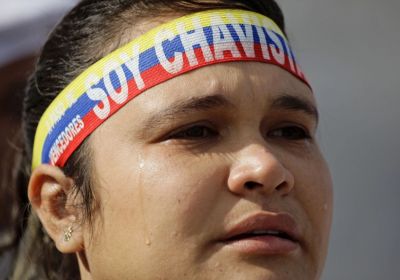 With few exceptions, most international media coverage of the recent protests in Venezuela gives little sense of the response from the popular social movements who support the government of President Nicolas Maduro but operate independently from it. As researchers who have carried out long-term fieldwork in the urban barrios (poor neighbourhoods) of Caracas, we felt compelled to translate and publish the statement of one of these barrio groups.
 -
Indiscriminate violence against ordinary people, whether they be involved in politics or not, is always appalling and serves no progressive or democratic purpose. The recent killing of children is even worse.
-
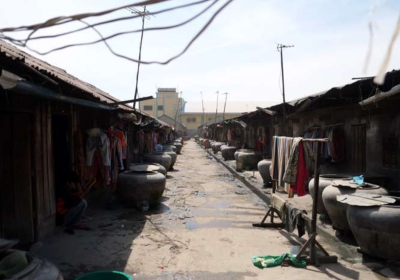
A new report by eight international trade unions and non-government organisations details the brutal government repression Cambodian garment workers were subjected to. It said the workers' demand to raise the minimum wage were reasonable.
-
Cusco, a city of 400,000 in south-eastern Peru, was totally paralysed on February 25. It was the first day of a 48-hour general strike initiated by trade unions and other civic groups.
-
Venezuelan car workers have slammed multinational car manufacturers for cutting back production in the country. The country's largest trade union federation has called for the industry to be nationalised. Accusing multinational car companies of being “imperialist”, the National Workers' Union (UNT) has called on the government to place car factories under worker control. The UNT said: “It's clear that building socialism relies on the working class, indeed the workers' control of the factories.”
-
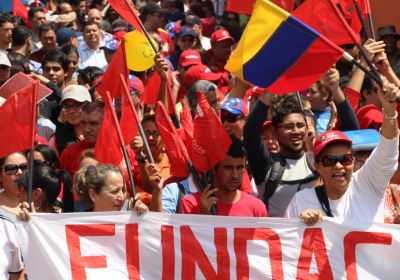 Almost a year has passed since the death of Hugo Chávez on March 5, 2013. Arguably this has been the most difficult one for the Bolivarian Revolution. Many people, both on the left and the right expressed doubt that there could be Chavismo without Chávez. Perhaps a year is still too short of a period to assess the situation after Chávez’s passing. Yet, the dynamic developments over the past twelve months call for some preliminary remarks.
 -
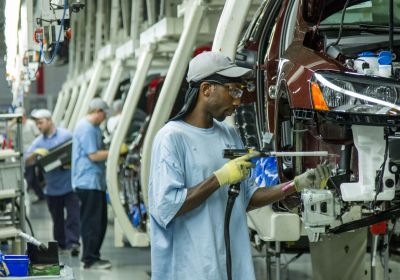 In a closely-watched election, the United Autoworkers Union (UAW) tried to break into the anti-union South to organise a Volkswagen plant in Chattanooga, Tennessee. The union lost the February election among the plant’s 1550 production workers. There were 626 votes in favor and 712 against. The negative vote was something of a surprise, because Volkswagen management did not threaten workers’ jobs if they voted yes, and was officially neutral. Generally, bosses intimidate workers and pay for a barrage of anti-union advertising to stop workers voting in favour of unionising.
 -
 After failing to violently crush mass protests in Kiev’s Independence Square, which have been raging since November 21, the regime of Viktor Yanukovich collapsed on February 22. The protests began in opposition to Yanukovich’s decision to back out of a Free Trade Agreement and Association Agreement with the European Union. But in the face of police brutality, the protests evolved into a general expression of anti-regime discontent. The movement was initially known as Euromaidan (“Eurosquare”) but later just Maidan, reflecting this evolution.
 -
The armed group Basque Country And Freedom (ETA has made a significant step towards decommissioning the weapons used in its campaign for independence and freedom, Irish Republican News said on February 21. But the Spanish government immediately rejected the move. The decommissioning by ETA of some its cache of weapons and explosives, drawing a definitive line under decades of bloody conflict, was confirmed by an International Verification Commission.