
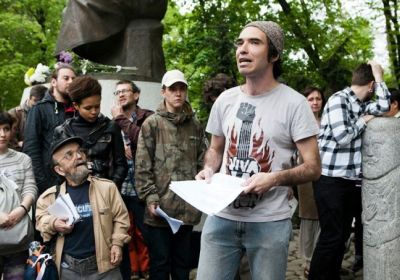
Moscow-based poet, translator, and activist Kirill Medvedev, of the Russian Socialist Movement, talks about President Vladimir Putin’s war on Ukraine and anti-war resistance at home.
Moscow-based poet, translator, and activist Kirill Medvedev, of the Russian Socialist Movement, talks about President Vladimir Putin’s war on Ukraine and anti-war resistance at home.
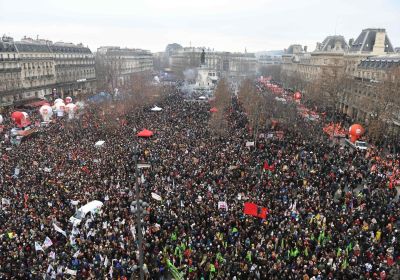
Millions of workers and youth in France mobilised on January 19 against the government's latest attack on pensions. John Mullen explains the background.
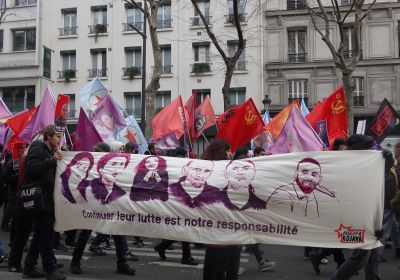
A large march took place in Paris, on January 7, to demand justice for three Kurdish female activists assassinated by a Turkish gunman in that city 10 years ago. Sarah Glynn participated in the march.

Polish left-wing party Razem (Together) International Office member Zofia Malisz discusses the party’s history, Polish politics and Razem’s views on Russia’s invasion of Ukraine.
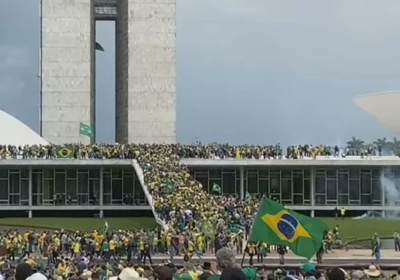
PSOL has condemned the invasion by former far-right president Jair Bolsonaro supporters of the country’s National Congress, arguing it “represents an attempted coup”, reports Federico Fuentes.

The answers for South Africa will have to come from struggle, National Union of Metalworkers of South Africa (NUMSA) leader Irvin Jim tells Vijay Prashad and Zoe Alexandra.

A new report reveals United States military officials knew that an August 2021 drone strike in Kabul likely killed Afghan civilians including children, but lied about it, writes Brett Wilkins.
An underreported news development from last year is the election of Benjamin Netanyahu's new government in Israel, reports Rupen Savoulian.

While floodwaters have receded across much of Pakistan, relief efforts continue to support flood-affected communities, reports Farooq Tariq.

A Bolivian court sentenced far-right Bolivian leader Luis Fernando Camacho to four months of preventive detention in the Chonchocoro Prison while investigation is underway in the ‘Coup d’état I’ case, reports People's Dispatch.

African People’s Socialist Party chairperson Omali Yeshitela discusses the FBI raid on his home and the continuing US government war on the movement for Black liberation and reparations.
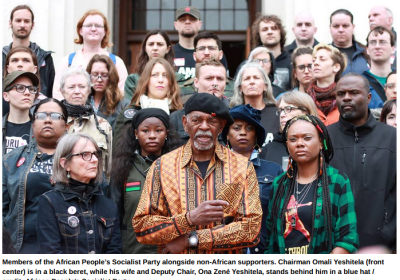
Members of the African People's Socialist Party (APSP) in the United States are expecting to be indicted this month over spurious allegations, reports Don Fitz, prompting a grassroots solidarity defence campaign.