-
Rather than giving us the government we deserve, the August 21 federal election delivered an outcome the two old parties deserved. Because both Labor and the Coalition focused on negative campaigning, sloganeering and scapegoating refugees and other minorities, a large number of voters decided to vote for alternatives with some vision. A hung parliament with the Greens holding the balance of power in the Senate was only a partial reflection of this growing disenchantment with the two-party system. -
By denying both the Australian Labor Party (ALP) and the the Liberal-National coalition an outright majority in primary votes and in House of Representatives seats, Australian electors voted “neither of the above” for the traditional parties of government. This followed an election campaign in which the major parties conducted an ugly race to the right, most notoriously by scapegoating the few thousand desperate refugees who attempt to get to Australia on boats. -
Barb Shaw, a well-known Aboriginal activist from Alice Springs’ town camps who has campaigned tirelessly against the Northern Territory intervention, doubled the Greens’ vote in the huge NT seat of Lingiari. The result damages the government’s claim that Aboriginal people support the intervention. The intervention imposes a series of discriminatory measures against Aboriginal people in remote communities. It was launched by the Howard Coalition government in August 2007 and has been extended under Labor. -
Unexpectedly, it seems to me, a great opportunity for social change has emerged. This might seem strange, with another neo-fascist on the verge of becoming Australian Prime Minister. However remember that real change comes from widespread social participation, over longer periods.
-
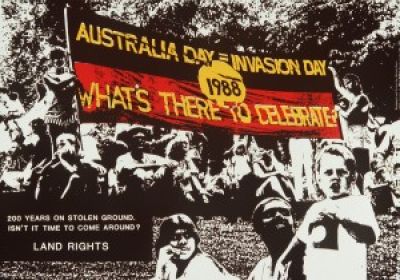
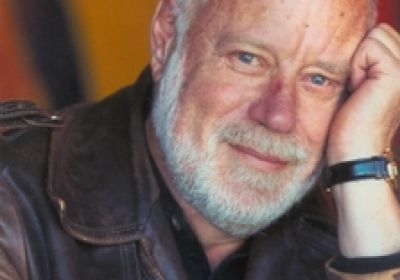
Greens candidate for Mackellar Dr Jonathan King is a blue-blooded radical. King gained national prominence in 1988 when he staged an $11 million recreation of the First Fleet's voyage. The historian and former journalist became, in his own words, “political hot property,” courted by both major parties. He declined their overtures. Politics “was in [his] blood”, King said, but he was “too radical” for the major parties. Following the bicentennial voyage, King found his “next big project, and that was helping the environment”. -
Sick of the manipulative, increasingly policy-free barrage of major party negative advertising in the race to the August 21 Australian federal election?
-
On August 16, Darwin was the venue for a screening of Our Generation, a landmark new documentary about the plight of Aboriginal people in the Northern Territory living under the repressive NT intervention. The film focuses on the effects of the intervention on the Yolngu people of East Arnhem Land, which coincided with a move by the NT Labor government to move people off traditional homelands and into larger towns (the “hub town” policy).
-
Whichever major party wins the August 21 elections, the real job of fighting for progressive change will remain. Not just because Labor and the Liberal-National Coalition have made this election campaign an ugly race to the right, but also because real change never comes simply through a vote. Even an election that registered real victory, such as the defeat of the hated John Howard Coalition government in November 2007, came on the back of sustained political action by millions of ordinary people focused primarily around the campaign against Work Choices.
-
On August 12, candidates from the Greens, Socialist Alliance (SA) and newly formed First Nations Political Party (FNPP) spoke to a group of 50 people at La Tropicana cafe in Fremantle. The forum was organised by SA to highlight environmental and social policies ignored by the major parties in the federal election campaign. The event was chaired by Fremantle councillor and Western Australian SA co-convenor Sam Wainwright Kate Davis, Greens candidate for Fremantle, said: “The Greens have a renewable energy target of 100% by 2030. -
After a successful strike and picket line on August 8, Victoria University’s (VU) vice chancellor, Liz Harman, agreed to negotiate on pay and conditions. Until then, senior management had demanded that promised pay rises this year be in return for abandoning regulation of workloads in the current enterprise bargaining round. The National Tertiary Education Union Branch (NTEU) has now suspended its bans on releasing results. Stood down union members have been reinstated. -
If imitation is the greatest form of flattery, Friends of Palestine (WA — FOPWA) must be doing something right: Friends of Israel (WA) was launched on August 8. The group’s website is a mix of nationalism and barely concealed racism. “Israel is in the front lines of the global battle between those who love life and those who glorify death”, it says. The launch took place at the Victory Life Centre, a fundamentalist Christian church, in Osborne Park, Perth. -
The Greens could have more power in the Australian parliament than ever before, after the federal election on August 21. Achieving the balance of power in the Senate is within reach for the Greens, meaning that the government would have to negotiate an agreement with either the opposition party or the Greens to pass legislation. The Greens currently share balance of power with Family First Senator Steve Fielding and independent Nick Xenophon. “We have shown a responsibility that the Coalition has shunned”, said Bob Brown, leader of the Australian Greens.