-
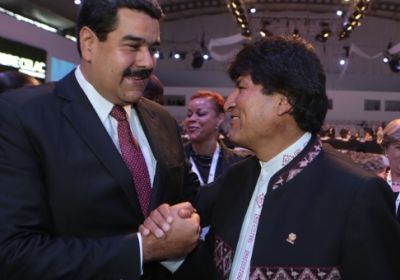
The US’s role in Latin America is facing a growing challenge. The 33 member states of the Community of Latin American and Caribbean States (CELAC) vehemently rejected North American intervention in the continent, and particularly the US-led blockade of Cuba and recent sanctions against Venezuela. These positions were part of the “Belen Declaration”, approved during CELAC’s third annual presidential summit, held on January 28th and 29th in Belen, Costa Rica. -
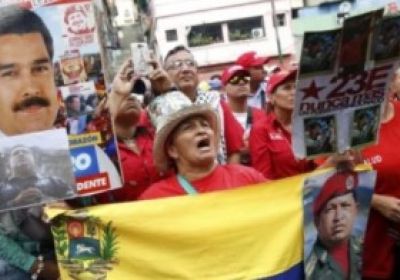
There is a coup underway in Venezuela. The pieces are all falling into place like a bad CIA movie. At every turn, a new traitor is revealed, a betrayal is born, full of promises to reveal the smoking gun that will justify the unjustifiable. Infiltrations are rampant, rumours spread like wildfire, and the panic mentality threatens to overcome logic. Headlines scream danger, crisis and imminent demise, while the usual suspects declare covert war on a people whose only crime is being gatekeeper to the largest pot of black gold in the world. Media attacks -
Venezuelan President Nicolas Maduro told a meeting of the Community of Latin American and Caribbean States (CELAC) in Costa Rica on January 28 that Latin America is living in a “new historic era” marked by unity and great opportunity. CELAC was first launched in 2011 in Venezuela, uniting all countries in the Americas except for the United States and Candada. It was set up as a counter-point to the Organisation of American States, which traditionally been dominated by the US. -
Venezuela's left-wing government has congratulated Alexis Tsipras, leader of Greece's radical left SYRIZA party, who won a huge victory in Greece's parliamentary elections on January 25, TeleSUR English reported. A Venezuelan government statement said: “Venezuela warmly congratulates the Syriza coalition party and Alexis Tsipras for their historic victory, wishing them success and complete solidarity and support.” -
The 15th solidarity brigade from the Australia-Venezuela Solidarity Network (AVSN) joined a long tradition of international brigades to visit Venezuela since 1998, and enjoyed a packed itinerary during its visit from December 2 to 13.
-
Thousands took to the streets of the Venezuelan capital of Caracas on January 23 to commemorate the 57th anniversary of the toppling of the Perez Jimenez dictatorship. Marchers also voiced their support for the government of President Nicolas Maduro in the face of economic war and political destabilisation. -
Venezuelan assistance to Palestine has played an important role in helping Palestine achieve domestic development goals, said Palestine's ambassador to venezuela, Linda Sabeh Ali. Sabeh Ali said her people hope to achieve some of the same freedoms the Venezuelan people have enjoyed in recent years. “Venezuela is a free land of liberators. We dream of a free country like this [Venezuela],” Sabeh Ali said in a January 21 interview to Venezuelan state media.
-
Delegates from environmental groups from around the world gathered on the Venezuelan island of Margarita this month as part of the country's “Social Precop”. The event was coordinated by the Venezuelan government in a bid to take the “voice of the people” into the United Nations talks on climate change scheduled for December in Peru. Over several days, movements and activists put the final touches to the “Margarita Declaration” that was drafted in July after four days of debate and discussion.
-
Since Israel’s July-August military offensive against the Gaza strip, Venezuela has sent 50 tonnes of food and medicine to Palestine. On November 2, the Venezuelan government sent its third shipment of aid to Palestine as part of the measures ordered by President Nicolas Maduro to help Palestinians after Israel’s war. The shipment was sent by plane and consists of 10.3 tonnes of food and medicines.
-
In celebration of the nationally acclaimed Day of Indigenous Resistance on October 13, Venezuelan President Nicolas Maduro handed over collective land titles to 14 original communities. Maduro also established a presidential council for indigenous peoples, lowered the threshold age for indigenous pensioners, and announced the creation of an institute to protect the country’s 44 native languages.
-
The Venezuelan National Assembly swore in grassroots leader Juan Contreras to assume the vacant post of the late deputy Robert Serra on October 7. Serra, a 27-year-old socialist deputy, was stabbed to death alongside his partner Maria Herrera in their Caracas home on October 1. Legislators also voted to ban former right-wing Colombian president Alvaro Uribe from entering Venezuela. Venezuelan President Nicolas Maduro has accused Uribe of being linked to the killings.
-
"Venezuela: The revolution continues," was the theme of a solidarity conference held at Redfern Town Hall here on October 6. About 120 people attended the conference, which was organised by the Embassy of the Bolivarian Republic of Venezuela, in conjunction with the Australia-Venezuela Solidarity Network (AVSN), the Bolivarian Circle, the Latin American Social Forum (LASF), other solidarity organisations, unions, and political groups, including Socialist Alliance.