
Lurid articles about Venezuela have peppered the Western press in recent days and weeks. The latest event that has been widely reported is the use of the military to occupy stores, including the national electronics chain Daka, with a mandate to sell products at “just prices”.
This is viewed by most media outlets as further evidence of the chaotic mismanagement of the economy by the government. However, while there are serious economic problems in Venezuela, this one-sided portrayal prevents an informed debate.
-
-
Venezuela’s National Assembly granted President Nicolas Maduro the power to pass laws by decree on economic and anti-corruption issues for a period of 12 months on November 19. The National Assembly held a second and final vote on a proposal from Maduro to enact the so-called enabling law, which allows him to legislate by decree on specific issues for the period set by the assembly. Maduro has been empowered to pass laws to “fight corruption, usury, money laundering and the economic war unleashed in recent times against the country by the national oligarchy”.
-
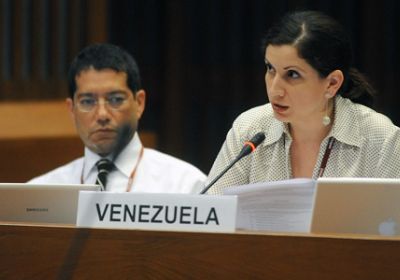 A group of 133 developing nations have walked out of a key part of the United Nations climate talks in Warsaw, Poland. The walk out came amid a conflict over how countries that have historically emitted the most greenhouse gases should be held financially responsible for some of the damage caused by extreme weather in nations with low carbon emissions. The United States, Australia, Canada and other industrialised countries are pushing for the issue — known as loss and damage — to be put off until after the 2015 climate talks in Paris.
 -
For more than a decade, people opposed to Venezuela's left-wing government have argued that its economy would implode. Like communists in the 1930s rooting for the final crisis of capitalism, they saw economic collapse just around the corner. How frustrating it has been for them to witness only two recessions: one directly caused by the opposition's oil strike (December 2002-May 2003) and one brought on by the world recession (2009 and the first half of 2010).
-
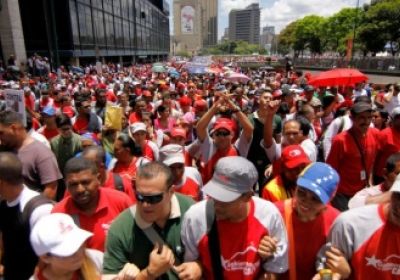 Venezuelan President Nicolas Maduro has announced a slew of policy reforms aimed at combating speculation and hoarding. New government institutions are also being created to regulate trade and oversee foreign currency exchange. “We have to make real decisions for the benefit of the economy and society, whatever the cost and whatever happens,” Maduro said on November 6. Describing the package of reforms as an “economic offensive”, Maduro pledged to “strike hard” at speculators and hoarders.
 -
Venezuela's finance minister, Nelson Merentes, presented a draft 2014 budget to the National Assembly on October 22 that devotes more revenue to social services, while predicting continued economic growth and lower inflation. About 62% of the 551 billion bolivars budget (about $92 billion) would be devoted to social services, compared with 37.7% this year.
-
 Comedian, Hollywood star and former host of MTV and Big Brother's Big Mouth Russell Brand took on veteran BBC broadcaster Jeremy Paxman in a Newsnight interview subsequently viewed millions of times on YouTube. The journalist, veteran of many bruising encounters with politicians of all stripes, decisively lost.
 -
 Venezuelan president Nicolas Maduro has launched the second phase of his Street Government initiative, with the aim of inaugurating new projects and strengthening community organisation. The Street Government is a governance mechanism implemented by Maduro this year which involves the national executive visiting Venezuela’s regions and holding meetings with different neighbourhoods and social groups. These meetings allow the government to orientate its regional development strategies and launch new projects with the support and involvement of communities.
 -
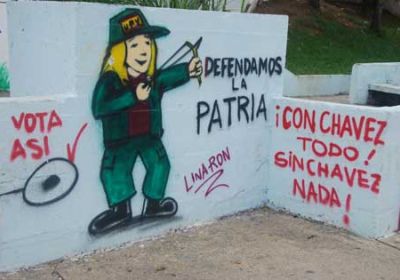 Jasmine Acosta and Hector Zabala are social activists from the Caracas neighbourhood of 23 de Enero (January 23). They come from a working-class neighbourhood with a strong tradition of community activism. This barrio of about 250,000 inhabitants has been part of all the major revolutionary moments in Venezuelan history.
 -
 Venezuelan President Nicolas Maduro ordered the expulsion of a top US diplomat and two other embassy officials from Venezuela for alleged conspiracy with the opposition. “Get out of Venezuela,” said Maduro during a televised political event. “Yankee go home. Enough of abuses against the dignity of a homeland that wants peace.” The US officials named were charge d'affaires Kelly Keiderling, and two other embassy employees, Elizabeth Hunderland and David Mutt. They were given 48 hours to leave the country.
 -
The U.N. Sustainable Development Solutions Network has released its World Happiness Report for 2013.
-
Bolivian President Evo Morales plans to file a lawsuit against the US government for crimes against humanity, RT.com reported on September 20. Morales criticised the US for its intimidation tactics and fear-mongering after a plane carrying Venezuelan President Nicolas Maduro was blocked from entering US airspace.