
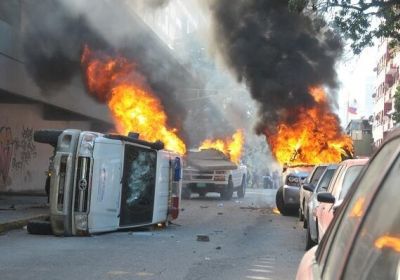
Venezuelan opposition protesters in Caracas attacked three journalists after a march demanding “greater freedom of the press”. Meanwhile, barricades in Tachira state have claimed another life.
Luis Gutierrez Camargo was killed instantly during a collision with an opposition roadblock in Tachira on March 4, communication minister Delcy Rodriguez announced via Twitter.
Rodriguez condemned the use of street barricades, describing them as “murderous methods”.
-
-
Below, Australia Venezuela Solidarity Network activist Federico Fuentes, provides answers to common questions about recent events in Venezuela. Key facts are referenced, largely from media outlets that could not be identified as pro-government.
-
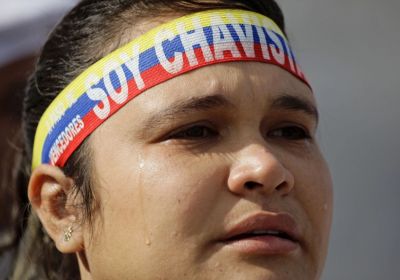 With few exceptions, most international media coverage of the recent protests in Venezuela gives little sense of the response from the popular social movements who support the government of President Nicolas Maduro but operate independently from it. As researchers who have carried out long-term fieldwork in the urban barrios (poor neighbourhoods) of Caracas, we felt compelled to translate and publish the statement of one of these barrio groups.
 -
Venezuelan car workers have slammed multinational car manufacturers for cutting back production in the country. The country's largest trade union federation has called for the industry to be nationalised. Accusing multinational car companies of being “imperialist”, the National Workers' Union (UNT) has called on the government to place car factories under worker control. The UNT said: “It's clear that building socialism relies on the working class, indeed the workers' control of the factories.”
-
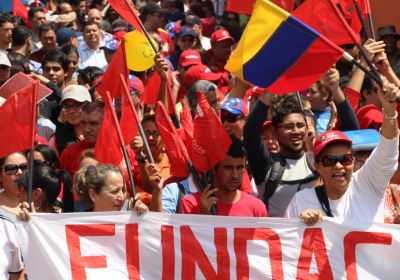 Almost a year has passed since the death of Hugo Chávez on March 5, 2013. Arguably this has been the most difficult one for the Bolivarian Revolution. Many people, both on the left and the right expressed doubt that there could be Chavismo without Chávez. Perhaps a year is still too short of a period to assess the situation after Chávez’s passing. Yet, the dynamic developments over the past twelve months call for some preliminary remarks.
 -

In response to the violence instigated by the Venezuelan elite, the working classes of Venezuela took to the streets this week.
-

Millions of dollars worth of damages to public property may have been caused by a wave of violence across Venezuela, according to government sources. The assessment comes after Venezuelan President Nicolas Maduro called for a “National Peace Conference” as a means of resolving the on-going violent opposition protests in Venezuela.
-
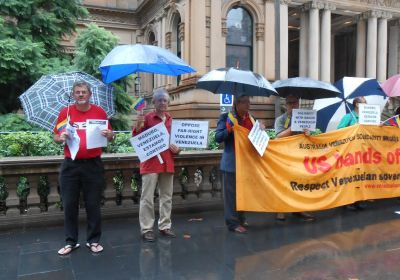 Activists have held solidarity actions against right-wing violence in Venezuela in several Australian cities, as part of an international campaign of solidarity with the Bolivarian revolution. About 20 people rallied outside Sydney Town Hall on February 19. Holding banners and placards expressing support for Venezuelan President Nicolas Maduro and the Bolivarian revolution, the protesters handed out leaflets explaining to passersby the need to defend the people of Venezuela and their government against extreme right attacks, backed by the US government.
 -
 Since the 1990s, many critics of the United States have accused Washington of promoting the dismemberment of nations such as Yugoslavia, in accordance with neoliberalism’s drive to weaken central governments and nation states. Today, Washington’s official policy in nations like Syria and now the Ukraine has been support for rebels seeking to overthrow the government, even though their chances of success are minimal.
 -
When is it considered legitimate to try to overthrow a democratically-elected government? In Washington, the answer has always been simple: when the US government says it is. Not surprisingly, that is not the way Latin American governments generally see it.
-

“WHERE IS MURDEROUS DICTATOR #NICOLASMADURO HOLDING #LEOPOLDOLOPEZ ?IS LOPEZ TORTURED,DEAD?INSANE MONSTERS CAN’T BEAR PPL KNOWING THE TRUTH?” So tweeted singer, actress and renowned Venezuelan political analyst Cher on February 19. Cher was far from the only celebrity to express support for the right-wing protests in Venezuela, and such tweets symbolise how much the source of disinformation and attacks on Venezuela and its democracy has shifted from mainstream to social media.
-
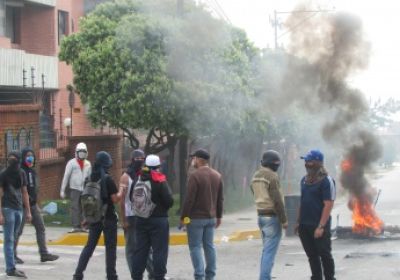 The slant of Venezuela’s private media and the international media on what is happening in Venezuela is clear: The government is responsible for the violence. In the first place, it is said, government-ordered gunmen are shooting at peaceful demonstrators and the violence generated by the opposition is just a response to the brutality of police and military forces. But there is considerable evidence that shows the violence, including that of unidentified motorcyclists against demonstrators, is being carried out by the opposition. Consider the following: