
Cuba calls for US to end covert operations
The Cuban government has called on Washington to halt hostile covert operations against it, the Morning Star said on August 7.
An Associated Press investigation revealed that a US government program had sent young Latin Americans to Cuba on political missions posing as AIDS-awareness workshop organisers.
-
-
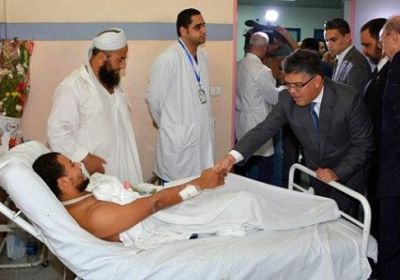 Ecuadorian President Rafael Correa has decided to cancel his visit to Israel, where he had planned meetings with government officials, including Israeli Prime Minister Benjamin Netanyahu, teleSUR English said on August 6. Correa cancelled the visit in protest against the atrocities being committed by Israeli forces against the people of Gaza.
 -
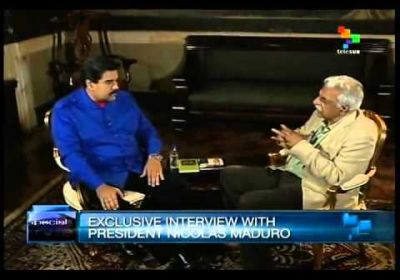
Latin American television TeleSUR has launched an English-language website to provide a global, English-speaking audience with a “Latin American perspective” on world events, IBT.com reported on July 29.
-
El Salvador joined four other Latin American countries in recalling its ambassador from Tel Aviv in protest against Israel’s bloody attack on the Gaza Strip, International Business Times said on July 30. Brazil, Chile, Ecuador and Peru have all recalled their diplomatic representatives to Israel.
-
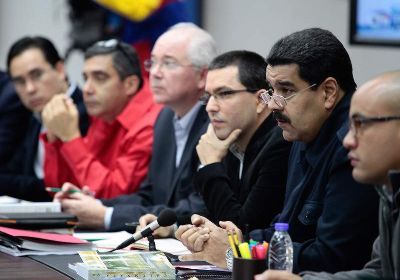 One of the most important public debates over the future of Venezuela’s revolutionary process has opened up after the publication of a document by recently ousted planning minister Jorge Giordani. In it, Giordani launched a series of scathing criticisms of the “new path” he says the government has taken since former president Hugo Chavez died in March last year. Giordani dropped the bombshell on June 18, a day after he was removed from the post he had held almost uninterruptedly since 1999.
 -
Ecuador withdrew its ambassador from Tel Aviv on July 18 in protest at Israel's offensive, which has already killed more than 700 Palestinians. Middle East Monitor reported that Ecuador's foreign minister Ricardo Patino said: “We condemn the Israeli military incursion into Palestinian territory, we require cessation of operations and indiscriminate attacks against civilians.”
-
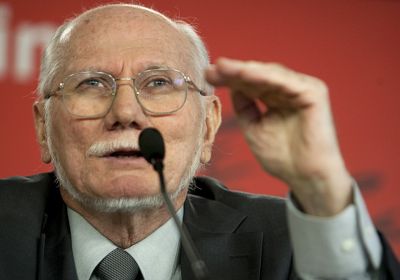 The publication of a document highly critical of the government of Venezuelan President Nicolas Maduro, authored by one of the longest-serving ministers in former president Hugo Chavez’s government, has triggered an unprecedented debate among Venezuelan revolutionaries. Jorge Giordani dropped the bombshell on June 18, a day after he was replaced as planning minister. This was preceded by his dismissal from the boards of Venezuela's Central Bank and state oil company PDVSA, the state oil company. He had held the post almost uninterruptedly since Chavez first came to power in 1999. .
 -
Venezuelan president Nicolas Maduro has launched an “SOS Palestine” campaign to demand an end to Israel’s ongoing bombardment of Palestine’s Gaza strip, Venezuela Analysis said on July 12. “Enough already, I’ve joined the campaign,” he told supporters during a televised broadcast. “#SOS Palestina, let’s launch it.” Holding up a handwritten placard, he asked fellow citizens to join the campaign, stating, “The Palestinian people have the right to live in their ancestral lands in peace.”
-
Unite the Union, the largest union in Britain and Europe, has unanimously passed a motion supporting the Venezuelan government of President Nicolas Maduro and re-affirming its support for the Venezuela Solidarity Campaign. The motion was presented during Unite’s June 30 to July 4 policy conference in Liverpool. Commenting on moves towards US sanctions on Venezuela in recent weeks, the mover of the motion said: “One can only conclude that some in the US share the Venezuelan opposition’s aim to oust the Maduro government”.
-
Venezuela: Social programs expanded in poorest communities The Venezuelan government has initiated its policy of expanding social programs in the country’s most deprived areas in a bid to eradicate extreme poverty, Venezuelanalysis.com said on June 30. The initiative, called “Red Sundays”, involves teams of social program workers visiting poorer communities every Sunday to diagnose which households are deprived of certain basic needs and which social programs are required to attend to these needs.
-
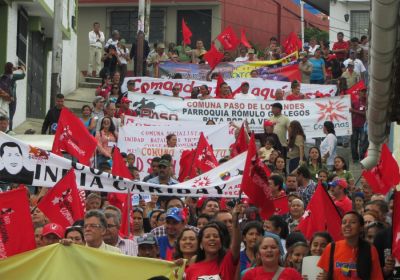 A spectre is haunting Venezuela ― the spectre of the colectivos. All the powers of old Venezuela have entered into a holy alliance to exorcise these colectivos: political parties, NGOs, the foreign press, and of course, Twitter users. “Armed thugs”, “vigilantes”, “paramilitaries” ― these are just a few of the hyperbolic terms attached to what has suddenly emerged as the central bogey of the Venezuelan opposition today: “los colectivos.”
 -
Venezuelan President Nicolas Maduro issued a call on June 7 to each grassroots unit of the governing United Socialist Party of Venezuela (PSUV) to submit 10 proposals for ways to improve how the government functions, Venezuelanalysis.com said on June 21. “In response,” the article said, “throughout Venezuela, local units of PSUV militants, known as Battle Units Bolivar-Chavez (UBCh), devoted their weekly meetings to lively debates analysing political problems and attempting to reach consensus on solutions.”