
-
-
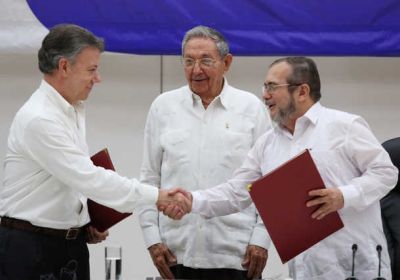
After the historic announcement on August 24 that negotiations have concluded in the Colombian peace process between the Colombian government and the left-wing Revolutionary Armed Forces of Colombia (FARC), here are the five key points that have been agreed on.
-
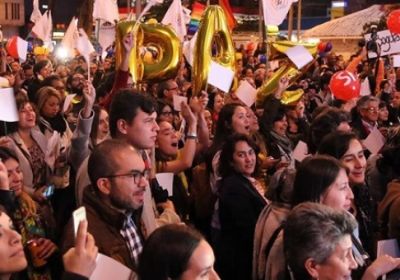
A groundbreaking peace deal has been signed between the government and left-wing Revolutionary Armed forces of Colombia (FARC) rebels. But while the more than 50-year-long war is finally over, difficult times still lay ahead to fully realise the promise of peace in the South American nation.
-
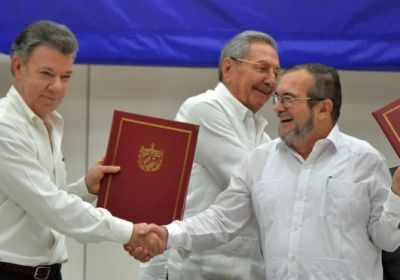
The majority of Colombians say they will vote “Yes” in a plebiscite to affirm the peace deal ending nearly 50 years of war between the Colombian government and the main rebel group, the left-wing Revolutionary Armed Forces of Colombia (FARC), a new poll has revealed.
-
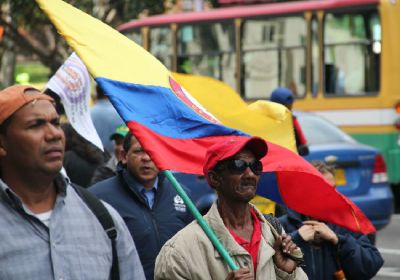 Colombia has just emerged from 50 years of civil war, but its future is still uncertain. Amid the optimism prompted by the peace deal between the leftist Revolutionary Armed Forces of Colombia (FARC) and the government of President Juan Manuel Santos, it is easy to assume the slaughter of trade unionists and other activists is a thing of the past. However, 534 people were murdered from 2011 to last year — 134 of those trade unionists — according to Justice for Colombia, the British trade union-based campaign against paramilitary violence against the Colombian labour movement.
 -
 Rebels from the left-wing Revolutionary Armed Forces of Colombia (FARC).
One of the world's longest running conflicts appears to be nearing an end after more than 50 years of fighting. Colombian government officials and rebels from the left-wing Revolutionary Armed Forces of Colombia (FARC) gathered in Havana, Cuba, on June 23 to announce a historic ceasefire nearly four years in the making.
Rebels from the left-wing Revolutionary Armed Forces of Colombia (FARC).
One of the world's longest running conflicts appears to be nearing an end after more than 50 years of fighting. Colombian government officials and rebels from the left-wing Revolutionary Armed Forces of Colombia (FARC) gathered in Havana, Cuba, on June 23 to announce a historic ceasefire nearly four years in the making.
-
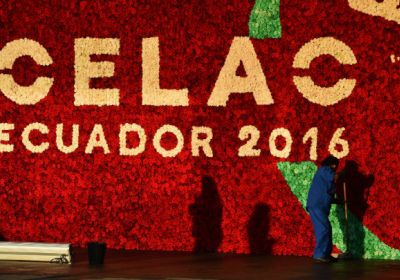 The 2016 summit of the Community of Latin American and Caribbean States (CELAC) began on January 26 with the meeting of foreign ministers and chancellors of the Latin American nations at the headquarters of the Union of South American Nations (UNASUR) in Mitad del Mundo, Quito, Ecuador. CELAC, a regional body involving all nations in the Americas except for the United States and Canada, was officially created in Caracas in 2011 under the leadership of then-Venezuelan president Hugo Chavez.
 -
 Day care centre for Colombian refugees in Ecuador.
Governments across the world are erecting walls and tightening laws to keep refugees out, but one country is taking a radically different approach based on the simple premise that “no one is illegal”.
The Andean nation of Ecuador, with a population of 15.7 million people, is no stranger to the challenges of dealing with refugee crises.
Day care centre for Colombian refugees in Ecuador.
Governments across the world are erecting walls and tightening laws to keep refugees out, but one country is taking a radically different approach based on the simple premise that “no one is illegal”.
The Andean nation of Ecuador, with a population of 15.7 million people, is no stranger to the challenges of dealing with refugee crises.
-
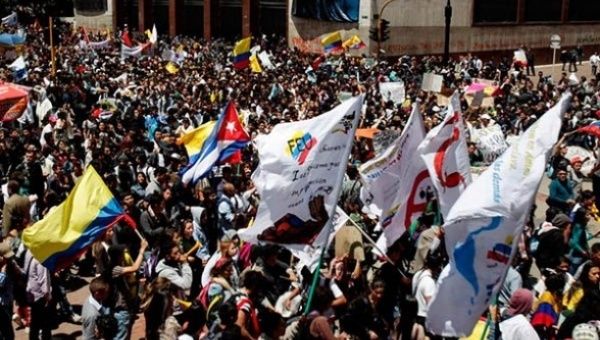 Land reforms are essential to achieving a long-standing peace after half a century of conflict, said Colombian academic Alejandro Reyes on September 10 during a forum on agrarian issues in Bogota.
-
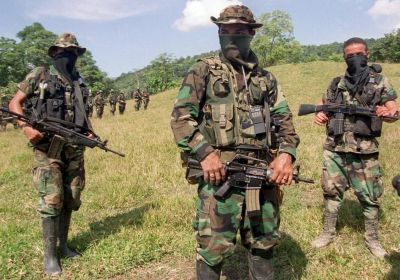
Venezuela and Colombia recalled their ambassadors for consultations on August 26. The move came after a meeting between the two nations’ foreign ministers failed to calm diplomatic tensions over Venezuelan border closures and Colombian smuggling activities.
-
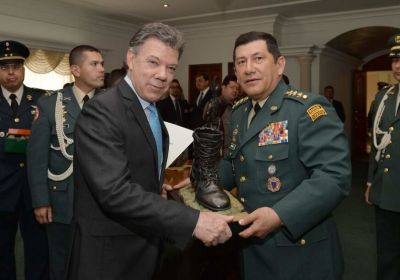
Top generals in the Colombian army have been implicated in the long-running “false positives” military scandal, according to a new report Human Rights Watch (HRW) published on June 24.
-
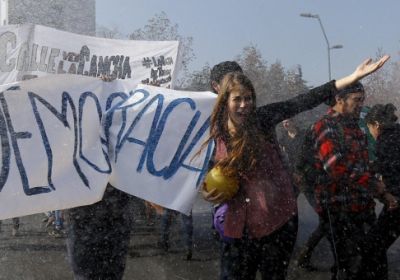 Chilean teachers strike against education bill Thousands of Chilean teachers took to the streets of Santiago once again on June 17, TeleSUR English said that day. The protest was part of the indefinite national strike to protest against an education reform bill proposed by the government of President Michelle Bachelet. There were marches in at least five other cities across the country.
Colombia
Colombia