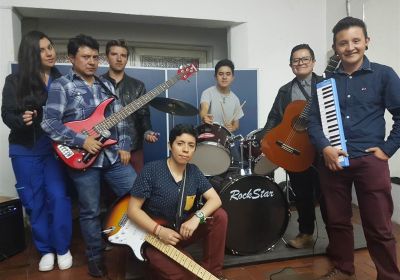
Last year, a group of studying music at the LGBTI Centre in Bogota decided to organize a rock band unlike any other in Colombia. Members say the band, 250 Milligrams, is the first transgender male rock group in South America.
Last year, a group of studying music at the LGBTI Centre in Bogota decided to organize a rock band unlike any other in Colombia. Members say the band, 250 Milligrams, is the first transgender male rock group in South America.
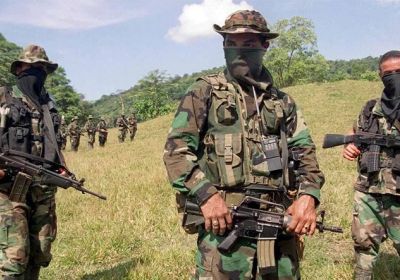
"This is a fundamental precept of paramilitarism: clear the land to ensure smooth functioning for big business deals and, in this sense, this is no different to what has happened in the past few years in this country, which is the consolidation of what I would call a militarised neoliberal model, militarised in both a state and para-state sense."
An interview with Renan Vega Cantor, a professor at Colombia’s National Pedagogical University.
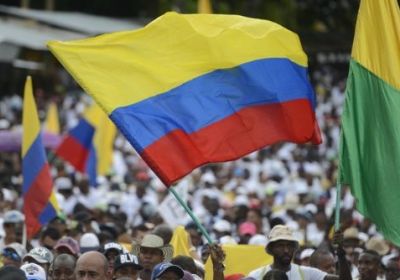
Jose Maria Lemus, president of the Tibu Community Board in Colombia’s North of Santander state, has been killed, the Peoples’ Congress reported June 14.
His murder adds to the growing list of recently assassinated social, Indigenous and human rights activists in the South American country.
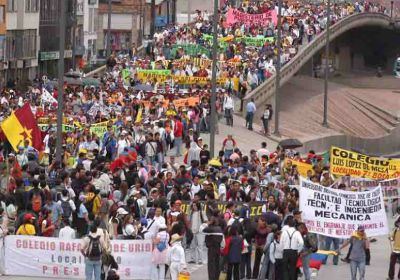
About 60,000 public school teachers gathered on the streets of Colombia’s capital, Bogota, on June 6 demanding a government response to a crisis in the sector.
The teachers have been on strike for over a month now demanding reform in education that would see dramatic investment in the sector in terms of pay and medical care as well as a reduction in the student-teacher ratio and improvement in school meals, among others.
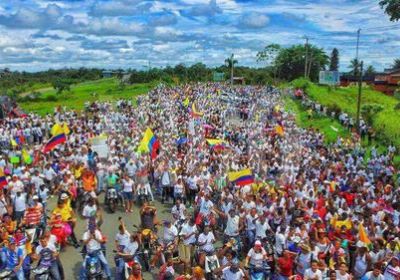
Colombia’s government reached an agreement with Buenaventura residents on June 6, bringing an end to 22 days of strike action in the country’s largest port city.
The strike action in Buenaventura resulted from decades of utter neglect of the region coupled with unfulfilled promises by successive governments to address the situation in the port city.
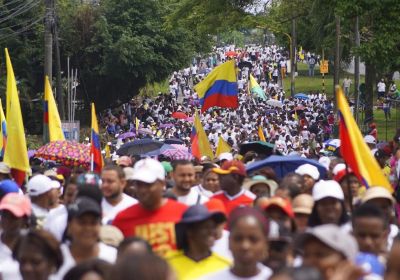
A rebellion has been raging in Buenaventura - Colombia’s largest port city - since May 16, when residents decided to embark on massive anti-government marches to demand an end to chronic state neglect and abandonment, corruption, crime and armed conflict.
The government’s inability to attend to protesters’ demands has only spurred an escalation of protests that has not shown signs of calming, even though the mayor’s office issued a decree declaring a curfew and a ban on public demonstrations.
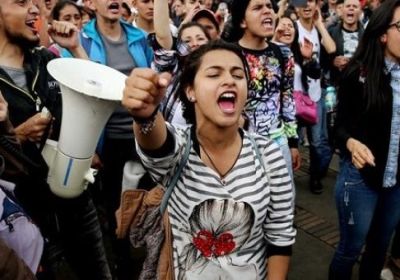
Colombia’s national teachers’ strike marked three weeks on June 1 as tens of thousands of education workers continue to pressure the government to respond to their demands for better working conditions, higher salaries and more investment in public education.
In the latest mass protest, about 300,000 teachers took to the streets on May 31 to call attention to education issues in major cities across the country, including Bogota, Cali, Medellin, Bucaramanga and Barranquilla.