
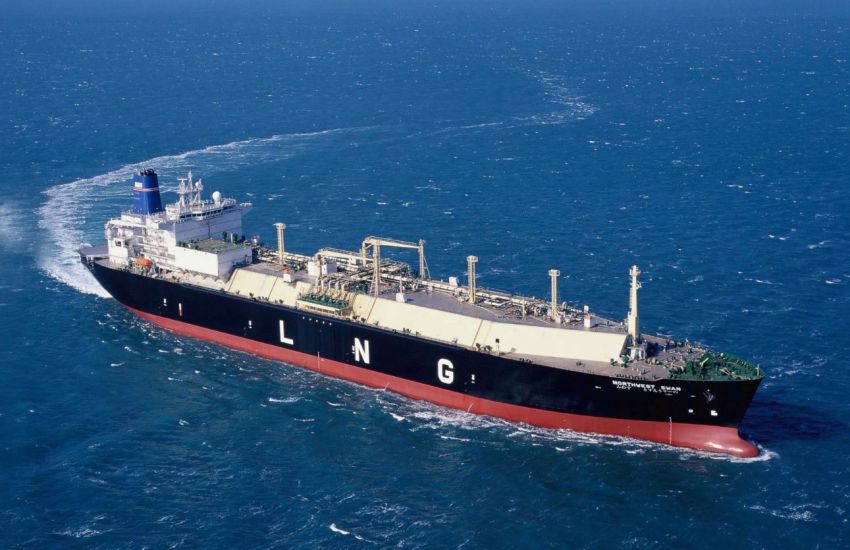
Australia digs fossil fuels; Türkiye burns them. One exports coal, the other imports it.
Then came Woodside — a nine-year liquefied natural gas (LNG) deal, signed weeks before COP31 was awarded to Antalya. Two states, one fossil fuel relationship, one climate summit.
The partnership shows how both governments talk about climate finance and what they refuse to name.
Australia is hosting a leaders’ summit in Fiji in October and then Tuvalu. Why Tuvalu? Because the island is sinking and it makes a ready-made stage. But county’s leaders are not coming — Germany, Mexico and South Korea are sending ministers instead. The Pacific Resilience Facility has a target of $500 million; only $172 million has been pledged.
Had COP31 been held in Kaurna Yerta/Adelaide, the bill could have reached $2 billion.
The summits in Dubai and Baku were funded by petrostates — fossil fuel companies paid for access. Now it is Türkiye’s turn.
The answer to who pays is buried in the COP31 hosting agreement, passed by the Turkish Grand National Assembly on July 30. It lists many cost items but attaches no estimated price to any — a blank cheque.
The total is estimated to have already exceeded half a billion dollars — surpassing the cost of the NATO Summit held in Ankara just weeks earlier, and COP31 (Conference of Parties for the United Nations Framework Convention on Climate Change) has not even begun.
This money will come from the public. But this is not what the “climate finance” conversation is about.
The tourism revenue from the summit will flow to the big hotels. Türkiye’s Minister of Culture and Tourism, Mehmet Ersoy, is the co-founder of ETS Tour, one of Türkiye’s largest tour operators and Voyage Hotels.
The agreement passed with barely a question asked. Only one party filed a dissenting note. Five deputies voted against, 22 abstained; 38 opposition deputies voted in favour, while 115 opposition deputies did not turn up to vote at all.
The pattern is familiar; a 2019 law exempting thermal power plants from pollution filters passed in the same near-silence — until we published the attendance records.
Parliament had chosen silence; the public named it and the president was forced to veto the law he had just been handed. What is being named this time is different: the absence of 115 deputies.
Climate change is a capital transfer built on fossil fuels. What we need is an end to the destructive system the public is financing, not more finance to work within it.
Türkiye spent US$727 billion on fossil fuel imports between 2003 and 2022. Even 10% of that figure would constitute a major source of climate finance. But that money is already spent — feeding the fossil fuel system.
Asphalt, concrete, roads, buildings are fossil fuel systems too.
COP31 will be held on land built over farmland for the EXPO 2016 fair — used once then left idle — with a 150,000 square metre asphalt car park added for the occasion. They just are not named as climate policy.
Finance 2.0: Philanthropy
The foundations of Türkiye’s largest climate-changing corporations came together in June to launch the “Philanthropy for Climate” initiative.
Who are the founding signatories? Koç Holding, which operates Türkiye’s largest oil refinery, Sabancı Holding, which owns Enerjisa’s coal and gas plants and Çimsa cement operations is a key player and TAV Airports, which operates Antalya Airport in the city hosting COP31.
They claim to be “taking responsibility for the climate”, but laundering it is a more accurate description.
What makes it worse is that environmental organisations, education and health bodies have signed on.
Sixteen organisations in Türkiye pushed back saying: “Those who are changing the climate cannot clear their own name”.
Other ecology and environment movements had no position. That silence gave Philanthropy for Climate exactly what it needed: civil society legitimacy.
“Climate finance” may be the most content-free phrase in the climate debate. Türkiye received billions of dollars of climate finance from the World Bank, among others, and its emissions kept rising.
The public money going to fossil fuel imports is another form of financing, but it will not appear on the agenda of climate negotiations.
A climate activist flying in from Australia for COP31 will land at TAV’s airport, stay in a hotel built by the minister’s company and sit in rooms where the “finance” being discussed will be none of the above.
This is not a COP problem; it is proof of exactly what COP is designed not to see.
We talk about climate finance. We do not talk about who finances the system that is changing the climate. Name that too.
[Önder Algedik is an energy and climate expert and activist. He is founder of 350Ankara and author of İklim Meselesi (İletişim Yayınları, 2025).]