
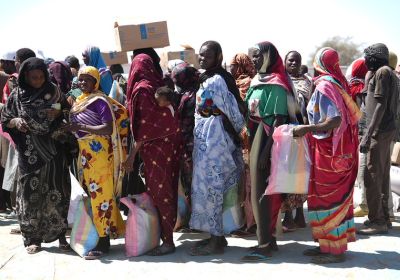
As the war in Sudan surpasses 1000 days, famine spreads throughout the country, reports Pavan Kulkarni.
As the war in Sudan surpasses 1000 days, famine spreads throughout the country, reports Pavan Kulkarni.

Pavan Kulkarni draws on analysis from the Sudanese Communist Party and other sources to examine the background to Sudan's December Revolution and its two-and-a-half-year counterrevolutionary civil war.
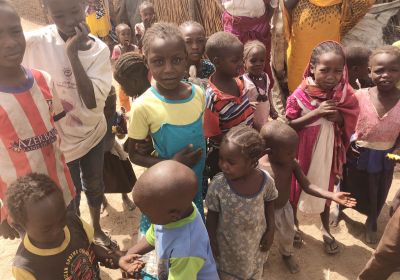
The situation in Sudan is described as the “biggest humanitarian catastrophe on Earth”, with children dying at a rate of 13 a day in the famine-stricken Zamzam camp for internally displaced persons, reports Pavan Kulkarni.
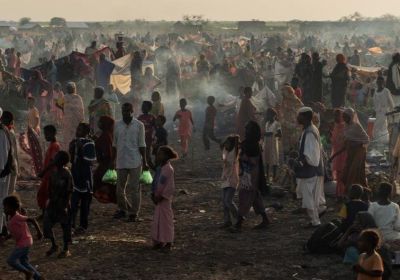
As the world turns its gaze to Gaza, the war in Sudan, which has killed thousands, continues into its eighth month with no ceasefire in sight, reports Pavan Kulkarni. Cholera stalks millions and the fragile healthcare system has all but collapsed.

France is refusing to withdraw its ambassador and troops from Niger, and reaffirming its threat of supporting foreign military intervention, reports Pavan Kulkarni.
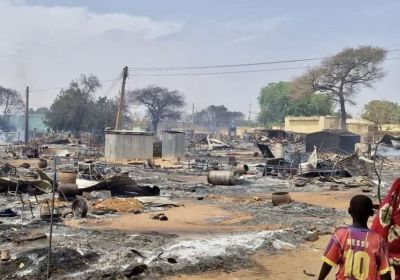
The Sudanese Communist Party welcomed the ceasefire between the army and the Rapid Support Forces but has warned against monopolisation of the peace process by United States and Saudi Arabia, reports Pavan Kulkarni.
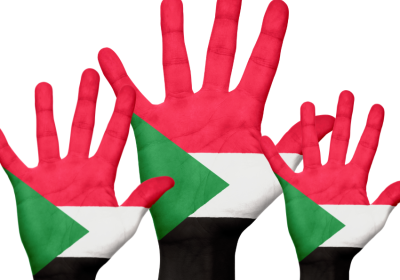
The left in Sudan warns that the conflict between the Sudanese Army and the Rapid Support Forces could be used as another excuse to prevent the hand over of power to civilian forces, reports Pavan Kulkarni.

Hundreds of thousands took to the streets calling for the overthrow of the military junta, in at least 19 cities and towns across Sudan, marking one year since the military coup. Pavan Kulkarni reports.
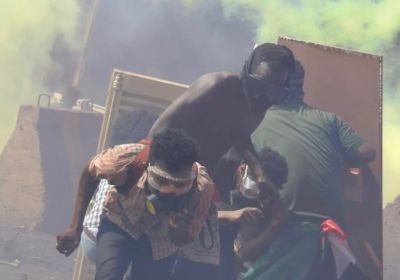
Elders took to the streets across Sudan in a show of support for the country’s youth, who are the forefront of resisting the military junta, reports Pavan Kulkarni.

Trade unions and people’s movements have called for strikes and mass protests in response to the coup by the Sudanese military on October 25, reports Pavan Kulkarni.

Two-thirds of all COVID-19 testing in South Africa has been conducted in costly private hospitals. This is raising questions as to whether the most vulnerable sections of the population are being tested sufficiently, writes Pavan Kulkarni.