
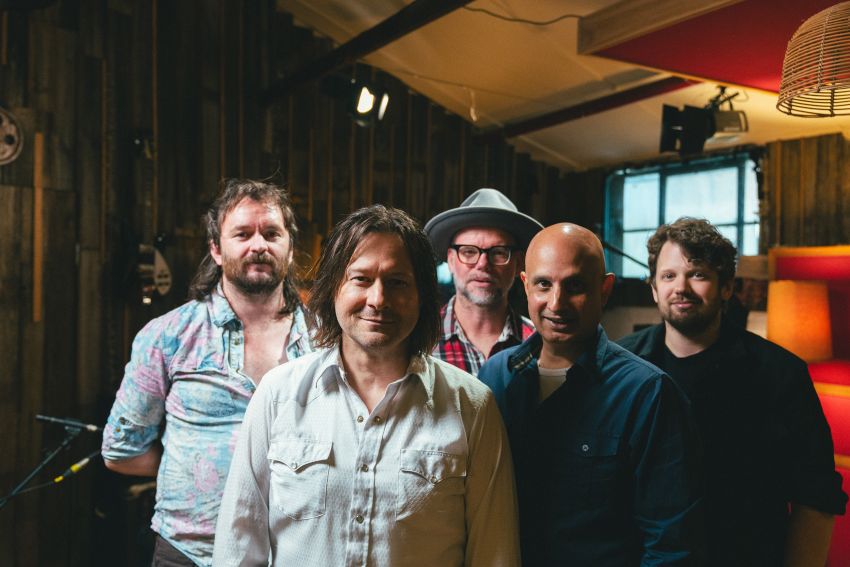
Suzanne James sat down with Melbourne musician Les Thomas and got a history lesson in colonialism, feminism, trade unionism and making music in defense of the working class.
* * *
Les Thomas' working-class roots were forged in the fires of Melbourne's industrial Williamstown. His Dad, a sheet-metal worker, taught at the local technical college, his students went to work on the factory floors of Australia's then-mighty car manufacturing industry.
At its peak in the 1970s, Australia produced almost half a million cars a year, employing more than 100,000 workers, mostly in Melbourne and Adelaide. Protected by strong unions and government tariffs, the industry supported generations of skilled tradespeople in permanent jobs — and led the world in car design and manufacture.
Thomas’ new album, I Remember Everything, honours the long and arduous history of working-class struggles and social and cultural upheavals around the world. Fans of his earlier works will find much in it to love.
Thomas told Green Left he wanted to recognise the human face of the history of resistance and revolution.
“The Firing Line" (released at his Melbourne fundraiser for Gaza in September last year) was the lead single from the 10-song album, Thomas explained.
“The title track ‘I Remember Everything’ is basically a journey through history, starting back in the days of the crucifixions, through various political movements and cultural figures. [It's also about] the struggles of anti-colonialism.”
Thomas includes many historic icons including Trukanini (1812–76), a palawa leader who survived Tasmania's violent colonisation and became a profound symbol of Indigenous survival and resistance.
It pays homage to figures like Frida Kahlo, a Mexican artist born in 1907, famous for her raw, intensely personal self-portraits, her unapologetic embracing of her Mexican heritage and her trailblazing role as a feminist and LGBTQ icon.
“It's about events that have shaped our consciousness, and I felt like that was a worthy kind of centrepiece of this album because it's very humanistic in terms of its themes,” Thomas said.
The latest single from the album is “The Last of the Old Holdens”, a tribute to his dad's generation of auto workers and the lessons of union solidarity, which Thomas also learned as he worked in the factories and as a young shop steward.
“The Last of the Old Holdens” is “really about the people and the stories that came out of that whole way of life. I think it's important that we celebrate and recognise the lives of working-class people in an empathetic and genuine way,” he said.
“For me, it's about honouring the stories of those people.”
The demise of the car industry began with tariff removals in the 1980s and the advent of Free Trade Agreements. Mitsubishi closed in 2008, followed by Ford, Holden and Toyota. By October 2017, the last Holden Commodore had rolled off the South Australian production line.
What was that “Day of the Last Holden” like for the Thomas family, its DNA so intertwined with the auto industry?
“Well, we had a lot of reasons to be angry, at those liberal governments and their policies, the kind of neoliberalism that attacks unions, that undermined so many manufacturing industries,” Thomas said.
“Dad was a long-time trade unionist and he got really worked up ... he had a visceral anger ... about what [John] Howard and later [Tony] Abbott came to do ... ending an era when a family could survive on one living wage.”
Reflecting on the rising international recognition of his music, Thomas will take his new album on tour in Britain soon, as part of the Tolpuddle Martyrs Festival in Dorset, England.
“The Tolpuddle Martyrs were a group of six farm labourers who came together in 1834 to try to organise for better wages and conditions. They were facing starvation and extreme poverty with their families,” Thomas explained.
“The six men were punished by the authorities for unionising, with transportation to Australia under an archaic law against swearing secret oaths.”
“So ... 100,000 workers rose up in protest through the streets of London, and it basically kicked off the early union movement,” Thomas said. “There was an appeal where it was argued that the King's own brother had sworn a 'secret oath' in order to become a member of the Masons.”
Convictions overturned on appeal, they were given a reprieve — most of them returning to England, their history now celebrated by the annual Tolpuddle Martyrs Festival.
Thomas is excited to be invited to be part of it.
“They have Billy Bragg play most years, and other left-wing singer-songwriters and bands. I'm part of that tradition and they liked my music enough to say 'come and join us'.”
When he returns from Britain, Thomas looks forward to more gigs with is band, spreading the message of human rights and social solidarity through song.
With worker representation, human rights and social security safety nets all under relentless attack at home and abroad — including from increasingly right-wing Labor governments — it's a message that needs to be heard loud and clear, now more than ever.
[Les Thomas will be touring Britain from June 30 to August 5. You can find all his music via lesthomasmusic.com and Bandcamp.]