
Australia is undergoing a turning point following the terrorist attack on Hanukkah celebrations at Bondi Beach on December 14.
The New South Wales Labor government has rushed in new laws, ostensibly to combat antisemitism, and federal Labor said it would adopt all 13 recommendations of the Special Envoy to Combat Antisemitism, including the controversial International Holocaust Remembrance Alliance’s (IHRA) definition of antisemitism, which criminalises criticism of the Israeli government.
An antisemitism unit has been established within the Australian Federal Police, which criminalises anything that might threaten the interests of the “Jewish community”. This is in addition to federal laws, enacted in January, which ensure states’ policies comply with federal antisemitism laws.
It is important to note that the IHRA’s definition of antisemitism encompasses hostility towards Judaism, in general, and hostility towards Zionism and the State of Israel in particular.
While the term “Semitic” refers to the peoples who inhabited the eastern Mediterranean in ancient times, the Zionist movement and its allies consider Jews — and only Jews — to be the Semitic people. This is despite the ancient Judaism religion being shared by several Semitic, Hamitic and Japhetic groups, as the Torah illustrates.
Race crimes
While there are rising rates of hate/racist crimes across the country, the terrorist attack on the Hanukkah celebration at Bondi Beach sent shock waves through all communities.
The Jewish community has special bodies dedicated to monitoring and documenting racist crimes. However, they often conflate politically-motivated crimes, which are predominantly directed against the Israeli government’s supporters in Australia, with other forms of racist violence.
It is undeniable that some racist crimes target the Jewish community as a whole.
But it is also important to note that progressive parts of the Jewish community oppose Zionism and reject the Israeli government’s control over Jewish communities worldwide, including in Australia.
Racist crimes against First Nations people are the most violent and, in the last year, have led to the most Black deaths in custody since 1979.
Racist crimes against Muslim communities, especially the Lebanese community, are the second-most widespread crimes in Australia. These are followed by racist crimes against new immigrants, Indian students and Chinese workers.
There are also racist crimes, at a smaller scale, against all non-European communities.
In addition to the NSW law against racial hatred, enacted in August, there are many laws to protect people from such crimes.
The Special Envoy to Combat Islamophobia, Aftab Malik, made 54 recommendations in September to counter widespread Islamophobia that are still to be debated by federal parliament. The Arab Australian Federation also put forward the Sydney Statement on anti-Palestinianism.
Racist groups have exploited the shock following the terrorist attack in Bondi and social media outlets have spread lies including falsely accusing individuals of being the terrorists.
False information was spread about entities that supposedly funded and supported the Bondi attack. This was further fuelled by Israeli officials, who attacked Labor leaders and the Muslim community.
All this happened before the names of the attackers had even been made public.
However, since then, no official has condemned the spread of false information and the unjustified defamation of some individuals.
Dr Ralph King, Australia's Ambassador to Israel, suggested in November that the rise in antisemitism across Australia might be linked to rising objections to “the policies of Israel”.
Special Envoy to Combat Antisemitism Gillian Segal saw the Bondi terrorist attack as an opportunity to claw back some political ground. She said Labor must adopt all 13 recommendations (The Plan), adding that the IHRA definition of antisemitism was no longer an issue as Labor had signed international agreements obligating its adoption.
Prime Minister Anthony Albanese said that the attorney-general and home affairs minister will “develop a package of legislative reforms to crack down on those who spread hate, division and radicalisation”.
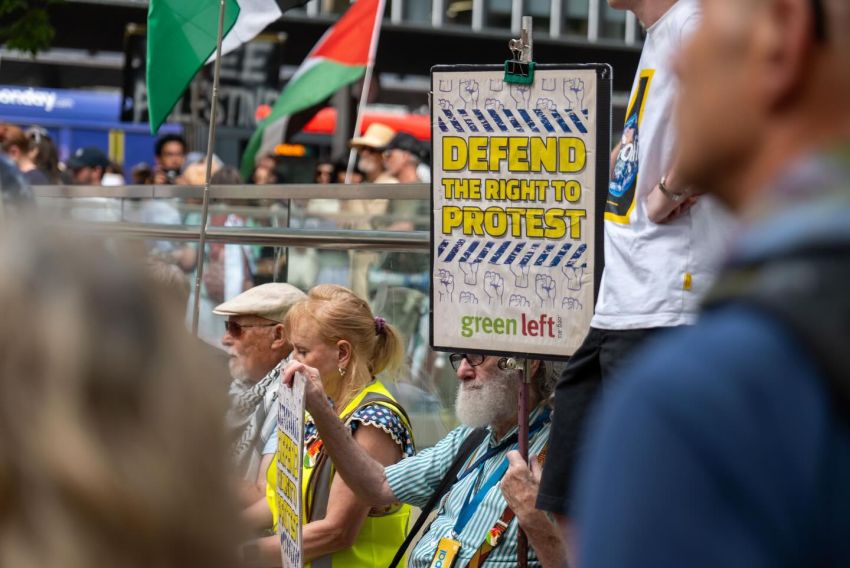
NSW Premier Chris Minns has rushed through laws to give police more powers to restrict public protests for up to three months following a "terrorism declaration”, on the grounds that such activities incite societal hatred.
This was followed by some Zionist websites circulating a fabricated video showing one of the Bondi terrorists in a pro-Palestine protest near the Opera House; their intention was to distort the call for an end to the war and defame the anti-genocide demonstrators as terrorists.
Antisemitism report
Federal Labor is rushing to adopt the Special Envoy’s Plan, which is based on data on antisemitic incidents compiled by the Executive Council of Australian Jewry (ECAJ). No independent entity has made a scientific study of the reports.
Progressive Jews dispute the ECAJ's views on antisemitism as it could include an individual or organisation that is hostile to the policies of the Israeli state or hostile to the Palestinian people’s right to self-determination. Furthermore, it could involve racist groups who attack Jews simply because they follow the Jewish faith.
Grouping these incidents together in a single report under the heading of “antisemitic incidents” is unscientific and misleading. The adoption of the IHRA definition of antisemitism will not make Jewish people safer.
The ECAJ’s Special Report: Anti-Jewish incidents in Australia 2025 even states that more than 50% of the incidents mentioned in the Segal report on antisemitic incidents that year were not directed against the Jewish community per se, but against the Zionist movement and the Israeli government.
The same report states that antisemitic incidents increased fivefold, compared to 2023, indicating that the incidents are linked to Israel’s ongoing genocide.
The anger over Israel’s genocide has been largely expressed through peaceful protests, articles and interviews on radio and television. But Segal wants to criminalise those who take part in anti-genocide protests, labelling them “antisemitic”.
Australian law deems all graffiti illegal, whether it says “Love Jesus”, “Freedom for Palestine” or “Death to Israel”. The law makes no distinction between positive and negative messages as it focuses on protecting private property. This helps contextualise the government’s approach to such incidents; they are an offence regardless of the intention.
Labor should not enact new “antisemitism” laws on the basis of Segal’s report. Instead, it should propose an independent committee to monitor allegations of antisemitism and determine if they are or not. Furthermore, it should consider the possibility that Zionist organisations might orchestrate incidents to push their case that any criticism of the state of Israel is antisemitic.
[Khaled Ghannam is a Palestinian researcher. A version of this article was published in Arabic on Khaled Ghannam's website].