Locked Out
Directed by Joan Sekler
www.lockedout2010.org
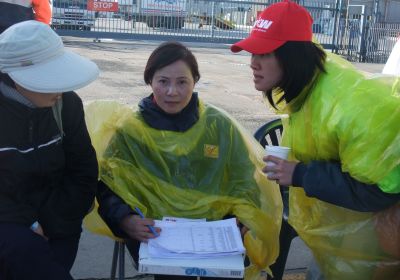
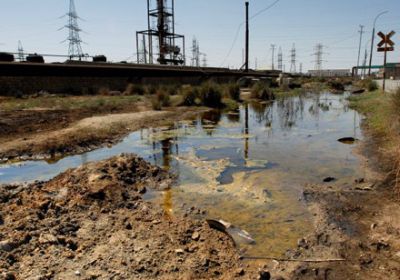
Locked Out, a film by Joan Sekler, documents the struggle of workers at the Borax mine in Boron, California, against the mine's multinational owner, Rio Tinto.
The mine is integral to the towns economy, employing 570 workers ― about a quarter of the population of Boron.
In September 2009, Rio Tinto revealed it intended on scrapping the workers' contract. The pay, benefits, and conditions set out in the contract had been negotiated for with workers over the past 40 years.
-
-
In a decision handed down on May 16, Fair Work Australia (FWA) acknowledged the gender-based undervaluation of the vital work of social and community sector (SACS) workers.
-
“Factories making sought-after Apple iPads and iPhones in China are forcing staff to sign pledges not to commit suicide, an investigation has revealed. “At least 14 workers at Foxconn factories in China have killed themselves in the last 16 months as a result of horrendous working conditions.
-
New Zealand’s Unite union has made great progress in recent years in organising previously unorganised sectors of workers ― often young workers in fast food, hospitality and retail. Through organising workers, Unite has forced fast food giants, such as McDonald's, KFC and Pizza Hut, to eradicate “youth wages”, which pay young workers less for the same work. -
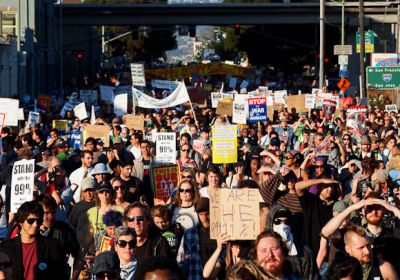
Despite years of anti-labour laws, government attacks on unions, workplace restructuring and labour “flexibility”, the huge turnout for 2011 May Day celebrations shows that South Korean organised labour is still a force to be reckoned with. On May 1, huge numbers of workers took to the streets for May Day protests across Seoul. Police estimated the crowd at more than 58,000 — making it the largest 2011 May Day rally in Asia. The main demands of the rally were for better workplace security and an end to the casualisation of labour. -
The mining and banking companies creaming billions in super profits from the mining boom — the biggest mining boom in Australia’s history — have done very well from the federal budget that was delivered by the Gillard Labor government on May 10. The big mining companies will continue to pay the lowest ever share in tax and royalties while they make their biggest ever profits. -
Several weeks of conflict between the government of President Evo Morales and Bolivian trade unions has again thrown into sharp relief some of the serious challenges confront Bolivia’s process of change. For two weeks in April, the Bolivian Workers Central (COB) called mobilisations across various cities to protest the government’s proposed 10% pay rise for teachers, health workers, police and soldiers, and 20% rise in the minimum wage. -
The ALP took government on the back of the “Your Rights At Work” campaign. But Labor has failed to “rip up” the Howard government’s Work Choices laws. Australian Industry Group boss Heather Ridout told the 2011 HR Nichols Society conference: “There were many positive elements of the previous [Coalition] government’s workplace relations laws that have been retained by the Labor government.” -
The Greens Mayor of Marrickville Council Fiona Byrne gave the speech below at the Unions NSW May Day toast at the Cypress Community Club in Stanmore on April 28. * * * I acknowledge we meet tonight on the traditional land of the Gadigal people of the Eora nation and pay my respects to elders both past and present. Those who don’t read the Oz or Tele, or don’t listen to shock jock radio, I’m the controversial Greens Mayor of Marrickville. -
Workers from the Australian Services Union (ASU) and the Australian Nurses Federation (ANF) stopped work for the second time in a week to protest outside Ballarat city hall. The second protest coincided with a visit from Victorian Premier Ted Baillieu on April 15. However, Baillieu did not turn up while the workers were protesting, delaying the scheduled event for 90 minutes. The ASU and the ANF have been locked in negotiations with the Ballarat City Council for more than 12 months for a new enterprise agreement and wage rises. Workers last received a pay rise in July 2009.
-
Transport Workers Union national secretary, Tony Sheldon, has condemned Qantas’s training of overseas strikebreakers after the company’s chief executive, Alan Joyce, admitted to the practice in media reports. Sheldon said in an April 5 media release: “They really need to come clean on who they are training, who is doing the training and why it has to be done in secret in another country? Why are they hiding it around the other side of the world? -
Transport Workers Union national secretary, Tony Sheldon, has condemned Qantas’s training of overseas strikebreakers after the company’s chief executive, Alan Joyce, admitted to the practice. Sheldon said on April 5: “They really need to come clean on who they are training, who is doing the training and why it has to be done in secret in another country? Why are they hiding it around the other side of the world? “Qantas has said they forecast a 7 per cent increase in international capacity and 8 per cent in domestic – they have the capacity to pay their workforce a decent wage.