
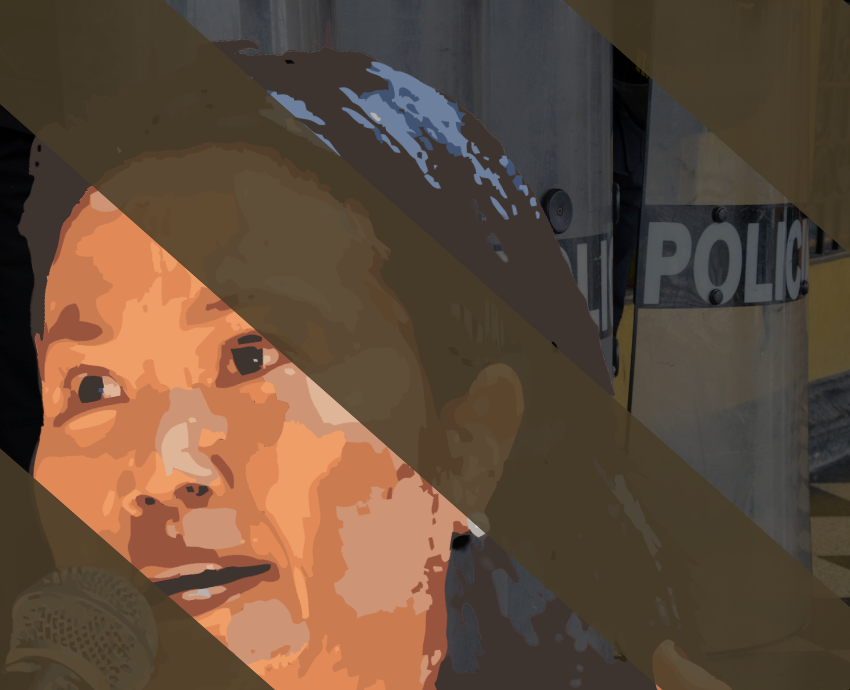
Keiko Fujimori, leader of the far-right Popular Force party, was sworn in as Peru’s president on July 28, after narrowly defeating leftist candidate Roberto Sánchez in the run-off election in June.
Fujimori is the daughter of former dictator Alberto Fujimori, who imposed a United States-sponsored “shock therapy” in the 1990s, privatising public enterprises, eliminating state subsidies, further deregulating the economy and attacking labour laws.
Fujimori represents the continuation of her father’s policies and has maintained the neoliberal status quo through her party’s control of Congress since 2016 and other state institutions, such as the judiciary.
In her first address, Fujimori pledged to combat “insecurity” and has previously promised to fight crime with an “iron fist”. She said the military will take control during “states of emergency”, which have been used by successive right-wing governments to suspend freedom of assembly, movement and privacy.
The falsity of Fujimori’s supposed “anti-crime” agenda is laid bare by her and her party’s record of brazen corruption and facilitating organised crime. She was imprisoned in pre-trial detention for her role in the Odebrecht bribery scandal and for using illicit money to fund presidential campaigns. As president, she is now immune from prosecution.
Moreover, 15 of Fujimori’s 19 cabinet members have faced criminal investigations or been imprisoned for corruption, theft, fraud, embezzlement and assault. Vice President Luis Galarreta is currently under investigation for money laundering, abuse of authority and links to organised crime, while environment minister Vladimiro Huaroc has 51 investigations against him.
Fujimori’s supposed “tough-on-crime” approach also does not extend to the heinous crimes committed by the police and military when inflicting violence against Peru’s working class.
The Fujimorista-controlled Congress approved Law 32735 on July 21, which allows crimes committed by the police and military to be investigated and tried by police and military courts. Ongoing investigations and trials can now be transferred from civilian courts or stopped, including cases where police and military have already been convicted.
This adds to the widespread impunity already enjoyed by police and soldiers, who have killed at least 50 people in anti-government protests since 2022. Recently, a police officer shot and killed an eight-year-old boy in Huacho, a town about 150 kilometres north of Lima.
During her address, Fujimori lamented that Peru’s economic inequality is the highest in Latin America and pledged, in a populist move, to raise the minimum wage by 15%, to 1300 soles (A$545) a month. She knows this will have a negligible impact on big business bottom lines and workers’ living standards, in a country where more than 70% work in the informal economy, with no guaranteed minimum wage and basic work entitlements.
In many ways, Fujimori and her father are responsible for entrenching the neoliberal model that makes Peru one of the most unequal countries in the world. The top 1% control almost half (44.7%) of the country’s wealth, while the bottom 50% control just 0.1%.
Under this model, domestic and transnational corporations are granted almost free reign to pillage the country’s vast mineral deposits to make obscene profits.
Meanwhile, the concentration of the economy into monopolies and oligopolies — particularly in the agribusiness industry — results in price fixing and rising living costs. The basic family basket — the cost of basic goods and services for a family of four for a month — is more than 1860 soles ($779.29), which Fujimori’s promised wage raise covers less than 70% of.
Joining the far-right shift in governments in the region, Fujimori seeks to deepen ties with the United States and other far-right leaders in the region. Her inauguration was attended by far-right leaders, such as Chilean President José Antonio Kast and Argentine President Javier Milei.
She pledged to join US President Donald Trump’s Shield of the Americas, which aims to reassert US economic and military dominance in Latin America.
Thousands protested in the country’s capital, Lima, against Fujimori’s inauguration, rightly pointing out her role in introducing laws that facilitate crime and grant impunity to the military and police. Among the protesters were relatives of some of the thousands of people tortured, killed and disappeared under her father’s regime.
During Fujimori’s address, some left-wing politicians turned their backs, held up photos of people killed and disappeared during Alberto’s regime or walked out chanting for justice.