
 BDS action in Adelaide's Rundle Mall.
Adelaide may be as far from Palestine as it gets, but a dedicated group of activists have just celebrated 10 years of BDS (boycott, divestment and sanctions) campaigns. Their weekly actions in the Rundle Mall highlight what BDS has become — a growing, grassroots, global phenomenon that presents a real threat to Israeli apartheid.
BDS action in Adelaide's Rundle Mall.
Adelaide may be as far from Palestine as it gets, but a dedicated group of activists have just celebrated 10 years of BDS (boycott, divestment and sanctions) campaigns. Their weekly actions in the Rundle Mall highlight what BDS has become — a growing, grassroots, global phenomenon that presents a real threat to Israeli apartheid.
-
BDS action in Adelaide's Rundle Mall.
Adelaide may be as far from Palestine as it gets, but a dedicated group of activists have just celebrated 10 years of BDS (boycott, divestment and sanctions) campaigns. Their weekly actions in the Rundle Mall highlight what BDS has become — a growing, grassroots, global phenomenon that presents a real threat to Israeli apartheid.
-

British politics is being shaken up by the shock rise of veteran socialist Jeremy Corbyn to take the lead in the British Labour Party leadership contest, running on a platform against austerity and for pro-people measures such as renationalising privatised industries. The ballot for Labour leader closes in September.
-
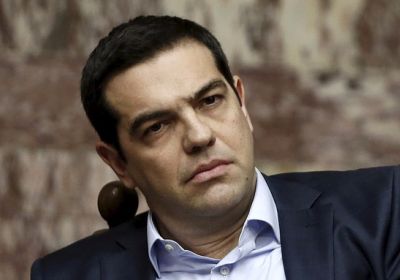 The International Monetary Fund (IMF) has decided not to sign off on the European Union's bailout deal with Greece, saying it does not specifically address tackling Greece's debt, TeleSUR English said on July 30. In a meeting on July 29, the IMF board members said they “cannot reach staff level agreement at this stage” over whether to support Greece's bailout package, according to the Financial Times who received the confidential meeting minutes.
 -
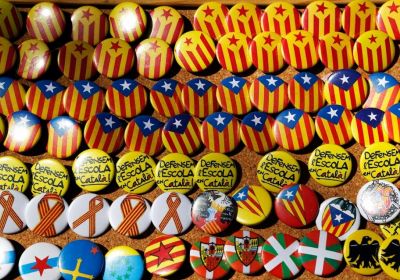
If a Catalan Rip Van Winkle were to wake up today after a sleep of only six years, his disorientation with Catalonia would be as great as that of the original Rip Van Winkle after he dozed right through the American War of Independence. “Am I hallucinating?” he might ask, struggling to find the right answer to questions like:
-
 Internationally renowned US intellectual Noam Chomsky told Mexican newspaper La Jornada on July 20 that it was because Washington was becoming increasingly isolated from “their own backyard” of Latin America, that the US decided to normalise relations with Cuba. Chomsky said the fourth Summit of the Americas of 2012 in Colombia was a major turning point for the US. It saw itself, along with Canada, completely marginalised from all the crucial issues being debated — including Cuba.
 -
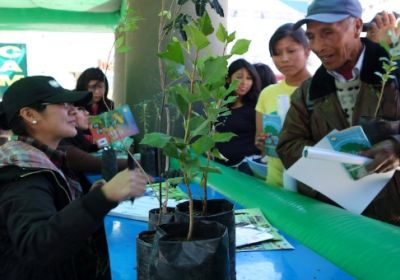 When Bolivian President Evo Morales announced in May that his government was allowing oil and gas drilling in national parks, mainstream and progressive media outlets alike were quick to condemn his supposed hypocrisy on environmental issues. Writing for the Associated Press, Frank Bajak argued that although Morales is known internationally for his outspoken campaigning on climate change, at home he faces constant criticism from conservationists “who say he puts extraction ahead of clean water and forests”.
 -
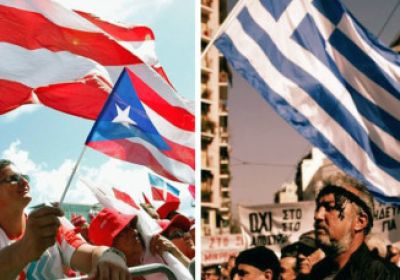 The world has been focused on the spectacle of the “Troika” of the International Monetary Fund, European Union and the European Central Bank crushing the Greek people, but it is far from the only example of strong nations using a “debt crisis” to extract more wealth from those that are weaker. A case in point is the US colony of Puerto Rico. In a June 28 New York Times interview, the governor of the Caribbean archipelago nation declared its debt of US$73 billion “is not payable. There is no other option. I would love to have an easier option. This is not politics. This is math.”
 -
At a protest outside the Turkish Consulate in Sydney on July 23, Kurdish activists and their supporters accused the Turkish government of complicity in the massacre in Suruc of 32 young socialists on their way to help rebuild Kobane, in the liberated area of Rojava in northern Syria.
-
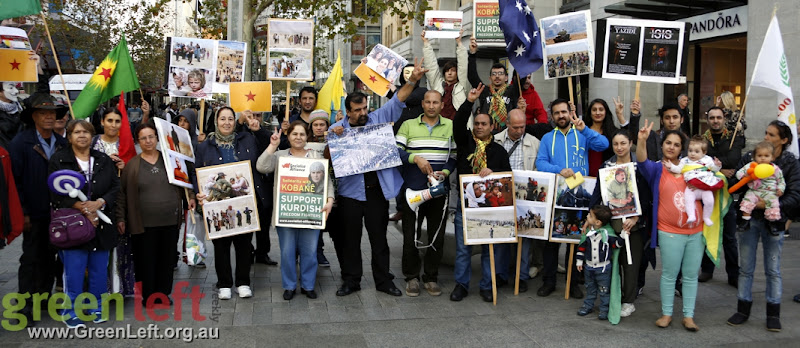 45 people gathered in Perth on July 24 to express solidarity with a group of young people who were victims of an Islamic State suicide bombing in the Kurdish town of Suruç on July 20.
-
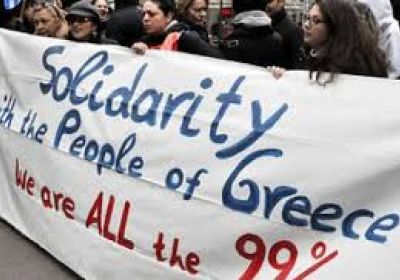 Thousands of people protested on July 15 across Europe – and in cities around the world – in solidarity with Greece's struggle against austerity. The next day, Marina Prentoulis, spokesperson for Syriza in Britain, told TeleSUR that what was needed was a “pan-European movement” capable of confronting the power of European capital and the neoliberal agenda of European leaders.
 -
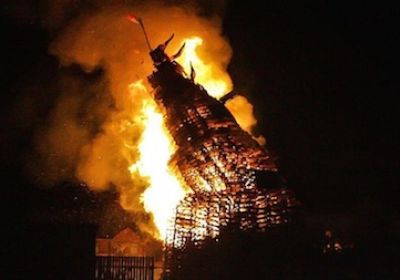 Loyalists rioted on July 13 in north Belfast, Irish Republican News said. The loyalists — largely anti-Catholic supporters of Britain's ongoing rule over the six counties in Ireland's north — drove a vehicle into residents in the predominantly Catholic and Irish nationalist Ardoyne area, seriously injuring a teenage girl.
 -
 More than 60 lawmakers from Germany’s Die Linke (The Left) party voted against the proposal for further austerity for Greece on July 17. They accused the German government of “destroying Europe” by forcing Greece to accept hard-hitting austerity measures required by the eurozone for a third bailout deal.