Rebels from the left-wing Revolutionary Armed Forces of Colombia (FARC).
One of the world's longest running conflicts appears to be nearing an end after more than 50 years of fighting. Colombian government officials and rebels from the left-wing Revolutionary Armed Forces of Colombia (FARC) gathered in Havana, Cuba, on June 23 to announce a historic ceasefire nearly four years in the making.
-
Rebels from the left-wing Revolutionary Armed Forces of Colombia (FARC).
One of the world's longest running conflicts appears to be nearing an end after more than 50 years of fighting. Colombian government officials and rebels from the left-wing Revolutionary Armed Forces of Colombia (FARC) gathered in Havana, Cuba, on June 23 to announce a historic ceasefire nearly four years in the making.
-
More than 20 students were injured at the University of Papua New Guinea (UPNG) in Port Moresby when police opened fire on students protesting against corruption on June 8. Several of those injured remain in a critical condition. Students have been protesting and boycotting classes since May 2. The students were demanding the resignation of Prime Minister Peter O'Neill over corruption allegations and authoritarian moves to block investigation of the allegations. -
British Labour MP Jo Cox, who was murdered by an apparent fascist on June 16, was a strong advocate for refugee rights.
Several non-profit groups that used to work closely with her and the refugees for whom she advocated immediately expressed their sorrow and praised her commitment to human dignity in Britain and abroad.
-
About 50 people attended an action in solidarity with students in Papua New Guinea outside the PNG Consulate on June 10. On June 8, PNG police shot at protesting students at the University of Port Moresby.
Sydney-based Papua New Guineans were joined by students, academics, unionists and NGOs to call for an immediate stop to the repression and for the students' demands to be met.
-
“When one farmer kills themselves you can call it suicide. But when a quarter of a million farmers kill themselves, how can the government call it suicide? It is genocide. These farmers are being killed by design.”
So opens Cotton For My Shroud, a documentary about embattled Indian farmers and the assault on traditional rural agricultural life waged by Monsanto and the political class in its pockets.
-
I just returned to the United States from Rio de Janeiro, where I was researching a story on the Olympics in August for The Nation.
People spoke to me about the displacement and police violence that are accompanying the games. Yet one of the hottest points of discussion emerged from outside the country: a call to move, or at least postpone, the Olympics to prevent the global expansion of the Zika virus, currently exploding in Rio.
-
Agustin Otxotorena, a Basque executive living in Caracas, grew tired of constant calls from friends and relatives in Spain telling him that there was no food in Venezuela. So on May 20, he began publishing photos on Facebook of supermarkets in upscale sectors of Caracas filled with goods. -
Venezuelan President Nicolas Maduro at a demonstration in support of the government's emergency economic measures emergency measures, Caracas, May 14. Photo via AVN.
-
Chief minister of the Northern Provincial Council, CV Wigneswaran, addressing a commemorative event at Mullivaikkal, May 18. Photo: Tamil Guardian.
Tamils throughout the north and east of the island of Sri Lanka held ceremonies on May 18 to remember those who died in the genocidal war waged by the Sri Lankan Army against the Tamil people.
-
Rafael “Rafucko” Puetter is a Rio-based artist and activist who put together an “Olympic anti-souvenir shop” to highlight the injustices that arrive with the summer games. -
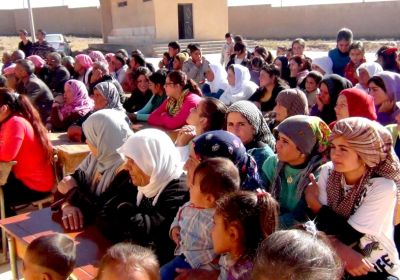
The Syrian Kurds and allied communities declared their areas the “Federation of Northern Syria and Rojava” on March 17, and announced that democratic federalism is a viable alternative to the detrimental politics of both the Syrian regime and the jihadist opposition.
-
Ecuadorean President Rafael Correa spoke out on June 1 about efforts by right-wing political forces in Latin America to oust democratically-elected governments, saying that it would set a dangerous precedent for democracy in the region. “Right-wing politicians don't just want to return to power, they want to return with a thirst for vengeance,” said Correa during an interview with Ecuador Public Television.