-
On September 2, Western Australian Premier Colin Barnett began the takeover of land at James Price Point in the Kimberley so the company Woodside can build a gas-processing hub. Barnett claims this is necessary, after two years of negotiating with the local Aboriginal community and the Kimberley Land Council (KLC). He said any further delays in the project will lose $30 billion after the $15 billion taxpayers have already spent. -
A 2006 episode of the ABC’s Lateline program led directly to the greatest human rights abuse in the past half century, said founder and former editor of the National Indigenous Times Chris Graham, at a public forum of 150 people in Sydney on September 3.
-
Two of the central figures in a major media and government scandal that erupted in the lead-up to the launch of the Northern Territory intervention will speak in Sydney on September 3, in their first public engagement together. Tjanara Goreng Goreng, a former Howard Coalition government official-turned-whistleblower, and Chris Graham, the founding editor of the National Indigenous Times, will speak address a public forum, at the University of Technology, Sydney, hosted by the Stop the Intervention Collective Sydney (STICS).
-
A powerful new film about the Northern Territory intervention, Our Generation, is being shown to audiences across the NT, and will screen in places across Australia. The film-makers, Sinem Saban and Damien Curtis, spent three years with “just a camera and a microphone and lots of tape stock and time” and no script, allowing Yolngu people in North-East Arnhem Land to tell their stories about how the policies of the intervention — introduced by the Howard government and continued by Labor — have changed their lives. -
Greg Eatock, a well-known Indigenous activist in Sydney, passed away aged just 51 on August 24. His early death, from chronic health problems, was more proof of the shameful 11.5-year gap in life expectancy between Indigenous and non-Indigenous males in Australian. One of Greg's brothers, Ronald, had already passed away, aged 27. Greg came from a family with a four-generation history of political activism. His great grandmother, Lucy Eatock, and her husband William were veterans of the great 1890s shearers’ strike. Lucy later moved to Sydney from Queensland. -
Peru’s Amazonian indigenous people have announced the creation of their own political party and will contest the presidential elections in April 2011. The indigenous people clashed with Peruvian President Alan Garcia’s government in 2009 to defend their ancestral lands in the largest indigenous uprising in recent history. -
Barb Shaw, a well-known Aboriginal activist from Alice Springs’ town camps who has campaigned tirelessly against the Northern Territory intervention, doubled the Greens’ vote in the huge NT seat of Lingiari. The result damages the government’s claim that Aboriginal people support the intervention. The intervention imposes a series of discriminatory measures against Aboriginal people in remote communities. It was launched by the Howard Coalition government in August 2007 and has been extended under Labor. -
On August 16, Darwin was the venue for a screening of Our Generation, a landmark new documentary about the plight of Aboriginal people in the Northern Territory living under the repressive NT intervention. The film focuses on the effects of the intervention on the Yolngu people of East Arnhem Land, which coincided with a move by the NT Labor government to move people off traditional homelands and into larger towns (the “hub town” policy).
-
Recent scenes of roadblocks, strikes and even the dynamiting of a vice-minister’s home in the Bolivian department (administrative district) of Potosi, reminiscent of the days of previous neoliberal governments, have left many asking themselves what is really going on in the “new” Bolivia of indigenous President Evo Morales. Since July 29, the city of Potosi, which has 160,000 inhabitants, has ground to a halt. Locals are up in arms over what they perceive to be a lack of support for regional development on the part of the national government. -
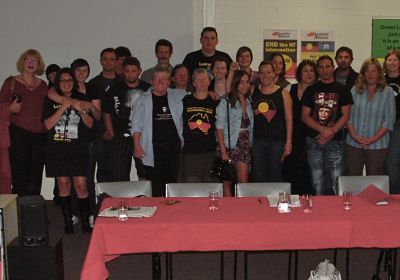
On August 12, candidates from the Greens, Socialist Alliance (SA) and newly formed First Nations Political Party (FNPP) spoke to a group of 50 people at La Tropicana cafe in Fremantle. The forum was organised by SA to highlight environmental and social policies ignored by the major parties in the federal election campaign. The event was chaired by Fremantle councillor and Western Australian SA co-convenor Sam Wainwright Kate Davis, Greens candidate for Fremantle, said: “The Greens have a renewable energy target of 100% by 2030. -
Whichever major party wins the August 21 elections, the real job of fighting for progressive change will remain. Not just because Labor and the Liberal-National Coalition have made this election campaign an ugly race to the right, but also because real change never comes simply through a vote. Even an election that registered real victory, such as the defeat of the hated John Howard Coalition government in November 2007, came on the back of sustained political action by millions of ordinary people focused primarily around the campaign against Work Choices.
-
Equality of access and outcomes in Indigenous education was a key demand at the 2010 Garma Festival, held over August 6-10. Up to 1200 visitors from around Australia and the world joined 2-3000 Yolngu people for the famous festival in north-east Arnhem Land. Each afternoon, clan groups from across Arnhem Land, Kunnunurra, Groote Eylandt and Central Australia performed traditional song and dance. Evenings featured Aboriginal bands from across the Top End, and films by and about Aboriginal issues. The mornings were dedicated to forums and workshops.